

🚀 Check out this must-read post from Hacker News 📖
📂 Category:
📌 Main takeaway:
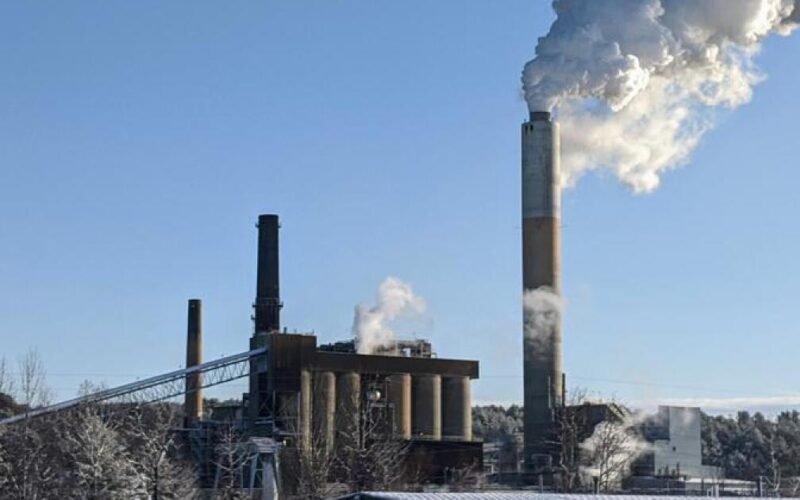
The last coal-fired power plant in New England, Merrimack Station, has stopped running.
With the closure of that facility, the region is poised to become the first in the United States without a coal plant on its grid (though New York state, which has its own regional grid operator, stopped burning coal in 2020).
Granite Shore Power, the company that owns the coal plant in Bow, New Hampshire, said they ceased commercial operations September 12th, about a year and a half since they announced they would retire their facility by 2028 as part of a settlement agreement with environmental groups.
“For nearly three quarters of a century, Merrimack Station has reliably served the energy needs of families and businesses across New Hampshire,” the company wrote in a statement.
The facility still has two kerosene-fired generators that will continue running. It has been struggling to keep its coal-fired generators in compliance with state regulations for more than two years.
“I’m so glad that we are not going to burn any more coal in New Hampshire,” said Kendra Ford, a climate organizer with 350 New Hampshire. “I know that this is hard on people who work there, and I know that the town of Bow may also be a little caught off guard by it closing at this moment, so I hope that lots of things can be done for those folks.”
Merrimack Station and another plant owned by Granite Shore Power, Schiller Station, are the last two coal-fired plants connected to New England’s regional electric grid. Schiller Station has not burned coal since 2020. In Maine, a paper mill burns coal to power their own operations.
Mary Cate Colapietro, a spokesperson for New England’s regional grid operator, said the organization has not received a formal retirement request from Merrimack Station, but the region does not depend on the facility for the grid’s reliability.
“Coal generation accounted for only 0.22% of power in the region in 2024,” Colapietro said.
Colapietro said there is no way to track what kinds of fuel are being used to generate the electricity that is imported from other regions, meaning it’s not a given that New Englanders are using coal-free power.
But with Merrimack Station shutting down, there will no longer be coal burned in New England to power the grid.
Granite Shore Power said they would provide assistance or placement services to employees who lost their jobs, and that they were considering “all opportunities” for redevelopment at the site of the plant.
Local transitions
Merrimack Station opened in the 1960s. It generated power for the regional grid – and had a major impact on the community that hosted it, the town of Bow.
“Back when it was built, it was the largest taxpayer in town by far,” said David Stack, Bow’s town manager.
The amount of revenue that Bow got from property taxes on the coal plant allowed the town to keep tax rates low, leading to a boom in residential development. The impact was especially profound because New Hampshire towns depend heavily on property taxes, Stack said.
But the value of the plant, and how much they should pay in taxes, has been the subject of yearslong conflict between Bow and the owners of Merrimack Station – first Public Service of New Hampshire and Eversource, and more recently, Granite Shore Power.
The conflict led to a lawsuit, in which Bow had to pay Eversource millions of dollars, after the New Hampshire Supreme Court found they had charged the company too much in taxes. Stack says that as the value of the plant has continued to drop, Bow has felt the economic impact.
Over the last 15 years, Stack says, Bow has tried to adapt. Officials have worked to become friendlier to developers, changing zoning rules. Firms like DHL and Coastal Forest Products opened distribution centers in town. But other than mixed-use developments that are primarily residential, Stack says there aren’t a lot of new opportunities.
“As far as manufacturing, you don’t really see that anymore,” Stack said. “I just don’t know if big commercial ventures beyond Amazon are that successful.”
A few years ago, the taxes from new commercial developments surpassed the taxes the power plant was paying – a major turning point for reducing Bow’s reliance on the plant. But despite the town’s preparation, the news of Merrimack Station’s closure came as a surprise.
“We realized we were going to get to this point eventually,” Stack said. “I thought they had a little more time.”
Stack says Granite Shore Power has never sat down with officials in Bow to talk about the future. The company has said publicly that they’re hoping to turn Merrimack Station and Schiller Station into “renewable energy parks,” with batteries and solar. Jim Andrews, the head of Granite Shore Power, said in 2024 he wasn’t planning to include natural gas as part of the redevelopment. But, he said, it’s not off the table.
“We’re concerned with the valuation. But we don’t know exactly what technology they’re looking at putting there,” Stack said.
National shifts
In the opposite northern corner of the country, other communities are also preparing to leave coal behind. Oregon and Washington are planning to eliminate coal from their generation portfolio by the end of this year, when the Centralia, WA coal plant is scheduled for retirement.
There, the plan for the future includes a $55 million fund, through an agreement between Washington State and the coal plant owner, to help the Centralia community transition.
Coal still makes up about 8% of the generation capacity in the Northwest, including Idaho and Montana. Next door, in California, coal still made up a small fraction of the state’s power production as of 2024.
Nationally and globally, coal has been on its way out for years. Coal plants account for the largest share of retiring energy generators in the country.
Research shows coal has become more expensive than other fuel options. And it’s one of the most carbon-emitting fossil fuels, creating emissions that can harm the health of people nearby and that fuel climate change.
Still, coal accounted for about 16% of the U.S.’s power generation in 2023. Some plants are delaying retirements. The Trump Administration has announced several efforts to expand the industry, including putting millions of dollars towards re-opening or modernizing coal plants, opening millions of acres of federal land for coal mining, and relaxing federal environmental rules that affect the burning of coal.
For Kendra Ford, the climate advocate, Merrimack Station’s closure seems to be another sign of the industry in decline, despite the Trump Administration’s efforts to revive it.
“It’s not sustainable in any way. It’s not sustainable for the environment, obviously. The economics are against it now,” she said. “It just doesn’t make any sense to go back to coal.”
🔥 What do you think?
#️⃣ #Englands #coal #plant #stopped #operating #owners
🕒 Posted on 1760494163
