

🚀 Check out this insightful post from Hacker News 📖
📂 Category:
📌 Key idea:
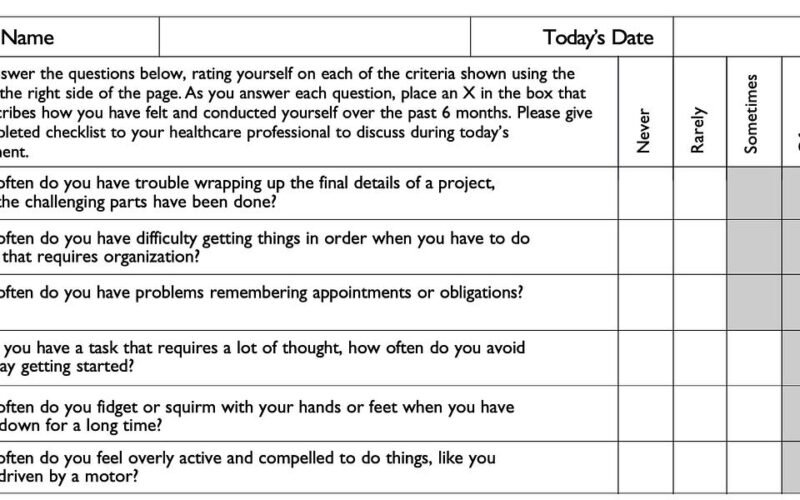
There is a six-question test for ADHD that takes a minute to complete. If you score highly on it, you are likely to have ADHD and have a strong reason to talk to a psychiatrist about getting medication. It’s a low-effort way to surface a real problem for yourself — or help someone else surface it.
Here’s the story of how I found the test. If you just want the test, skip this section.
A few years ago when I was moving from Moscow to London I had small leftover amounts of simulants 3-FMC and MDPV from my student days. I’d use them for productivity during exam periods, but I never actually enjoyed them recreationally. Still, I was not going to carry sketchy chemicals across two borders, so I figured I’d experiment with recreational use.
I snorted a small line of 3-FMC and instead of having fun I finally felt clearheaded enough to stop procrastinating on writing a farewell post for my then-colleagues. I knew stimulants are a common treatment for ADHD, so a question popped into my head: do I have ADHD? Yes, stimulants help everyone focus, but the contrast was too striking to ignore.
I took a few online tests, they did suggest ADHD. I then read more about ADHD online and that also suggested I had it. I kept reading and reading wanting full certainty.

There was only one definitive way to find out: get a diagnosis from a psychiatrist.
I was leaving Russia in a few weeks, and Russia bans first-line ADHD medications like amphetamine and methylphenidate. So I decided to wait until I moved to London. After two months after arriving in London, I booked a private assessment with a psychiatrist. Shortly after, I had the 1.5 hour assessment and walked out with an ADHD diagnosis and a prescription for lisdexamfetamine, a prodrug of d-amphetamine.
One of the questionnaires they sent me before the appointment was very short. I later learned that this six-question screener is surprisingly effective.

If you score 4 out 6 on the test above, you have a strong reason to suspect ADHD and get a proper assessment.
Just the six questions above have a sensitivity of 69% and specificity of 99.5% in the general population. This means:
If we assume 5% of people have ADHD (this source gives 4.4%, and this gives 6%), then:
-
The test would correctly pick up 3.5% of the population as having ADHD (0.69 × 5%).
-
It would incorrectly flag about 0.5% (≈0.475%, rounding up) of the population who don’t have ADHD.
So if you score 4 out of 6, the chance you actually have ADHD is:
3.5% / (3.5% + 0.5%) = 87.5%.
ADHD is highly treatable with meds. First-line treatments for ADHD — stimulants like amphetamine and methylphenidate — work really well. To quote a podcast on psychiatry: “Stimulants are one of the most effective meds in psychiatry” (source), ”Not many treatments in psychiatry have a large effect size. There’s stimulants for ADHD, ketamine for depression” (source).
70-90% of people with ADHD find stimulants effective and experience noticeable quality of life improvements.
And if you don’t want to take stimulants or they don’t work for you, there are non-stimulant medications, such as atomoxetine or Intuniv.
This test is an imperfect screening tool that misses a third of all true ADHD cases and incorrectly flags a small percentage of non-ADHD people. But it has an incredible signal to effort ratio — it only takes a minute to take. If you score above its threshold — you have a strong reason to seek a full assessment.
Even if you are confident you don’t have ADHD, it’d only take you a minute to test your distractible friend. The right medication could be life-changing for them — it certainly was for me.
💬 Tell us your thoughts in comments!
#️⃣ #OneMinute #ADHD #Test
🕒 Posted on 1763974229
