


✨ Discover this insightful post from Hacker News 📖
📂 **Category**:
✅ **What You’ll Learn**:
Every cell in the human body squeezes over six feet of DNA into a miniscule speck invisible to the naked eye—like compressing a whole house into a single sugar cube. In order to fit in a cell and remain organized, DNA is carefully wrapped around spool-like protein clusters called nucleosomes.
For decades, the prevailing view held that DNA is coiled so tightly around a nucleosome that it’s basically locked away and the cell can’t access it. Scientists believed only unwrapped DNA could be active. Now, a study from Gladstone Institutes and the Arc Institute challenges that black-and-white view.
Using a new AI-powered computational method, scientists discovered that most nucleosomes contain sections of DNA that are partially accessible to the cell, rather than fully wound up and packed away. The findings, published in the journal Nature, point to a previously unrecognized way that cells control their genes.
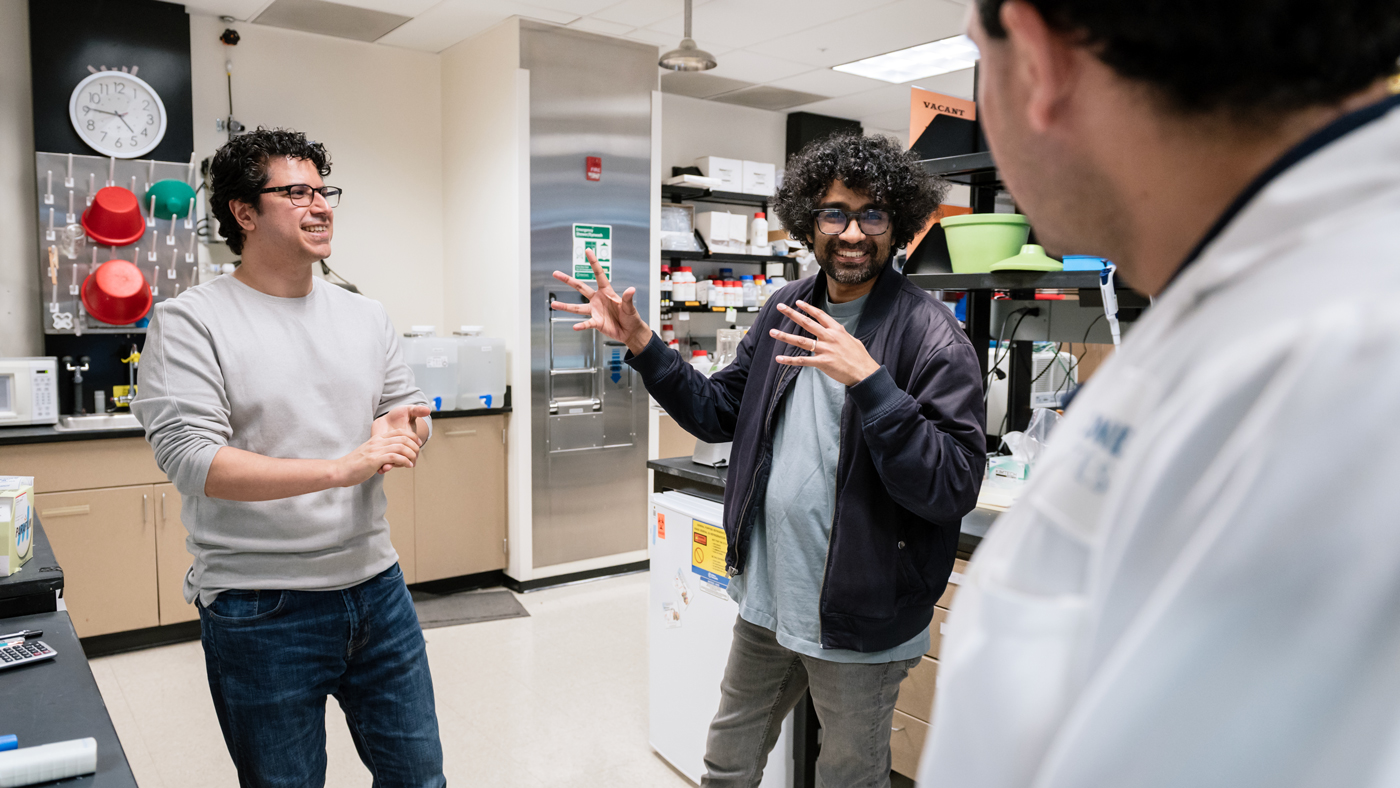
The new study—led by the Arc Institute’s Hani Goodarzi (left) and Gladstone’s Vijay Ramani (right)—offers a completely new way of understanding how the genome is organized, suggesting DNA is much more accessible than previously believed.
“The conception before was that, when it came to nucleosomes, genes were either turned on or off, but we’re finding it’s more like a volume dial,” says Gladstone Investigator Vijay Ramani, PhD, one of the scientists who led the new study. “This is a completely new organizational code for the genome.”
A New Way to Read DNA Packaging
All cells in the body carry the same DNA, but different cells use only the genes relevant to their specific jobs. To achieve this, cells have elaborate systems for controlling which genes are accessible and which are stored away. Nucleosomes have long been considered one of the primary elements of this filing system.
This is why researchers often study chromatin—which is all of a cell’s DNA packaged using nucleosomes—to get a sense of what genes a cell is using.
“Our findings suggest that the genome is far more dynamic and accessible that the scientific community realized.”
The Ramani lab previously developed a technology called SAMOSA, which for the first time mapped where nucleosomes were located along individual DNA molecules. Their new tool, IDLI (Iteratively Defined Lengths of Inaccessibility), builds on that foundation using an AI model trained to recognize subtle differences between nucleosome structures within the SAMOSA sequencing data.
Rather than simply locating each nucleosome, IDLI scans the data in two dimensions—across the length of the DNA fiber and within each nucleosome itself—to probe its internal structure.
Beyond On and Off: A Dynamic View of Chromatin
Each nucleosome is made of eight distinct building blocks, and IDLI can detect whether all of those blocks are present and tightly bound to each other. Missing or loose building blocks indicate that the nucleosome is distorted, with sections of DNA partially exposed.
The scientists used their new tool to analyze the chromatin from mouse embryonic stem cells. They found that more than 85 percent of nucleosomes showed some degree of distortion.
“Our findings suggest that the genome is far more dynamic and accessible than the scientific community realized,” Ramani says.
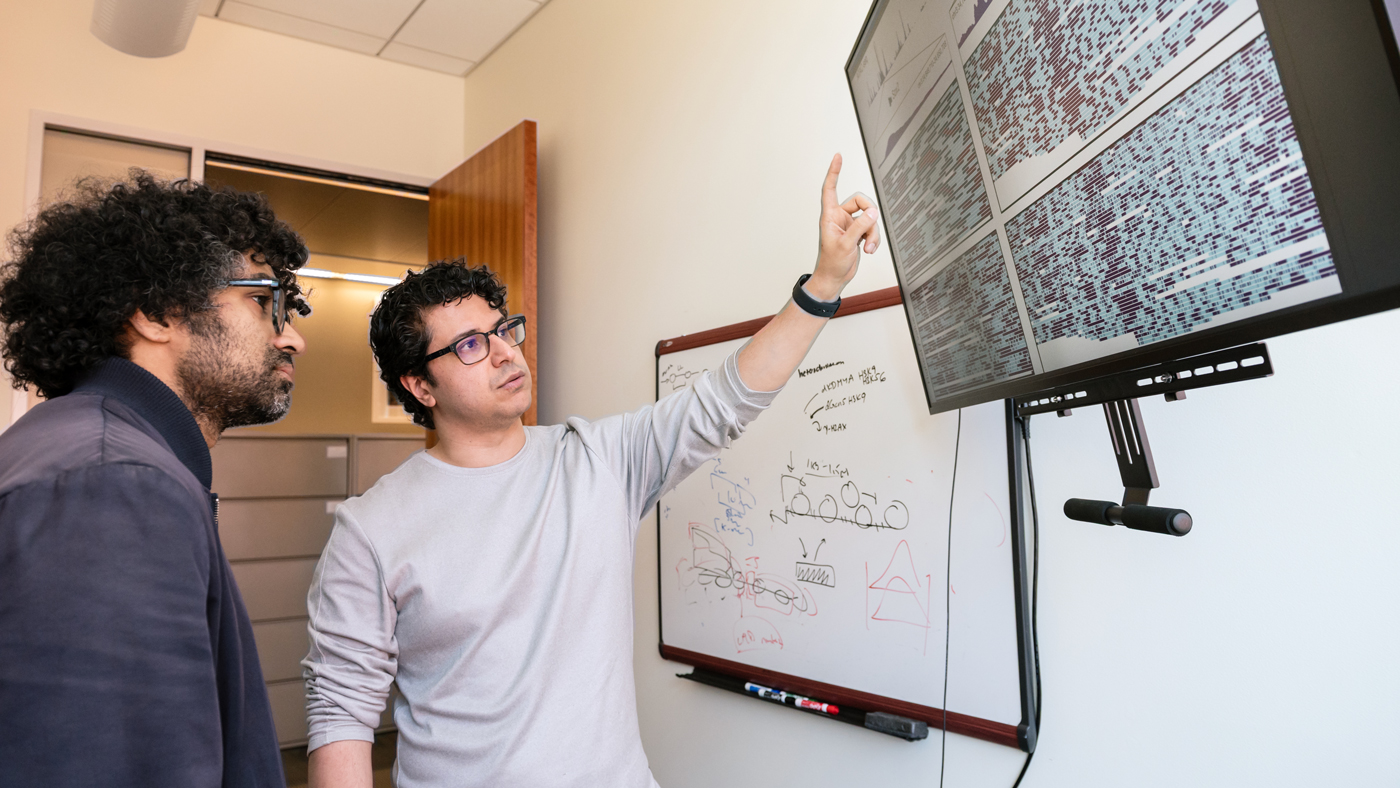
Using an AI-powered method, Ramani (left) and Goodarzi (right) showed that over 85 percent of nucleosomes have sections of partially exposed DNA, representing a fundamental shift in how scientists should think about how DNA is packaged in a cell.
Crucially, the team showed that the DNA distortions are not random, but carefully programmed by the cell. They identified 14 distinct structural states of nucleosomes, each associated with different levels of gene activity. The same patterns appeared in human stem cells being coaxed into liver-like cells, and in liver cells taken directly from mice.
For Hani Goodarzi, PhD, an investigator at the Arc Institute who led the study with Ramani, the findings represent a fundamental shift in how scientists should think about chromatin.
“Before this, our understanding of chromatin was a bit like reading a text that only had sound and silence—just two states of being,” Goodarzi says. “Now we can see that it’s much more nuanced. There are letters and words, and we uncovered a new kind of grammar that controls them.”
“We’re not here just to observe biology; at some point we want to intervene.”
The team also showed that transcription factors, which are special proteins responsible for turning genes on and off, directly shape those nucleosome structures. When the researchers removed two of these proteins from cells, the nucleosome distortion patterns shifted in predictable ways. The findings suggest that transcription factors are responsible for forcing nucleosomes to either stay open or remain locked.
“This adds to the many different ways in which a cell can tune things up and down, by making parts of the DNA more or less accessible,” says Ramani.
Mapping a Path Toward Healthier Aging
For many complex conditions, scientists have not been able to pinpoint specific DNA changes that trigger disease. That’s likely because diseases like cancer and neurodegeneration arise from small shifts across many genes at once—genes that should be completely off instead being read by the cell, or vice versa.
Ramani sees the 14 new nucleosome states as a kind of readout for those shifts.
“These are precisely the states that end up being quite important in terms of disease relevance,” says Ramani. “Most complex diseases revolve around gradation; maybe a gene is on but at half the level it would normally be, or maybe it’s on in the wrong cell type.”
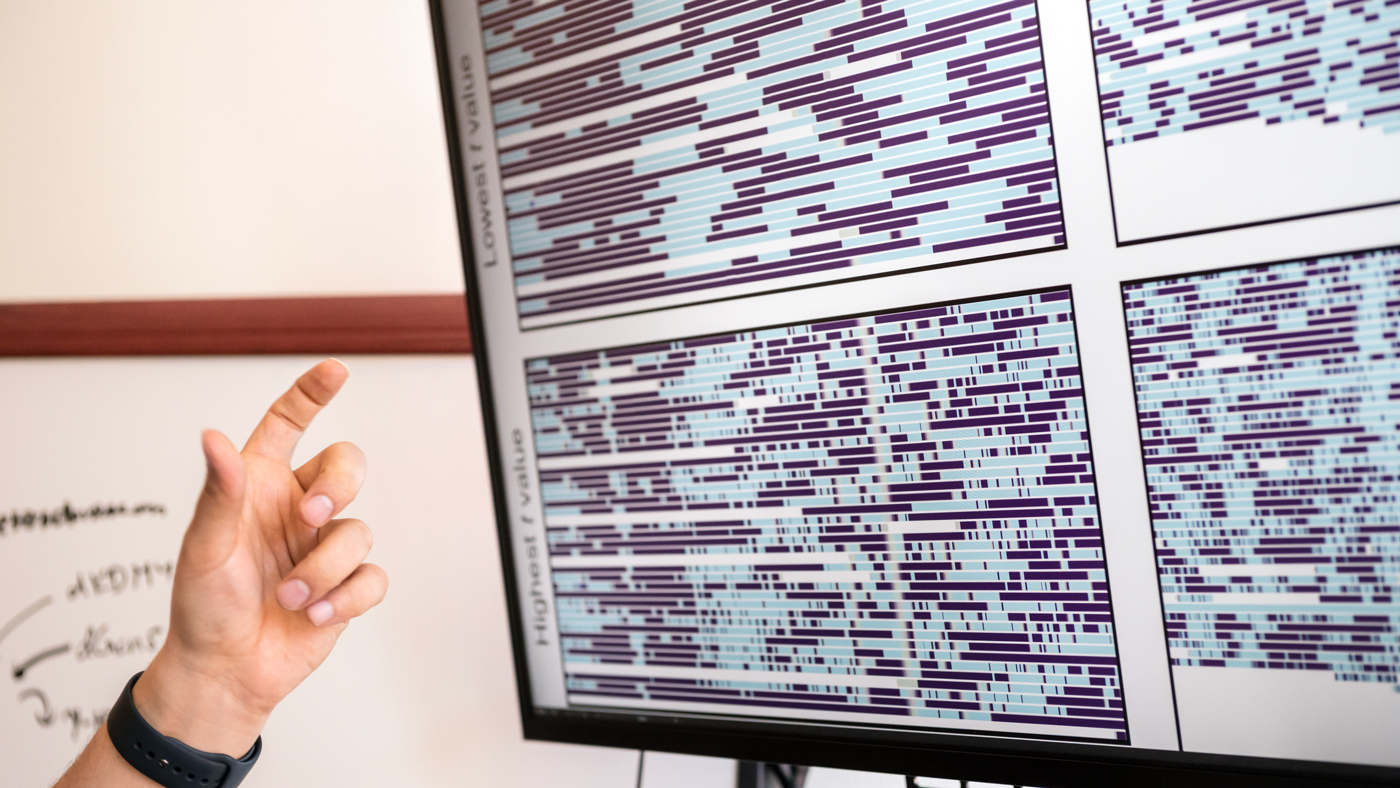
Findings from this study could eventually point toward therapeutics that restore healthy nucleosome patterns in aging or disease.
The researchers also see promise in applying the new tool to aging research. Chromatin structure changes in predictable ways as cells age, and some of those changes appear to be reversible. Ramani envisions using IDLI to map how nucleosome states shift across different tissues during aging.
Those kinds of studies could eventually point toward therapeutics that restore healthy nucleosome patterns in aging or disease.
“We’re reading the language, but ultimately, we want to learn how to speak it so that we can control and modify it,” Goodarzi says. “We’re not here just to observe biology; at some point we want to intervene.”
🔥 **What’s your take?**
Share your thoughts in the comments below!
#️⃣ **#Discovery #Reveals #DNA #Isnt #Locked #Cells**
🕒 **Posted on**: 1777595225
🌟 **Want more?** Click here for more info! 🌟
