

✨ Check out this trending post from Hacker News 📖
📂 **Category**:
📌 **What You’ll Learn**:
Key Takeaways:
- AI is expected to eliminate many repetitive, entry-level tasks, but that may allow engineering students trained on the latest tools to start in more senior positions.
- AI is a force multiplier. It can accelerate the learning curve for junior engineers.
- While AI is very good at solving multi-dimensional problems, domain expertise, critical thinking, and sanity checks will remain essential.
AI is almost certain to eliminate many entry-level jobs in chip design by automating repetitive and data-intensive tasks, but there is a corresponding expectation that today’s engineering students will be trained using these tools so they can enter the workforce higher up the ladder.
Many engineers liken the current era to the Industrial Revolution, which replaced hand tools, or the advent of automobiles replacing horses. An ongoing talent shortage requires more efficient use of engineers, and AI can help. But it’s unclear how widespread or deep the disruptions will be.
There are two schools of thought about its impact. “One angle is, I have an established workflow, and I need people who can ask, ‘What in this workflow could be enhanced and/or replaced by an AI?’” said Alexander Petr, senior director at Keysight EDA. “Another group of people needs to say, ‘What if we throw out the whole workflow and retool the whole thing?’ Both have merits. Wherever you go, everything you look at has a certain amount of culture and meaning. People are so accustomed to doing things a certain way that it’s hard to break out. That explains why you have this group that says, ‘Let’s use AI to enhance,’ and you get questions like, ‘Can AI substitute for four people I don’t have?’ Basically, the AI is asked to do the same job as the engineers. The AI is asked to think the same way as the engineers, and it’s asked to create the same output as those engineers. That makes it much harder to achieve than potentially going with the second group, which says, ‘What if I don’t do it the same way as the engineers do? What if I try to re-engineer the problem and I use the AI to the point where it’s more capable of looking at a high-dimensional problem beyond what humans are able to do? And what if I take the next step in automation and use AI to automate it?’”
Others point to two types of seniority, with one more easily replaced than the other. “One is a senior engineer who understands lots of the problems from the very bottom to the upper level, which means knowing how to use the tools,” observed Kexun Zhang, head of research at ChipAgents. “The other type has experience about the bigger picture, about how a project is organized, and that kind of experience is gained from years of being in the field, of working together, of succeeding and failing. The first type of seniority, which is about familiarity with a lot of bottom-level tools, is not the most important thing. In computer science (CS) and electronic engineering (EE), we’ve seen lots of generations of tools being invented, and usually the next generation of tools is at a higher level of abstraction than the previous level of tools. When the higher abstraction tool is mature and is fully adopted, even in schools, people don’t really need to know that much detail about the lower level of abstraction. That is true for EE. That is true for CS.”
Existing tools at a lower level of abstraction may not be needed for an engineer’s education, but that there is still value in becoming proficient on those tools. “Of course, we still need people to know all these different levels of abstraction, but we don’t need that many junior engineers to go deep into the abstraction,” Zhang said. “They just need to be at the right level, and still, they can work on the same things and gain experience. They can still become senior engineers.”
This solves the problem of how engineers gain expertise if AI takes many of today’s junior jobs. “This is a topic of conversation with me and my friends, and basically our whole company about recent grads,” said Daniel Rose, founding AI engineer at ChipAgents. “There are a lot of people who have been PhD, Master’s, or undergrad students, and all of us are using these amazing advancements of AI to help us code more efficiently and help impact the industry. Otherwise, we would have to spend 10 years to develop to a senior position. AI is helping us impact industries much more quickly.”
In fact, mid-level engineers may find the AI-driven job shift the hardest. “Entry-level engineers will be very used to using AI tools, and they are on the learning curve where they understand aspects of it,” said Nandan Nayampally, chief commercial officer at Baya Systems. “There are senior members who understand a lot more, and have more experience from a system perspective, design flow perspective, and domain expertise perspective, and who have a much bigger understanding of context. There is a section in between that will find using AI a bit challenging. What AI does is move them effectively and faster up that cycle of understanding. AI may be the tools that are needed for gaining that expertise. It’s finally a tool. How you use it best is up to you.”
Nvidia CEO Jensen Huang has repeatedly said, “You’re not going to lose your job to AI — you’re going to lose your job to somebody who uses AI.’” And if industry pundits are correct, electrical engineers using AI will replace electrical engineers not using it.
“It’s just another tool that’s been added to the toolbox to create and allow things to happen,” said Marc Swinnen, director of product marketing at Synopsys. “If you don’t keep up with that, you will not be able to do leading-edge design. For instance, there will always be a place — and there still is to this day — for manual analog design. It’s not like one completely makes the other extinct. But the bulk of the market moves to the new paradigm.”
Some jobs will be taken by automation and robots, but new technology also will create more jobs, as it did with the advent of the internet. “I’m optimistic about that, but compared to something like the Industrial Revolution, the only thing I’m worried is the pace is much higher now,” said Ransalu Senanayake, assistant professor in the School of Computing and Augmented Intelligence at Arizona State University, and director of the Laboratory for Learning Evaluation and Naturalization of Systems (LENS Lab). “In the Industrial Revolution, we had pretty much a generation to adapt through this drift. But language models are improving every week, and the same thing with robots, so people need to adapt very quickly. Considering human limitations, I don’t know if that is a possibility.”
CS/EE/ECE job market trends
As AI picks up steam, exactly which tasks electrical engineers will do is unclear today. The loss of some jobs along the way is inevitable. But given the industry’s worsening talent shortage, it all may shake out in the end.
“I can’t solve Schrodinger’s equation and I don’t know how to crawl around on my hands and knees and lay out a chip with masking tape on a floor, but there absolutely is a set of skills that will no longer be required to do chip design,” said Matthew Graham, senior group director, verification software product management at Cadence. “What skills will be required is still TBD in an AI-driven future, in the same way that in the 1920s and 1930s, to be able to drive a car you needed to understand things like spark advance, and you needed to know how to be able to refill the radiator halfway through your trip. Most people who drive cars now couldn’t find the radiator cap if they were paid to, and that’s fine. We haven’t devolved as a society. We’ve evolved. The solution has evolved to the point where you don’t need to know how to do that. That 1920s car driver couldn’t figure out how to use Apple CarPlay. We’ve just migrated the skills. The same thing will happen in chip design with AI. We will migrate the skills.”

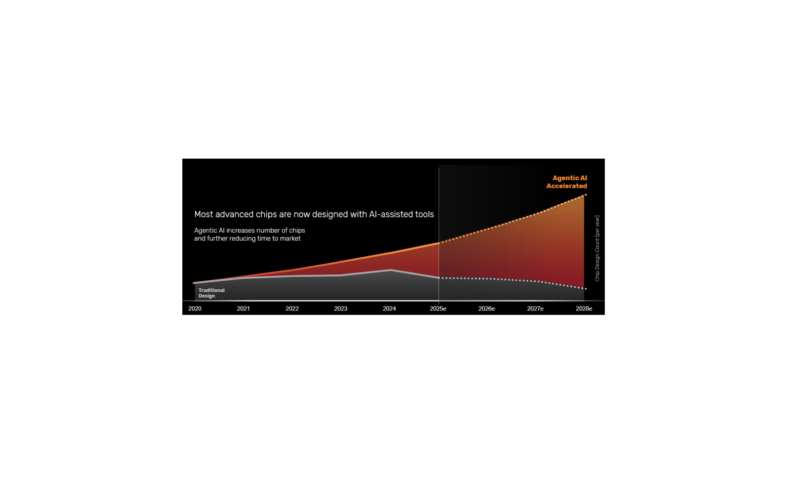
Fig. 1: AI-driven chip design inflection point. Source: Cadence
Fundamentally, AI is designed to boost human productivity and help tackle design complexity. “In this vein, it will accelerate products going to market,” said Anand Thiruvengadam, product management senior director at Synopsys. “Given the significant talent shortage in the semiconductor industry, AI is more likely to help address the productivity bottlenecks than replace human engineers.”
According to Thiruvengadam, trends in the job market include:
- Automation of routine tasks: AI tools are increasingly capable of handling routine, repetitive, and lower-complexity coding and design tasks. Examples include generating simple code snippets, automating layout design, or creating basic graphics.
- Job market shifts: Some entry-level positions may be redefined or merged as organizations adopt AI-powered tools that can accomplish the basics more efficiently.
- Evolving skill requirements: Universities and training programs are adapting curricula to include AI literacy, tool proficiency, and higher-level problem-solving skills. Graduates are increasingly expected to know how to leverage AI tools to enhance productivity and focus on more complex, strategic work.
- Higher-level entry points: As AI tools handle basic tasks, new graduates may be able to start at a higher level, working on more advanced projects sooner than before. The focus shifts from manual execution to oversight, tool management, and creative problem-solving.
- Human skills remain vital: Skills such as critical thinking, collaboration, innovation, and domain-specific expertise are not easily automated and will continue to be in demand.
Agentic AI to train people faster
As EDA evolves, natural language AI agents and mixture of experts (MoE) machine learning architectures can be trained on a company’s data to help senior engineers work more efficiently, and to move new recruits up the ladder faster by serving as a teaching aide.
“The real value of AI is to have a system that can capture the knowledge and experience of a human and replicate that task as an expert,” said David Fritz, vice-president of hybrid-physical and virtual systems, automotive and mil-aero, at Siemens EDA. “We’re seeing that in medicine and in a lot of things. It’s coming to engineering, and it’s not going to be overnight. It’s going to take time, because putting the knowledge of a group of experts into an artificial intelligence system that is tasked with producing the same quality results is very difficult to verify, time-consuming, and expensive to do the training and the verification.”
Fritz believes that eventually, some software design, hardware design, and system design will be replaced by AI. His recommendation for electrical engineers: “Get up to speed on AI.”
Further, agentic AI tools can serve as an assistant, like an intern or a fresh grad. “The workforce that’s going to come into the industry is going to be much more trained,” said Sathishkumar Balasubramanian, head of products at Siemens EDA. “I don’t need to waste experienced engineers to train that new person. He’ll be able to learn on his own. He’ll be able to understand how someone else has done the work in a much easier way, like having a professor.”
That would amount to a foundational shift for engineers. “The era of passive software is over, where I just throw you software and your manual, you have a set of scripts you run, then you go,” said Balasubramanian. “You first understand how to operate the tool, then you understand how to script it, how to do it, import your data, and do all the stuff you need for analysis. Then you learn it, and do your real project. You still keep learning the tool, rather than solving your real problem, which is making better designs.”
Natural language makes learning easier than wading through manuals. “Like ChatGPT 5, you can interact with it all the time, and then it can help you with setup,” said Balasubramanian. “It can help you with analysis, debug, and it can even ask you questions. You can ask questions like how to solve this problem.”
At the same time, many are cautious when it comes to agentic AI and large language models. “They are not a general salve, and there’s always scope for hallucination with today’s AI technology, so you always have somebody that has to do a bit of a tire kick on what’s being produced,” said Andy Nightingale, vice president of product management and marketing at Arteris. “As things progress, the need for that becomes less and less, because the people who are building the AI technology are teaching it how to work for longer without hallucinating, or at least to double-check itself. That’s not the case today, but it certainly will be tomorrow. The amount of engineering expertise can be reduced, but there still needs to be that sanity check in the loop somewhere. It may be that for the person who specified the functionality in the first instance, it’s enough for them to say, ‘Is this thing –– I don’t know how it does it –– but is it actually doing what I expect it to do?’ You might have a mathematician who knows what the thing is supposed to be doing, and they don’t necessarily know how to code up the FPGA, for example. But they’ll know that the results they’ve been given are correct or not.”
Conclusion
If AI can enable engineers to spend more time on creative problem-solving, it almost certainly will improve overall job satisfaction and morale. “They’re seeing this already in the software industry,” said Cadence’s Graham. “It will no doubt trickle into verification and design, and so on. It was simply about, ‘I’m happier, I feel more in the flow, I feel less interrupted by minutiae and repetitive tasks, and I’m able to focus more engineering energy on creative problem solving, and the areas where I can truly give value.’ This is where the human in the loop will absolutely provide the value.”
Related Articles
Even With AI Inroads, Human Chip Designers Still Essential
Engineers are still needed at key points throughout the design pipeline.
The Limits Of AI’s Role In EDA Tools
AI is a set of algorithms capable of solving problems. But how relevant are they to the tasks that EDA performs?
How AI Will Impact Chip Design And Designers
How AI is reshaping EDA, and how it will help chipmakers to focus on domain-specific solutions.
Best Options For Using AI In Chip Design
Narrowly defined verticals offer the best opportunities for AI. Plus, what will the impact be on junior engineers?
AI’s Value In Chip Design Depends On Data Availability
AI can help engineers do their jobs better, but results can vary greatly by area of expertise and company size.
💬 **What’s your take?**
Share your thoughts in the comments below!
#️⃣ **#AIs #Impact #Engineering #Jobs #Expected**
🕒 **Posted on**: 1769711184
🌟 **Want more?** Click here for more info! 🌟
