

✨ Read this insightful post from PBS NewsHour – Politics 📖
📂 **Category**: credit card debt,credit cards,Donald Trump news,interest rates
📌 **What You’ll Learn**:
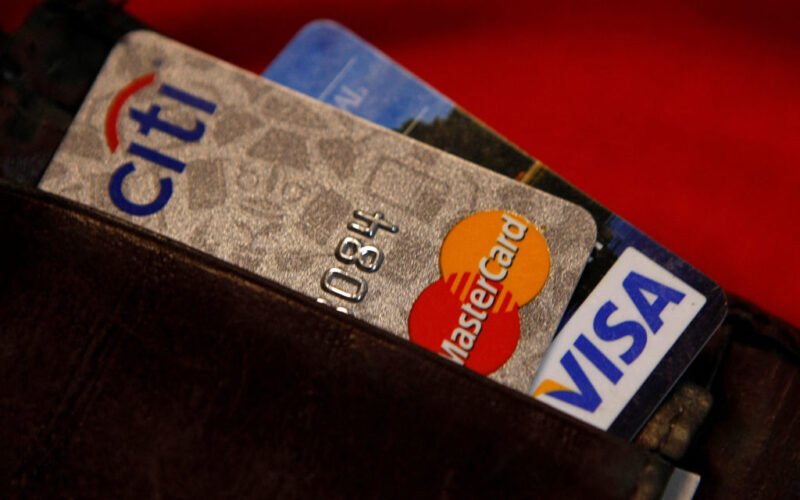
NEW YORK (AP) — Reviving a campaign pledge, President Donald Trump wants to put a one-year, 10% cap on credit card interest rates, a move that could save Americans tens of billions of dollars but drew immediate opposition from an industry that was in his corner.
Read more: The economy is giving mixed signals. Here’s what experts say they mean
Trump was not clear in his social media post Friday night whether the cap might take effect through executive action or legislation, though one Republican senator said he had spoken with the president and would work on a bill with his “full support.” Trump said he hopes this will happen on January 20, one year after he takes office.
To be sure, there is strong opposition from Wall Street as well as credit card companies, which have donated heavily to his 2024 campaign and supported Trump’s agenda for a second term. Banks argue that such a plan would hit the poor hardest, at a time of economic anxiety, by reducing or eliminating lines of credit, pushing them to high-cost alternatives such as payday loans or pawnshops.
“We will no longer allow the American people to be defrauded by credit card companies that charge interest rates ranging from 20 to 30%,” Trump wrote on his platform, Truth Social.
Researchers who studied Trump’s campaign pledge after it was first announced found that Americans would save nearly $100 billion in interest annually if credit card rates were capped at 10%. The same researchers found that although the credit card industry would take a big hit, it would still be profitable, although credit card rewards and other perks would likely be cut back.
The Consumer Financial Protection Bureau says about 195 million people in the United States had credit cards in 2024, and interest charges were assessed at $160 billion. Americans now carry more credit card debt than ever before, to the tune of about $1.23 trillion, according to figures released by the Federal Reserve Bank of New York for the third quarter of last year.
Moreover, Americans, on average, pay between 19.65% and 21.5% in interest on credit cards, according to the Federal Reserve and other industry tracking sources. That fell last year when the central bank cut benchmark interest rates, but is near the highest levels since federal regulators began tracking credit card rates in the mid-1990s. That’s much higher than a decade ago, when the average interest rate on credit cards was about 12%.
He watches: High prices are pushing many Americans into credit card debt
The Republican administration has proven particularly friendly so far toward the credit card industry.
Capital One received little resistance from the White House when it completed its purchase and merger with Discover Financial in early 2025, a deal that created the nation’s largest credit card company. The Consumer Financial Protection Bureau, largely charged with going after credit card companies for alleged wrongdoing, has been largely dysfunctional since Trump took office.
In a joint statement, the banking industry opposed Trump’s proposal.
“If enacted, this cap will only push consumers toward less regulated and more expensive alternatives,” the American Bankers Association and allied groups said.
Banking lobbyists have long argued that lowering interest rates on their credit card products would require banks to reduce their lending to high-risk borrowers. When Congress passed a cap on the fees stores pay big banks when customers use a debit card, banks responded by removing all rewards and perks from those cards. Debit card rewards have only recently returned to consumers’ hands. For example, United Airlines now has a debit card that awards miles on purchases.
The United States already sets interest rate caps on some financial products and certain demographics. The Military Lending Act makes it illegal to charge active duty service members more than 36% for any financial product. The National Credit Union Regulatory Authority has set interest rates on credit union credit cards at 18%.
Credit card companies get three sources of revenue from their products: fees charged to merchants, fees charged to customers, and interest charged on balances. The argument made by some left-leaning researchers and policymakers is that banks earn enough revenue from traders to keep them profitable if interest rates are capped.
“A 10% credit card interest cap would save Americans $100 billion a year without causing massive account closures, as banks claim,” said Brian Shearer, director of competition and regulatory policy at the Vanderbilt Policy Accelerator, who wrote the research on the industry impact of Trump’s proposal last year. “That’s because the few large banks that dominate the credit card market are making huge profits on customers at all income levels.”
There are some historical examples of interest rate caps cutting off less creditworthy financial products because banks are unable to price the risks correctly. Arkansas has a strictly enforced interest rate cap of 17% and evidence suggests the poor and less creditworthy are excluded from the state’s consumer credit markets. Shearer’s research showed that capping interest rates at 10% would likely result in banks lending less to those with credit scores below 600.
The White House did not respond to questions about how the president sought to set a rate cap or whether he had spoken with credit card companies about the idea.
Sen. Roger Marshall, R-Kansas, who said he spoke with Trump on Friday evening, said the effort aims to “cut costs for American families and rein in predatory credit card companies that have been ripping off hardworking Americans for too long.”
Legislation in both the House and Senate would achieve what Trump seeks.
Sens. Bernie Sanders, R-Va., and Josh Hawley, R-Mo., released a plan in February that would immediately set interest rates at 10% for five years, hoping to use Trump’s campaign promise to build momentum for their measure.
Hours before Trump spoke, Sanders said the president, instead of working to cap interest rates, had taken steps to deregulate big banks that had allowed them to charge much higher fees on credit cards.
Reps. Alexandria Ocasio-Cortez, D-N.Y., and Ana Paulina Luna, R-Fla., have proposed similar legislation. Ocasio-Cortez is a frequent political target of Trump, while Luna is a close ally of the president.
Sung Min Kim reported from West Palm Beach, Florida.
A free press is the cornerstone of a healthy democracy.
Support trustworthy journalism and civil dialogue.
💬 **What’s your take?**
Share your thoughts in the comments below!
#️⃣ **#Banks #balk #Trump #seeks #place #oneyear #cap #credit #card #interest #rates**
🕒 **Posted on**: 1768075137
🌟 **Want more?** Click here for more info! 🌟
