

💥 Check out this trending post from Business News 📖
📂 **Category**:
✅ **What You’ll Learn**:
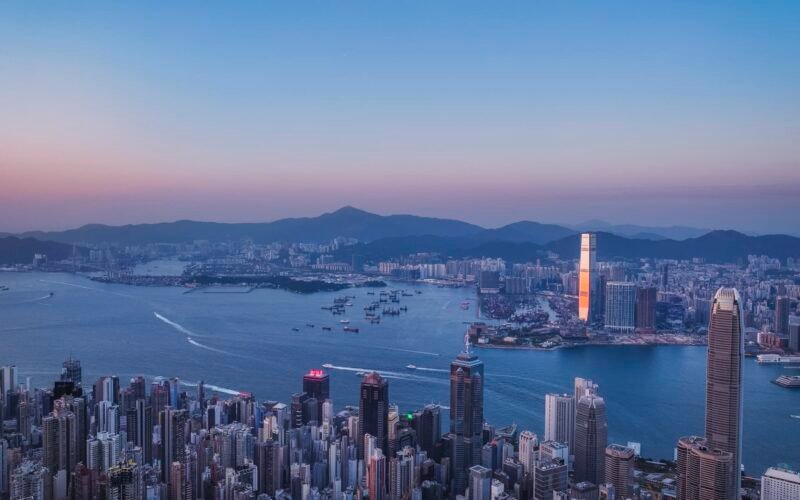
Victoria Harbor in Hong Kong.
Yaorocheng | moment | Getty Images
As the Iran war shakes Dubai’s safe-haven image, Hong Kong’s growing tax incentives for family offices may attract wealthy individuals reconsidering their exposure to the Middle East, lawyers and advisers told Inside Wealth.
“We are seeing a lot more interest in Hong Kong,” said Gavin Cheung, partner and fund formation lawyer at Charles Russell Speechleys. “And that interest, especially in the last couple of weeks, has gone through the roof.”
Cheung, who is based in Hong Kong, said he has conversations almost daily with families considering setting up family offices in Hong Kong, including those who have previously left the region.
In late February, the Hong Kong government proposed several new tax incentives for single-family offices, family-owned investment vehicles, and investment funds. One of the most prominent proposals is to extend tax breaks on gold, cryptocurrencies, private credit and overseas real estate, among other assets. Paul Chan, Hong Kong’s finance minister, said the legislation would be introduced by June.
In 2023, Hong Kong introduced tax concessions for family offices aimed at attracting wealthy investors to the region after 2019 protests led to an exodus of wealth. An estimated 4,200 millionaires left Hong Kong that year alone, according to investment migration consultancy Henley & Partners.
Many mainland Chinese families have chosen to move their companies from Hong Kong to Singapore because of its political neutrality, favorable tax system and independent courts, according to Singapore-based lawyer Edmund Liu.
Between 2020 and 2024, the number of family offices in Singapore rose from 400 to more than 2,000, according to the Monetary Authority of Singapore.
“There was a mad rush to set up family offices in Singapore, and Hong Kong realized they needed to do something otherwise a lot of their families would change,” said Liu, a senior partner in Dentons Rodyk’s corporate practice group.
Many of Hong Kong’s tax concessions are modeled on those granted in Singapore, Liu said. Some of Hong Kong’s newly proposed tax breaks, such as the gold exemption, already exist in Singapore.
Liu said he viewed Hong Kong’s latest proposals as “incremental changes” that would not radically change the value proposition of setting up a family office there versus Singapore. Some clients have family offices in both jurisdictions, he said.
“It depends a lot on the person and what that person wants. If that person is politically aligned with China, they might choose Hong Kong for that reason, because Hong Kong is part of China. But on the other hand, if they’re looking for a politically neutral country, they might go to Singapore,” Liu said.
“If your business is in China, you need to have good relations with the Chinese government. This will be a reason to choose Hong Kong,” he added.
According to research by Deloitte commissioned by the Hong Kong government, Hong Kong had nearly 3,400 single-family offices as of the end of 2025, an increase of 681 offices since the end of 2023.
Cheung said he views the potential tax exemption on cryptocurrencies as a meaningful distinction between the tax systems of Singapore and Hong Kong. While Hong Kong’s legislation has not yet been fully unveiled, the exemption so far is broader than that in Singapore, he said.
Domicile is also useful for family offices that want to relocate quickly, said Anthony Lau, head of Deloitte Private in Hong Kong.
Family offices do not need to apply for an exemption in order to qualify for tax breaks in Hong Kong, he said.
In Singapore, it takes about three months to get approval for an exemption. However, this is an improvement: the process previously took around 12 months before the waiting time was reduced by Singapore’s financial regulator last year.
Hong Kong’s tax system also does not require family offices to invest locally, Lau added. In Singapore, family offices are required to allocate S$10 million (about US$7.85 million) or 10% of their assets under management (whichever is lower) in specific local investments.
However, it is too early to say whether families will personally move from Dubai to Hong Kong.
“If you want to diversify your risks and want more exposure in Asia, they obviously want to move part of their investments out of the potential conflict zone,” he said. “But whether the family or family members will actually move to Hong Kong, I think that is a question mark.”
⚡ **What’s your take?**
Share your thoughts in the comments below!
#️⃣ **#Family #offices #Hong #Kong**
🕒 **Posted on**: 1773322432
🌟 **Want more?** Click here for more info! 🌟
