


✨ Read this must-read post from Hacker News 📖
📂 **Category**:
💡 **What You’ll Learn**:
|
|
|
|
Other Formats:
  |
|
|
|
|
IP Addresses through 2025
January 2026
Geoff Huston
It’s time for another annual roundup from the world of IP addresses. Let’s see what has changed in the past 12 months in addressing the Internet and look at how IP address allocation information can inform us of the changing nature of the network itself.
Back around 1992, the IETF gazed into their crystal ball and tried to understand how the Internet was going to evolve and what demands that would place on the addressing system as part of the “IP Next Generation” study. The staggeringly large numbers of connected devices that we see today were certainly within the range predicted by that study. The assumption made at the time was that we would continue to use much the same IP protocol architecture, including the requirement that each connected device was assigned a unique IP address, and the implication was that the 32-bit address field defined in version 4 of the IP protocol was clearly going to be inadequate to cope with the predicted number of connected devices. A span of 4 billion address values was just not large enough.
We concluded at the time that the only way we could make the Internet work across such a massive pool of connected devices was to deploy a new IP protocol that came with a massively larger address space. It was from this reasoning that IPv6 was designed, as this world of abundant silicon processors connected to a single public Internet was the scenario that IPv6 was primarily intended to solve. The copious volumes of a 128-bit address space were intended to allow us to uniquely assign a public IPv6 address to every such device, no matter how small, or in whatever volume they might be deployed.
But while the Internet has grown at amazing speeds across the ensuing 33 years, the deployment of IPv6 has proceeded at a more measured pace. There is still no evidence of any common sense of urgency about the deployment of IPv6 in the public Internet, and still there is no common agreement that the continued reliance on IPv4 is failing us.
Much of the reason for this apparent contradiction between the addressed device population of the IPv4 Internet and the actual count of connected devices, which is of course many times larger, is that through the 1990’s the Internet rapidly changed from a peer-to-peer architecture to a client/server framework. Clients can initiate network transactions with servers but are incapable of initiating transactions with other clients. Servers are capable of completing connection requests from clients, but cannot initiate such connections with clients. Network Address Translators (NATs) are a natural fit to this client/server model, where pools of clients share a smaller pool of public addresses, and only require the use of an address once they have initiated an active session with a remote server. NATs are the reason why a pool of excess of 30 billion connected devices can be squeezed into a far smaller pool of some 3 billion advertised IPv4 addresses. Services and Applications that cannot work behind NATs are no longer useful in the context of the public Internet and no longer used as a result. In essence, what we did was to drop the notion that an IP address is uniquely associated with a device’s identity, and the resultant ability to share addresses across clients largely alleviated the immediacy of the IPv4 addressing problem for the Internet.
However, the pressures of this inexorable growth in the number of deployed devices connected to the Internet implies that the even NATs cannot absorb these growth pressures forever. NATs can extend the effective addressable space in IPv4 by up to 32 ‘extra’ bits using mapping of the 16-bit source and destination port fields of the TCP and UDP headers, and they also enable the time-based sharing of these public addresses. Both of these measures are effective in stretching the IPv4 address space to encompass a larger client device pool, but they do not transform the finite IP address space into an infinitely elastic resource. The inevitable outcome of this process, if it were to be constrained to operate solely within IPv4, is that we would see the fragmenting of the IPv4 Internet into a number of disconnected parts, probably based on the service ‘cones’ of the various points of presence of the content distribution servers, so that the entire concept of a globally unique and coherent address pool layered over a single coherent packet transmission realm would be foregone.
Alternatively, we may see these growth pressures motivate the further deployment of IPv6, and the emergence of IPv6-only elements of the Internet as the network itself tries to maintain a cohesive and connected whole. There are commercial pressures pulling the network in both of these directions, so it’s entirely unclear what path the Internet will follow in the coming years, but my (admittedly cynical and perhaps overly jaded) personal opinion lies in a future of highly fragmented network, as least in terms of the underlying packet connectivity protocol.
Can address allocation data help us to shed some light on what is happening in the larger Internet? Let’s look at what happened in 2025.
IPv4 in 2024
It appears that the process of exhausting the remaining pools of unallocated IPv4 addresses is proving to be as protracted as the process of the transition to IPv6, although by the end of 2021 the end of the old registry allocation model had effectively occurred with the depletion of the residual pools of unallocated addresses in each of the Regional Internet Registries (RIRs).
It is difficult to talk about “allocations” in today’s Internet. There are still a set of transactions where addresses are drawn from the residual pools of RIR-managed available address space and allocated or assigned to network operators, but at the same time there are also a set of transactions where addresses are traded between network in what is essentially a “sale”. These address transfers necessarily entail a change of registration details, so the registry records the outcome of a transfer, or sale, in a manner that is similar to an allocation or assignment.
If we want to look at the larger picture of the amount of IPv4 address space that is used or usable by Internet network operators, then perhaps the best metric to use is the total span of allocated and assigned addresses, and the consequent indication of annual change in the change in this total address span from year to year.
What is the difference between “allocated” and “assigned”?
When a network operator or sub-registry has received an allocation it can further delegate that IP address space to their customers along with using it for their own internal infrastructure. When a network operator has received an assignment this can only be used for their own internal infrastructure. [https://help.apnic.net/s/article/Using-address-space]
I personally find the distinction between these two terms somewhat of an artifice these days, so from here on I’ll use the term “allocation” to describe both allocations and assignments.
The total IPv4 allocated address pool contracted by some 237 thousand addresses in 2025, with some 3.687 billion allocated addresses at the end of the year. This represented a contraction of some 0.01% for the total allocated IPv4 public address pool through 2025 (Table 1).
| 2011 | 2012 | 2013 | 2014 | 2015 | 2016 | 2017 | 2018 | 2019 | 2020 | 2021 | 2022 | 2023 | 2024 | 2025 | |
|---|---|---|---|---|---|---|---|---|---|---|---|---|---|---|---|
| Address Span (B) | 3.395 | 3.483 | 3.537 | 3.593 | 3.624 | 3.643 | 3.657 | 3.657 | 3.682 | 3.684 | 3.685 | 3.687 | 3.686 | 3.687 | 3.687 |
| Annual Change (M) | 168.0 | 88.4 | 53.9 | 55.9 | 30.6 | 19.4 | 13.2 | 0.6 | 24.9 | 2.2 | 1.1 | 1.6 | -0.4 | 1.2 | -0.2 |
| Relative Growth | 5.2% | 2.6% | 1.5% | 1.6% | 0.85% | 0.53% | 0.36% | 0.02% | 0.68% | 0.06% | 0.03% | 0.04% | -0.01% | 0.03% | -0.2% |
Table 1 – IPv4 Allocated addresses by Year
Have we exhausted all the available sources of further IPv4 addresses? The address management model is that unallocated addresses are held in a single pool by the Internet Assigned Numbers Authority, and blocks of addresses are passed to RIRs, who then allocate them to various end entities, either for their own use or for further allocation. The IANA exhausted the last of its available address pools some years ago, and these days it holds just 3 /24 address prefixes, and has done do for the past 13 years. Because the option of dividing this tiny address pool into 5 equal chunks of 153.6 individual address is not viable, then these 768 individual IPv4 addresses are likely to sit in the IANA Recovered Address registry for some time.
That is, until one of more of the RIRs return more prefixes recovered from the old “legacy” allocated addresses to the IANA, who would then be able to divide the pool equally and distribute them to each the 5 RIRs. This is unlikely to occur.
There are also addresses that have been marked by the IANA as reserved for “special uses””. This includes blocks of addresses reserved for Multicast use. At the top end of the IPv4 address space registry there is a set of addresses that are marked as reserved for “Future Use””. This is a relatively large pool of 268,435,456 addresses (the old former “Class E” space) and if ever there was a “future” for IPv4 then it has well and truly come and gone. But exactly how to unlock this space and return it to the general use pool is a problem that so far has not found a generally workable solution, although efforts to do so have surfaced in the community from time to time.
The topic of releasing the Class E space for use in the public Internet as globally routable unicast address space has been raised from time to time over the past 15 years or so. Some Internet drafts were published for the IETF’s consideration that either directly proposed releasing this space for use, or outlined the impediments in various host and router implementations that were observed to exist in 2008 when these drafts were being developed.
The proposals lapsed, probably due to the larger consideration at the time that the available time and resources to work on these issues were limited and the result of effort spent in ‘conditioning’ this IPv4 space for general use was only going to obtain a very small extension in the anticipated date of depletion of the remaining IPv4 address pools, while the same amount of effort spent on working on advancing IPv6 deployment was assumed to have a far larger beneficial outcome.
From time to time this topic reappears on various mailing lists and blogs (see https://www.potaroo.net/ispcol/2024-09/2404.html, for example), but the debates tend to circle around this same set of topics one more time, and then lapse.
As the IANA is no longer a source of addresses, then we need to look at the RIR practices to see the life cycle of addresses from the registry’s perspective. When IP address space is returned to the RIR or reclaimed by the RIR according to the RIR’s policies it is normally placed in a RIR-reserved pool for a period of time and marked as reserved by the RIR. Marking returned or recovered addresses as reserved for a period of time allows various address prefix reputation and related services, including routing records, some time to record the cessation of the previous state of the addresses prefix, prior to any subsequent allocation. Following this quarantine period, which has been between some months and some years, this reserved space is released for re-use.
The record of annual year-on-year change in allocated addresses per RIR over the same fourteen-year period is shown in Table 2. There are some years when the per-RIR pool of allocated addresses shrunk is size. This is generally due to inter-RIR movement of addresses, due to administrative changes in some instances and inter-RIR address transfers in others.
| 2011 | 2012 | 2013 | 2014 | 2015 | 2016 | 2017 | 2018 | 2019 | 2020 | 2021 | 2022 | 2023 | 2024 | 2025 | |
|---|---|---|---|---|---|---|---|---|---|---|---|---|---|---|---|
| APNIC | 101.0 | 0.6 | 1.2 | 4.6 | 7.4 | 6.7 | 3.2 | 0.4 | 10.5 | 1.7 | 1.5 | 0.8 | -1.1 | -0.8 | 0.6 |
| RIPE NCC | 40.5 | 37.8 | 1.0 | 33.8 | 4.7 | 4.1 | 3.7 | 0.3 | 12.0 | 0.4 | 2.5 | 4.7 | 6.2 | 0.5 | 8.9 |
| ARIN | 53.8 | 24.3 | 19.0 | -14.1 | 2.3 | -4.8 | -2.3 | -0.3 | -10.1 | -0.9 | -1.7 | -3.8 | -5.5 | -3.0 | -2.9 |
| LACNIC | 13.6 | 17.3 | 26.3 | 18.7 | 1.2 | 1.5 | 1.4 | 0.1 | 2.4 | 1.2 | -0.2 | -0.3 | -0.1 | 0.0 | -7.0 |
| AFRINIC | 9.4 | 8.5 | 6.3 | 12.8 | 15.0 | 11.9 | 7.1 | 0.2 | 10.1 | -0.2 | -0.9 | 0.2 | 0.1 | 0.0 | 0.2 |
| TOTAL | 218.3 | 88.5 | 53.8 | 55.8 | 30.6 | 19.4 | 13.1 | 0.7 | 24.9 | 2.2 | 1.2 | 1.6 | -0.4 | 1.2 | -0.2 |
Table 2 – Annual change in IPv4 Allocated addresses (millions) – Distribution by RIR
Each of the RIRs are running through their final pools of IPv4 addresses. At the end of 2025, across the RIR system there are some 3.9 million addresses are in the Available Pool, held mainly in APNIC (3.1 million) and AFRINIC (773 thousand). Some 11.2 million addresses are marked as Reserved, with 5.6 million held by ARIN and 4.5 million addresses held by AFRINIC. As seen in Table 3, there has been a reduction in the Reserved Pool for all RIRs, except AFRINIC, and the major reductions were seen in APNIC (1.7M) and ARIN (600K) in ARIN (98K).
| Available | Reserved | ||||||
|---|---|---|---|---|---|---|---|
| RIR | 2023 | 2024 | 2025 | 2023 | 2024 | 2025 | |
| APNIC | 2,469,120 | 3,647,488 | 3,107,392 | 2,202,624 | 416,256 | 465,152 | |
| RIPE NCC | 1,024 | 256 | 1,536 | 708,872 | 677,160 | 782,440 | |
| ARIN | 8,960 | 3,840 | 66,560 | 5,213,184 | 4,609,792 | 5,424,640 | |
| LACNIC | 256 | 1,536 | 2,304 | 151,296 | 118,528 | 118,528 | |
| AFRINIC | 1,201,664 | 990,976 | 773,631 | 4,186,112 | 4,443,648 | 4,480,512 | |
| TOTAL | 3,681,024 | 4,644,096 | 3,951,424 | 12,462,088 | 10,265,384 | 11,271,272 | |
Table 3 – IPv4 Available and Reserved Pools, December 2023 – December 2025
The RIR IPv4 address allocation volumes by year are shown in Figure 1, but it is challenging to understand precisely what is meant by an allocation across the entire RIR system as there are some subtle but important differences between RIRs, particularly as they relate to the handling of transfers of IPv4 addresses.
In the case of ARIN, a transfer between two ARIN-serviced entities is conceptually treated as two distinct transactions: a return of the addresses to the ARIN registry and a new allocation from ARIN. The date of the transfer is recorded as the new allocation date in the records published by the RIR. Other RIRs treat an address transfer in a manner analogous to a change of the nominated holder of the already-allocated addresses, and when processing a transfer, the RIR’s records preserve the original allocation date for the transferred addresses. When we look at the individual transaction records in the published RIR data, and collect then by year, then in the case of ARIN the collected data includes the volume of transferred addresses that were processed in that year, while the other RIRs only include the allocations performed in that year.
In order to provide a view across the entire system, it’s necessary to use an analysis approach that can compensate for these differences in the ways RIRs record address transactions. In this study, an allocation is defined here as a state transition in the registry records from reserved or available to an allocated state. This is intended to separate out the various actions associated with processing address transfers, which generally involve no visible state change, as the transferred address block remains allocated across the transfer, from address allocations. This is how the data used to generate Figure 1 has been generated from the RIR published data, comparing the status of the address pools at the end of each year to that of the status at the start of the year. An allocation in that year is identified as allocated in that year if the address block was not registered as allocated at the start of the year.
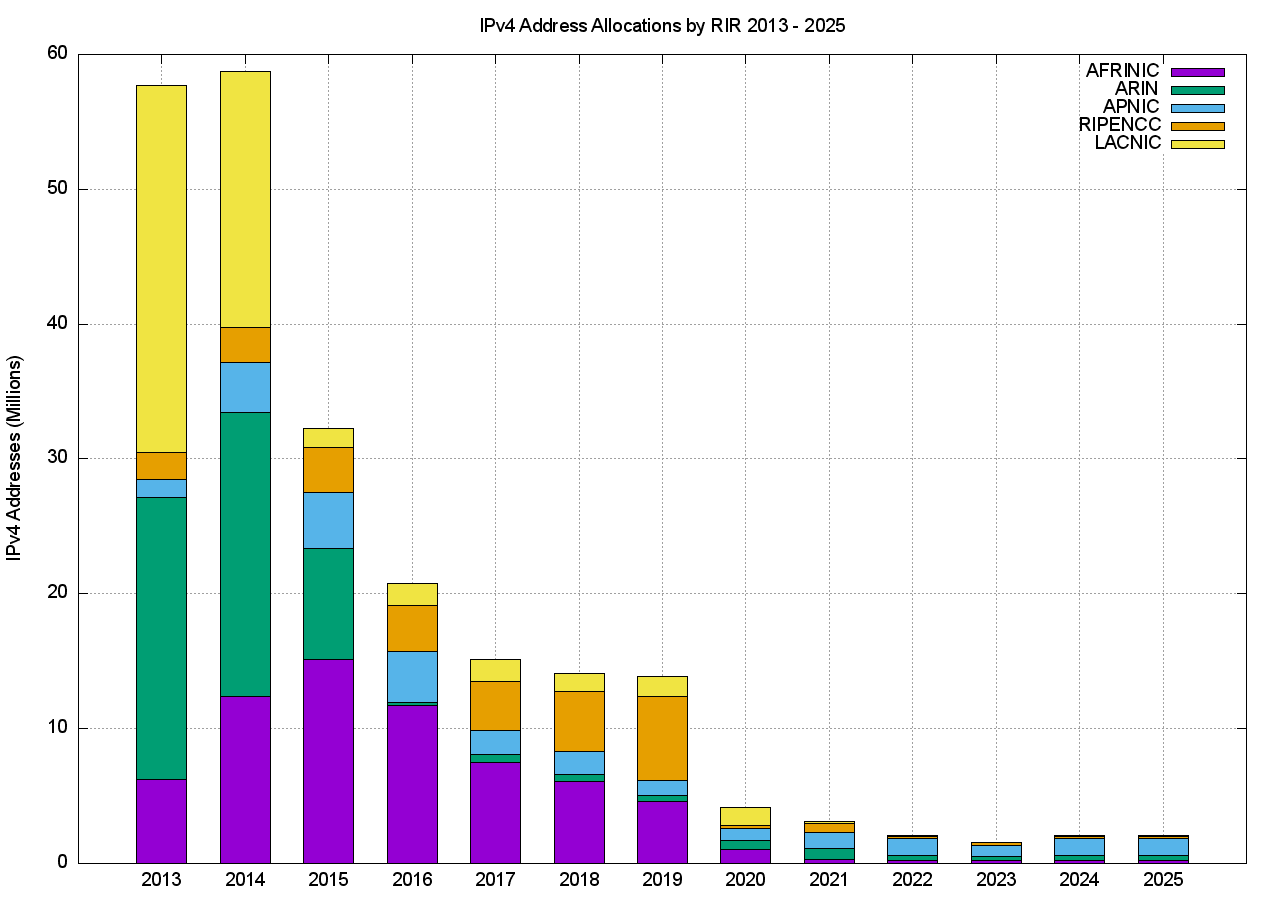
Figure 1 – IPv4 Address Allocations by RIR by year
The number of RIR IPv4 allocations by year, once again generated by using the same data analysis technique as used for Figure 1, are shown in Figure 2.
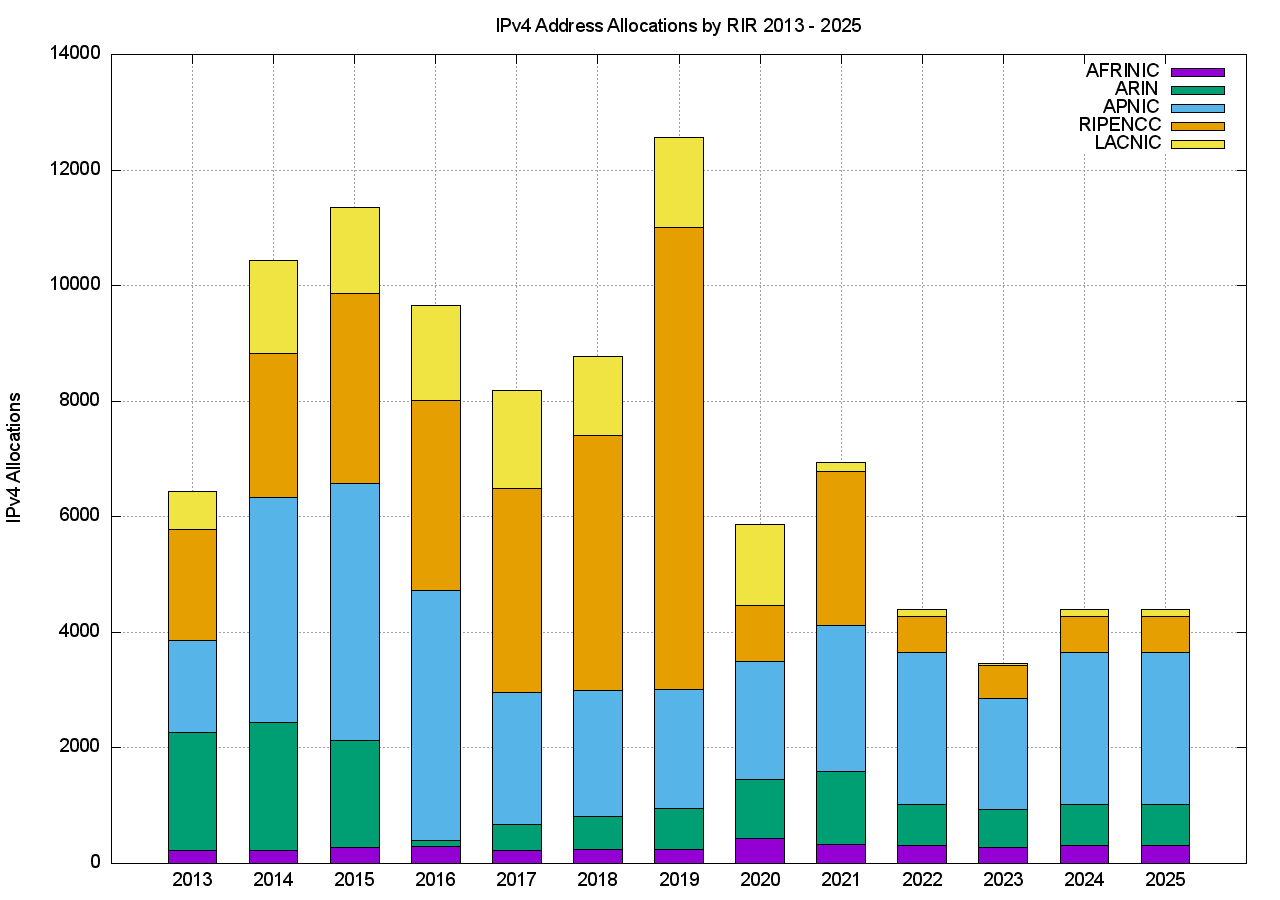
Figure 2 – IPv4 Allocations by RIR by year
It is clear from these two figures that the average size of an IPv4 address allocation has shrunk considerably in recent years, corresponding to the various IPv4 address exhaustion policies in each of the RIRs.
What’s Left in the IPv4 Address Pools?
To recap, when addresses are held by an RIR they are classified into one of three states:
- Available, indicating that the address block is available for allocation under the terms of the prevailing address allocation policies adopted by the community that is served by that RIR,
- Allocated, indicating that the address block has been allocated to an entity, and
- >Reserved, indicating that the address block is held by the RIR, but is not available for allocation at this point in time. The Reserved category covers a number of scenarios, depending on the RIR’s procedures, including the holding of an address block in a form of quarantine after its recovery by the RIR before declaring the address to be available.
The pool size of available addresses over the past five years for each RIR is shown Figure 3.
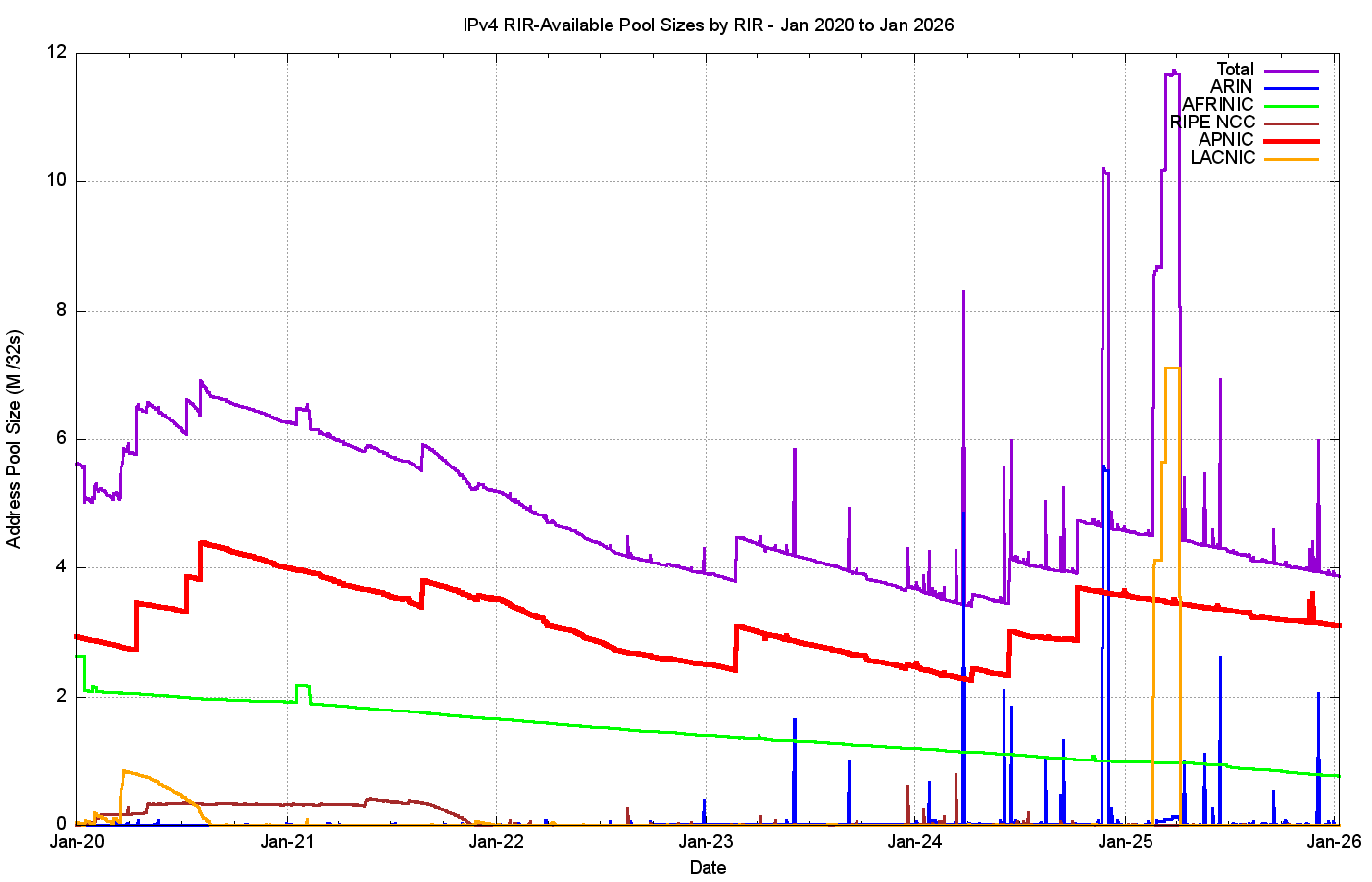
Figure 3 – IPv4 Available Pool Sizes by RIR by day – 2020 – 2026
Only APNIC and AFRINIC are operating with relatively large pools of available addresses. At the start of 2026 APNIC had some 2,849 address blocks in its registry that were marked as available, with a total pool size of 3.095M addresses. AFRINIC has 19 address blocks similarly marked, with a total pool size of 0.765M addresses. For both of these RIRs, the allocation rates from these pools are small, and even without any further returns of addresses these available address pools will likely last from some years to come at current allocation rates.
There are some 11.169M addresses in the RIRs’ reserved address pools. Between 2020 and 2025 APNIC reduced the size of its reserved address pool by some 4M addresses, and the current reserved pool is 0.454M addresses in APNIC. Both RIPE NCC and LACNIC have similarly small reserved address pools these days. The majority of the total pool of reserved address space lies with AFRINIC, which has 543 separate reserved address blocks with a total span of 4.481M addresses, and ARIN, which has 3,765 such address blocks with a total span of 5.2865M addresses. The AFRINIC pool size has been slowly increasing in size, while the ARIN pool size was declining up to 2025, and increased in size through 2025 (Figure 4).
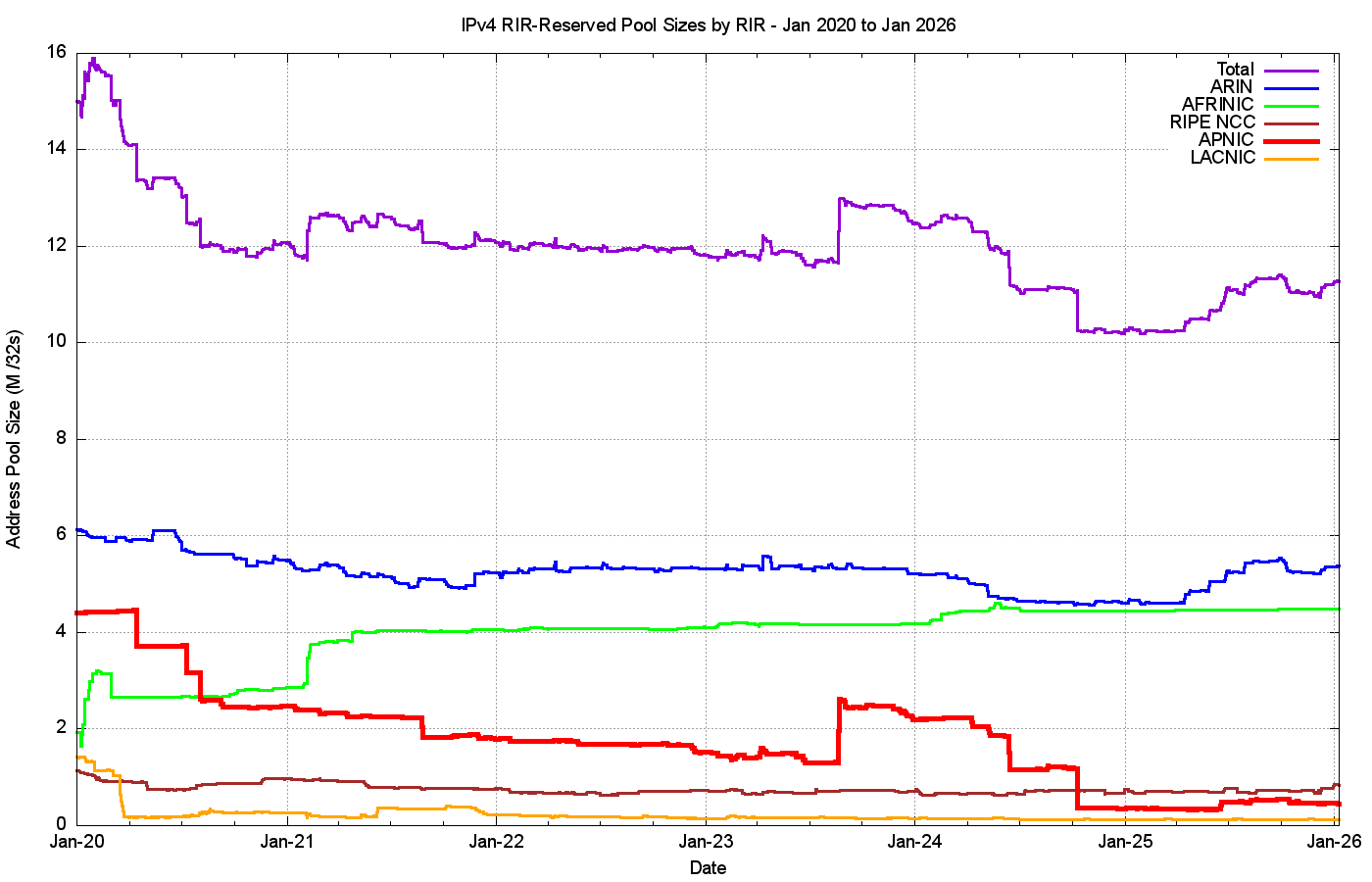
Figure 4 – IPv4 Reserved Pool Sizes by RIR by day – 2020 – 2026
At the start of 2026, 45% of the total pool of 3.687B allocated IPv4 addresses are held in ARIN’s registry, 24% in APNIC’s registry, 23% in the RIPE NCC, 5% in LACNIC and 3% in ARINIC.
IPv4 Address Transfers
The RIRs permit the registration of IPv4 transfers between address holders, as a means of allowing secondary re-distribution of addresses as an alternative to returning unused addresses to the registry. This has been in response to the issues raised by IPv4 address exhaustion, where the underlying motivation as to encourage the reuse of otherwise idle or inefficiently used address blocks through the incentives provided by a market for addresses, and to ensure that such address movement is publicly recorded in the registry system.
The number of registered transfers in the past eleven years is shown in Table 4. This number of transfers includes both inter-RIR and intra-RIR transfers. It also includes both the merger and acquisition-based transfers and the other grounds for of address transfers. Each transfer is treated as a single transaction, and in the case of inter-RIR transfers, this is accounted in the receiving RIR’s totals.
| Receiving RIR | 2013 | 2014 | 2015 | 2016 | 2017 | 2018 | 2019 | 2020 | 2021 | 2022 | 2023 | 2024 | 2025 |
|---|---|---|---|---|---|---|---|---|---|---|---|---|---|
| APNIC | 180 | 307 | 451 | 840 | 845 | 491 | 533 | 820 | 785 | 745 | 796 | 752 | 706 |
| RIPE NCC | 171 | 1,054 | 2,836 | 2,373 | 2,451 | 3,775 | 4,221 | 4,696 | 5,742 | 4,640 | 4,937 | 5,215 | 4,196 |
| ARIN | 3 | 22 | 26 | 26 | 68 | 94 | 150 | 141 | 97 | 185 | 703 | ||
| LACNIC | 2 | 3 | 9 | 17 | 20 | 17 | 12 | ||||||
| AFRINIC | 17 | 27 | 26 | 80 | 58 | 14 | 15 | 2 | |||||
| Total | 351 | 1,361 | 3,290 | 3,235 | 3,322 | 4,311 | 4,849 | 5,639 | 6,766 | 5,601 | 5,864 | 6,184 | 5,619 |
Table 4 – IPv4 Address Transfers per year
The differences between RIRs reported numbers are interesting. The policies relating to address transfers do not appear to have been adopted to any significant extent by address holders in AFRINIC and LACNIC serviced regions, while uptake in the RIPE NCC service region appears to be very enthusiastic!
A slightly different view is that of the volume of addresses transferred per year (Table 5).
| Receiving RIR | 2013 | 2014 | 2015 | 2016 | 2017 | 2018 | 2019 | 2020 | 2021 | 2022 | 2023 | 2024 | 2025 |
|---|---|---|---|---|---|---|---|---|---|---|---|---|---|
| APNIC | 2.3 | 4.1 | 6.6 | 8.2 | 4.9 | 10.0 | 4.3 | 16.6 | 6.5 | 3.7 | 2.7 | 2.5 | 2.4 |
| RIPE NCC | 2.0 | 9.6 | 11.6 | 9.2 | 24.6 | 19.5 | 26.9 | 18.2 | 16.2 | 36.9 | 20.8 | 23.0 | 22.3 |
| ARIN | 0.1 | 0.3 | 0.2 | – | 0.3 | 0.2 | 0.2 | 3.1 | 1.6 | 4.5 | 8.4 | ||
| LACNIC | – | – | – | – | 0.0 | 0.0 | 0.1 | ||||||
| AFRINIC | 0.2 | 0.5 | 1.2 | 3.4 | 0.5 | 0.1 | 0.1 | 0.0 | |||||
| Total | 4.3 | 13.7 | 18.2 | 17.6 | 29.6 | 29.7 | 31.9 | 36.2 | 26.4 | 44.3 | 25.3 | 30.2 | 33.4 |
Table 5 – Volume of Transferred IPv4 Addresses per year (Millions of addresses)
A plot of these numbers is shown in Figures 5 and 6.
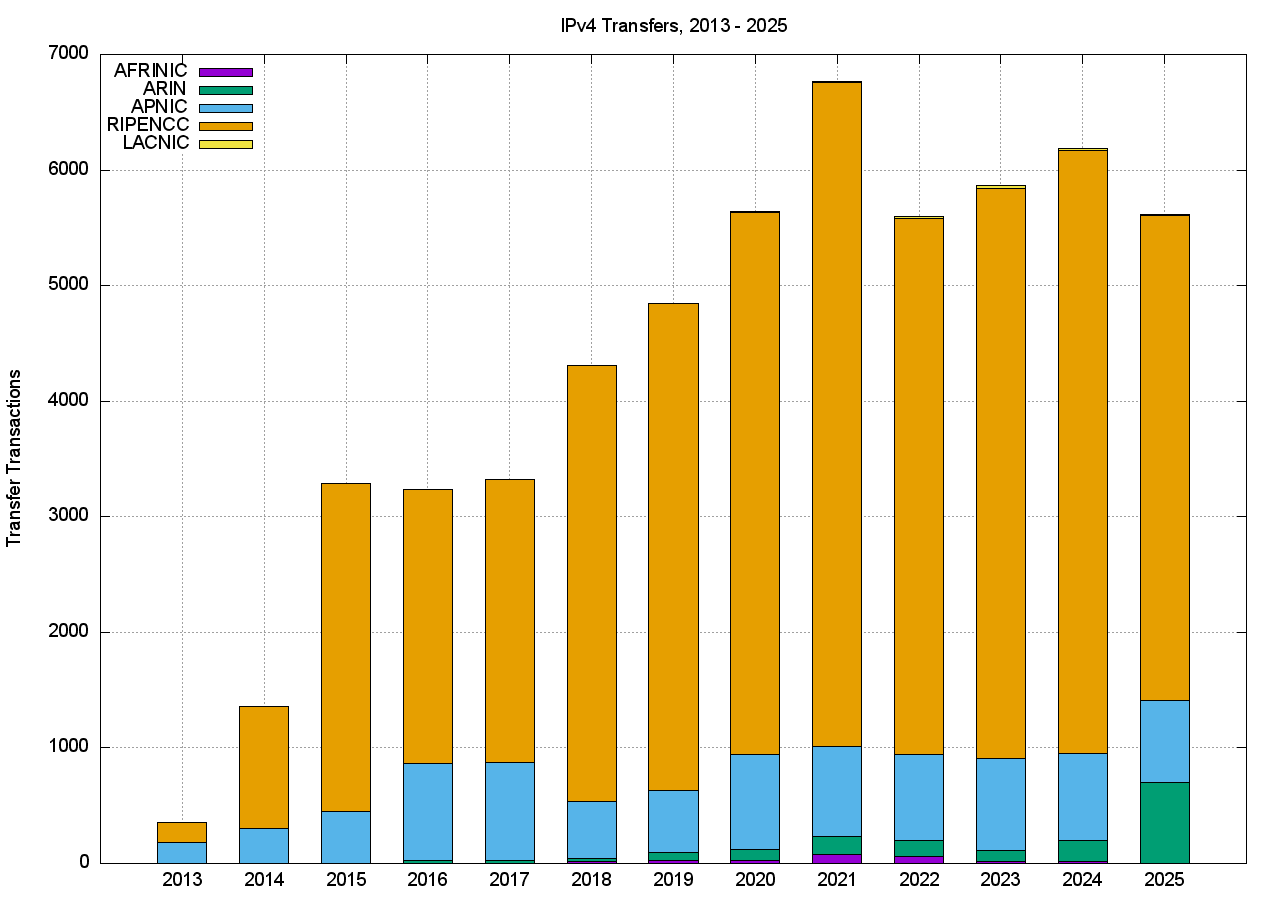
Figure 5 – Number of Transfers: 2013 – 2025
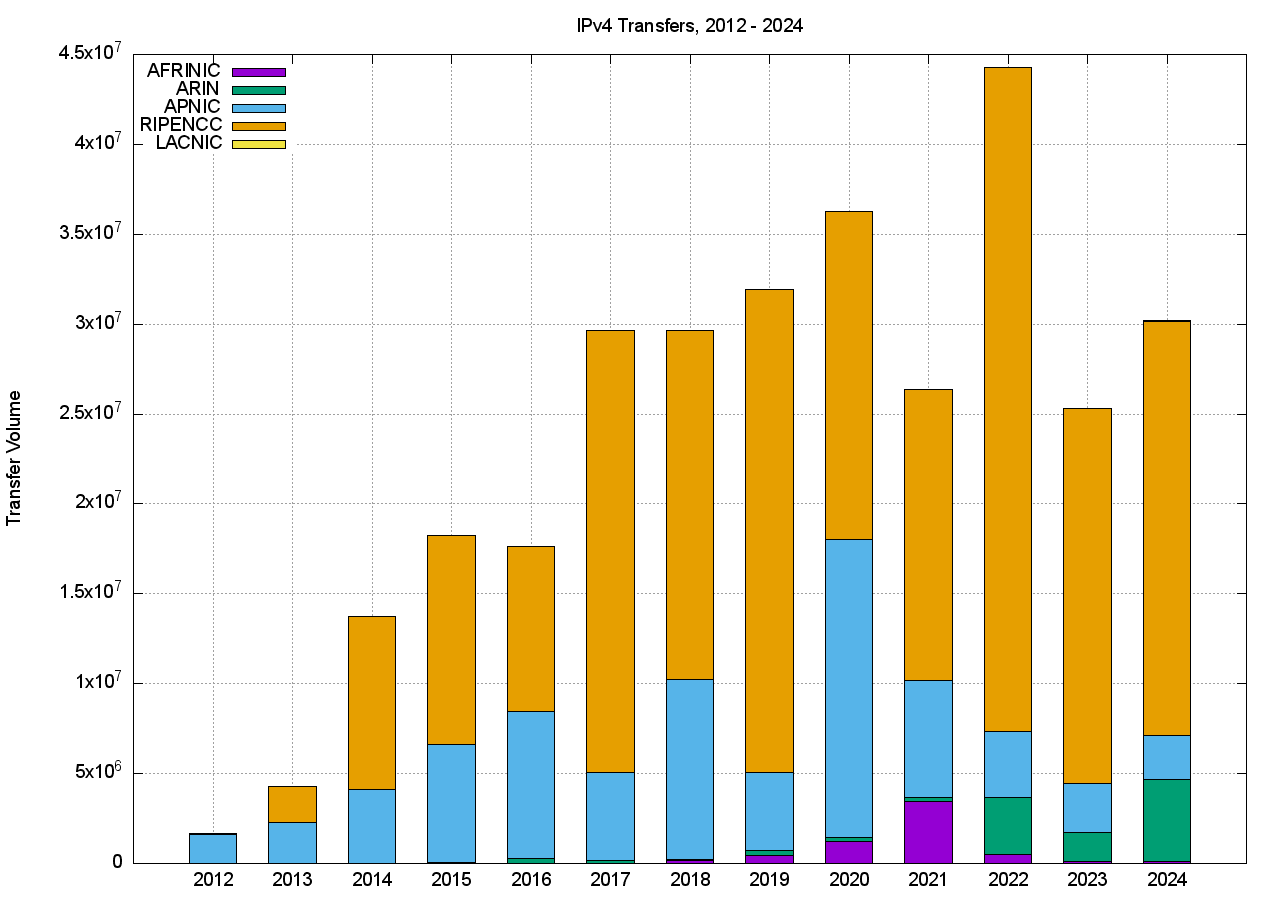
Figure 6 – Volume of Transferred Addresses: 2013 – 2025
The volumes of transferred addresses reached a peak in 2022 and declined in 2023. In the case of APNIC the peak occurred in 2020, and the APNIC 2024 volume is comparable to the volume transferred in 2013. In the ARIN region address transfers are growing in total volume, while in APINC the volume of IPv4 address transfers has largely waned.
The aggregate total of addresses that have been listed in these transfer logs since 2012 is some 342 million addresses, or the equivalent of 20.4 /8s, which is some 9.3% of the total delegated IPv4 address space of 3.7 billion addresses. However, that figure is likely to be an overestimate, as a number of address blocks have been transferred multiple times over this period.
Are Transfers Performing Unused Address Recovery?
This data raises some questions about the nature of transfers. The first question is whether address transfers have managed to be effective in dredging the pool of allocated but unadvertised public IPv4 addresses and recycling these addresses back into active use.
It was thought that by being able to monetize these addresses, holders of such addresses may have been motivated to convert their networks to use private addresses and resell their holding of public addresses. In other words, the opening of a market in addresses would provide incentive for otherwise unproductive address assets to be placed on the market. Providers who had a need for addresses would compete with other providers who had a similar need in bidding to purchase these addresses. In conventional market theory the most efficient user of addresses (here “most efficient” is based on the ability to use addresses to generate the greatest revenue) would be able to set the market price. Otherwise unused addresses would be put to productive use, and as long as demand outstrips supply the most efficient use of addresses is promoted by the actions of the market. In theory.
However, the practical experience with transfers is not so clear. The data relating to address re-cycling is inconclusive. In the period 2000 to 2010, the pool of unadvertised assigned IP4 addresses increased in size from 600M to 900M addresses, which was almost one third of the assigned address pool. In the ensuring 11 years to pool of unadvertised assigned addresses fell to around 800M addresses, with the bulk of that reduction occurring in 2015. There was a substantial reduction in the size of this unadvertised address pool at the start of 2021, due to the announcement in the Internet’s routing system of some seven /8s from the address space originally allocated to the US Department of Defence in the early days of the ARPANET. At the end of 2021 AS749 originated more IPv4 addresses than any other network, namely some 211,581,184 addresses, or the equivalent of a /4.34 in prefix length notation, or some 5% of the total IPv4 address pool. Across 2022 and 2023 the previous trend of an increasing pool of unadvertised addresses resumed. On December 12 2024, a total of some 81,224,704 addresses (the equivalent of 4.8 /8s) was advertised by ASes operated by Amazon, mainly AS16509, bringing the total pool of unadvertised addresses down to a level last observed in the year 2000. Across 2025 the pool of unadvertised assigned IP4 addresses has increased slightly (Figure 7).
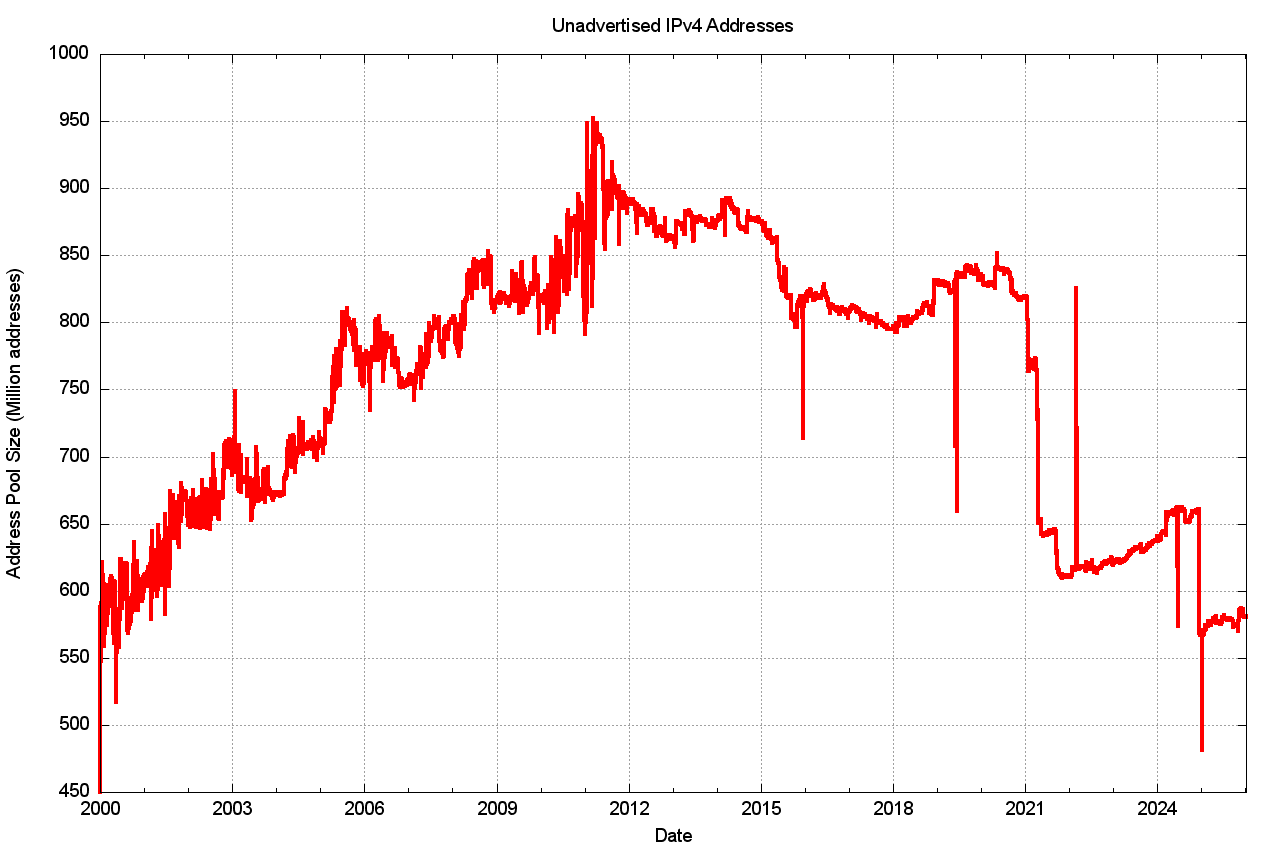
Figure 7 – IPv4 Unadvertised Address Pool Size
The larger picture of the three IPv4 address pool sizes, allocated, advertised and unadvertised address pools since the start of 2000 is shown in Figure 6. The onset of more restrictive address policies coincides with the exhaustion of the central IANA unallocated address pool in early 2011, and the period since that date has seen the RIRs run down their address pools.
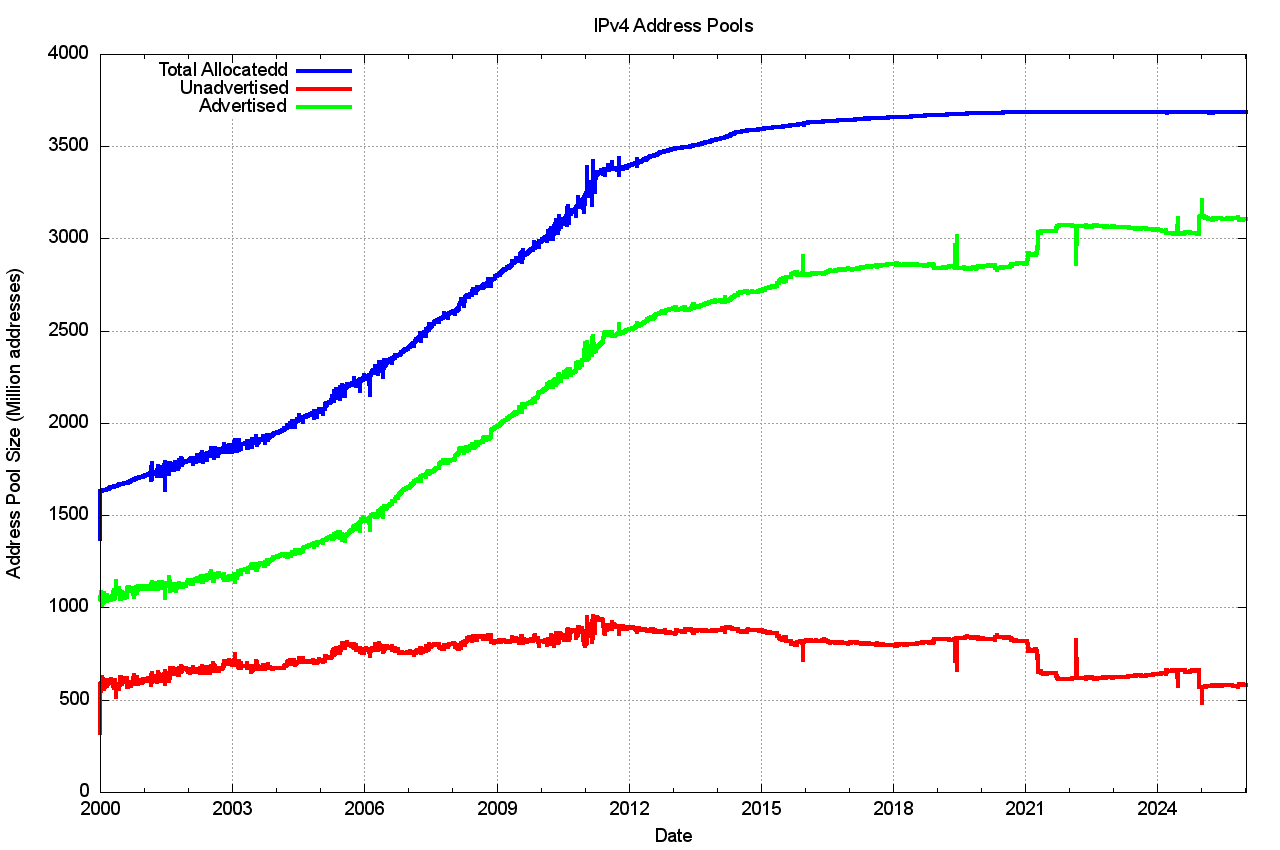
Figure 8 – IPv4 Address Pools 2000 – 2025
We can also look at the year 2025, looking at the changes in these address pools since the start of the year, as shown in Figure 9. The total span of advertised addresses fell by a total of 10M addresses through the year.
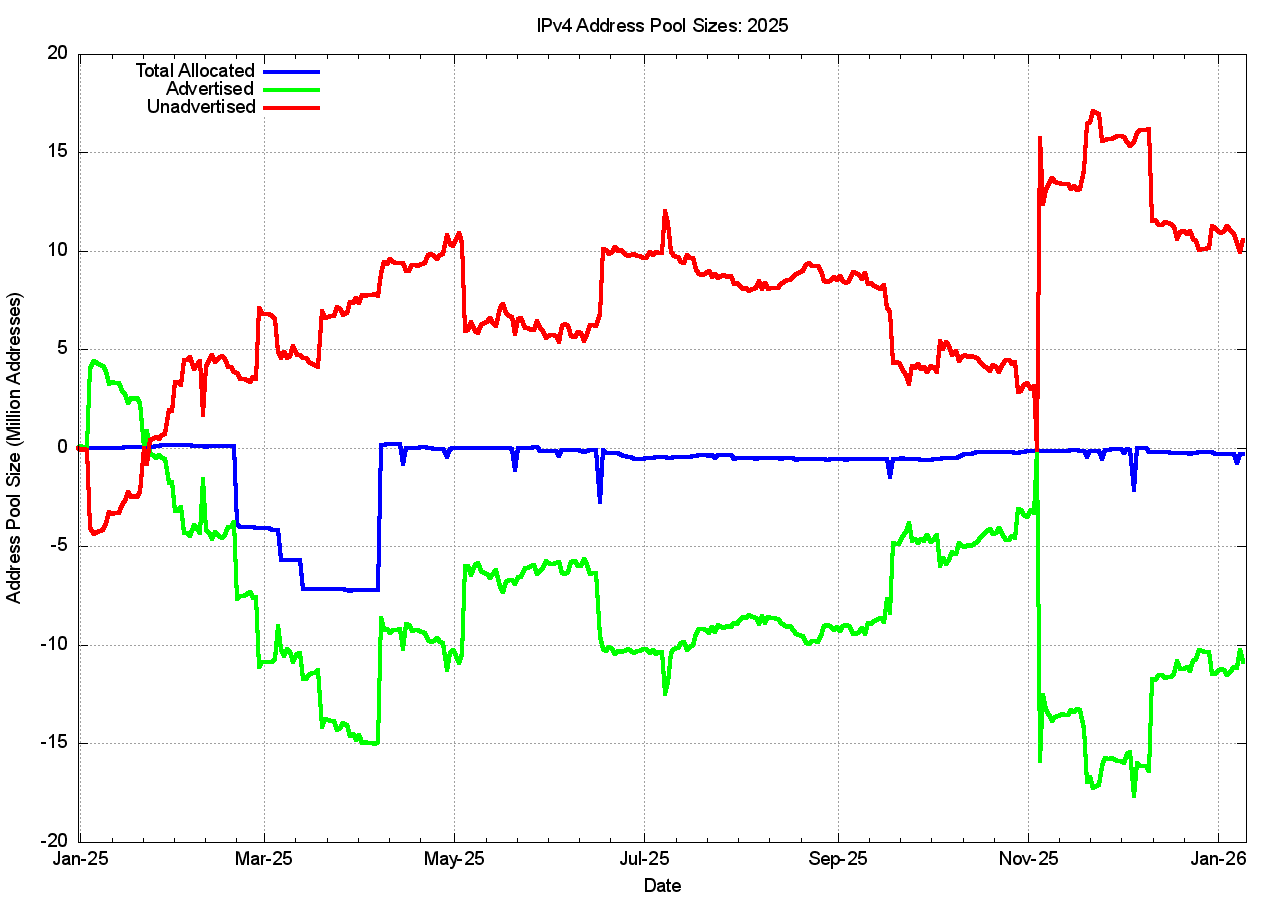
Figure 9 – IPv4 Address Pool changes through 2025
That change in the blue trace in Figure 9, the total allocated address pool, can be attributed to LACNIC, where some 7M addresses were market as available through March 2025, and then passed back into the advertised pool in early April 2025.
Four of the major step changes through the year in the advertised address span (5 January, 5 May, 5 November and 11 December) can be attributed to AS16509 (Amazon 02), and the day-by-day record of the total address span advertised by this AS is shown in Figure 10. Amazon has advertised a total of an additional 12M addresses through 2025, peaking at 168M addresses at the start of November. On the 5th November, Amazon stopped announcing a collection of prefixes with a total span of 15.744M addresses. A month later, on the 10th December some 5.039 M additional addresses were announced bringing the total span of addresses announce by AS16509 Amazon at the year’s end to 157.425 addresses, just 2.777M more than the 154.763M addresses that were announced at the start of 2025.
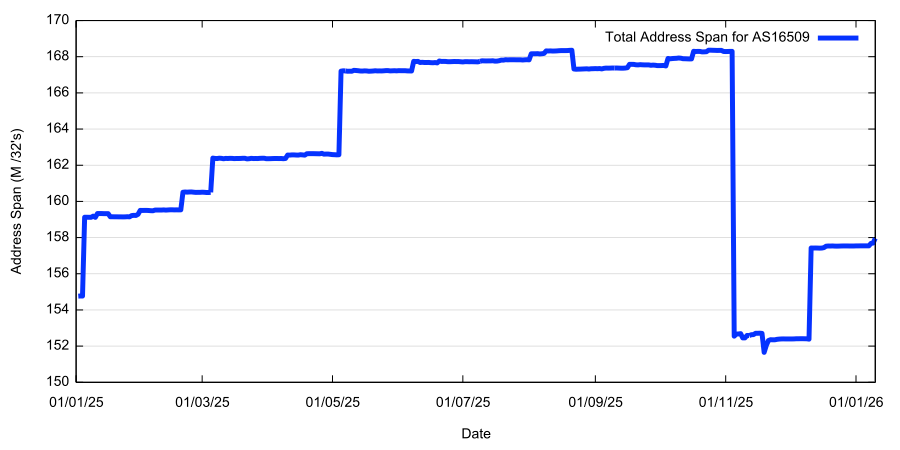
Figure 10 – Total advertised address span for AS16509 (Amazon-O2) through 2025
In relative terms, expressed as a proportion of the total pool of allocated IP addresses, the unadvertised address pool peaked at 38% of the total assigned address pool in early 2003, and then declined over the ensuing 15 years to a relatively low value of 22% at the start of 2018. The ratio has been steadily climbing since that date, with abrupt falls due to the advertisement of the legacy US Department of Defence address space in 2021, and the Amazon address announcements in December 2024 (Figure 11). The unadvertised address space now sits at some 16% of the total assigned address pool.
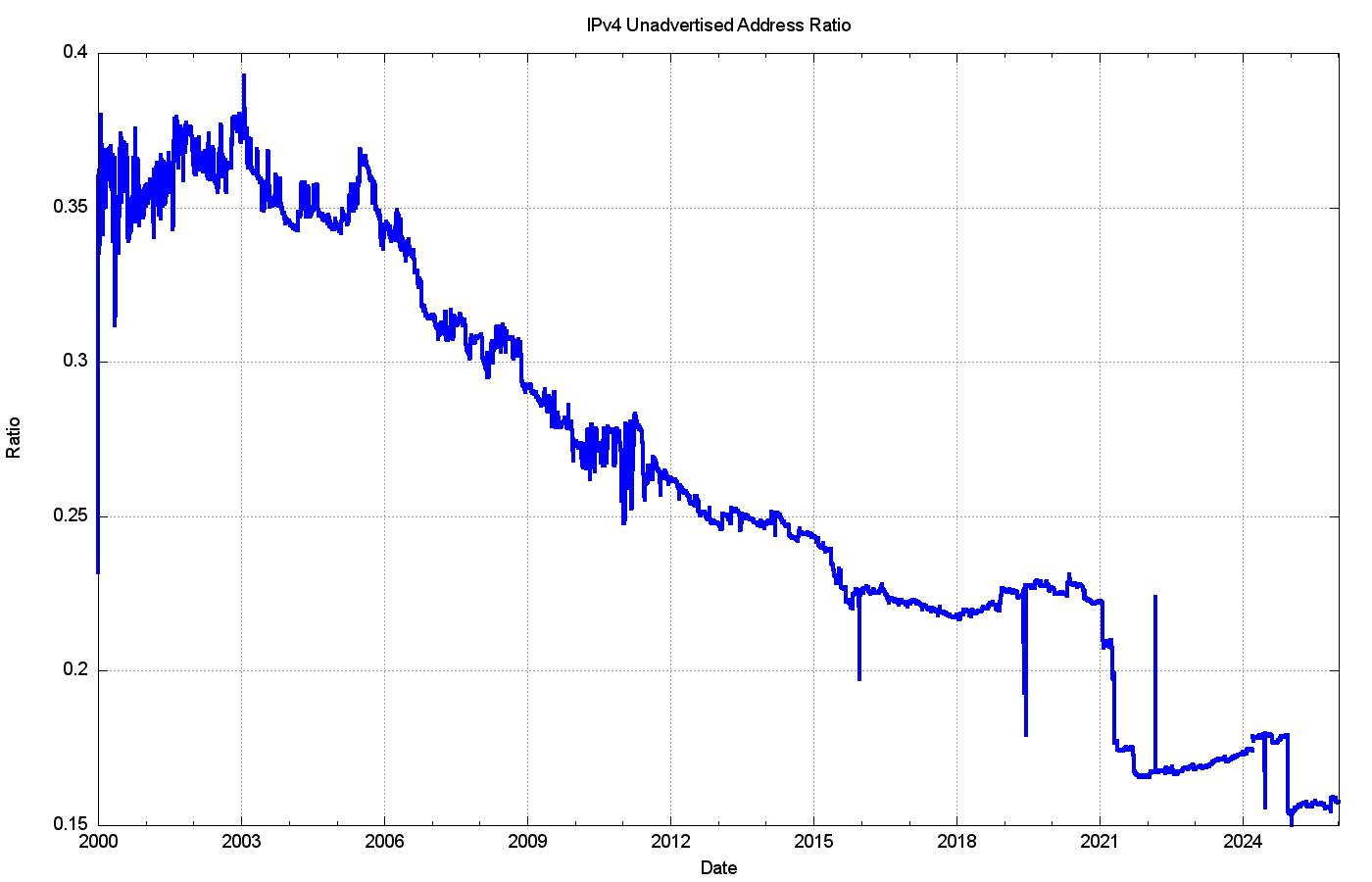
Figure 11 – Ratio of Unadvertised Pool Size to Total Pool Size: 2000 – 2026
The data behind Figure 11 gives the impression of a steady effort to recycle otherwise idle IP addresses over the past twenty-five years, and to a certain extent this has been the case. However, the large drop in this ratio in early 2021 was due to the moves by the US DoD to advertise their address holdings to the public Internet, and the large drop in late 2024 was due to Amazon announcing address space that it had previously acquired.
The transfer data points to a somewhat sluggish transfer market. The number of transfer transactions is rising, but the total volume of transferred addresses is falling for most RIRs, with the exception of the RIPE NCC (Tables 4 and 5). The address market does not appear to have been all that effective in flushing out otherwise idle addresses and re-deploying them into the routed network. However, as with all other commodity markets, the market price of the commodity reflects the balancing of supply and demand and the future expectations of supply and demand. What can be seen in the price of traded IPv4 addresses over the past 10 years?
One of the address brokers, Hilco Streambank’s IPv4.Global, publish the historical price information of transactions (if only all the address brokers did the same, as a market with open price information for transactions can operate more efficiently and fairly than markets where price information is occluded). Figure 12 uses the Hilco Streambank IPv4.Global transaction data to produce a time series of address price.
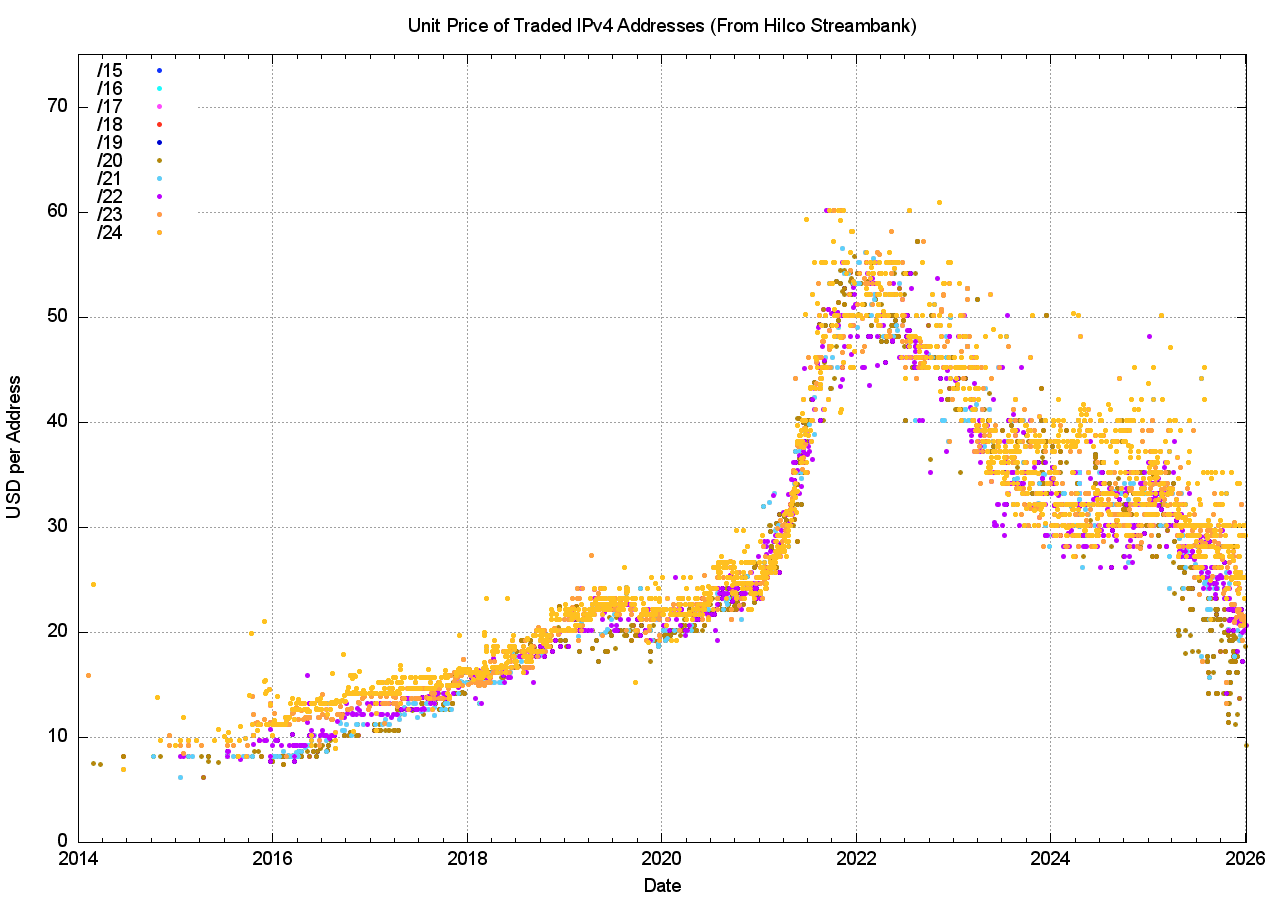
Figure 12 – IPv4 Price Time Series (data from Hilco Streambank IPv4.Global>)
There are a number of distinct behaviour modes in this time series data. The initial data prior to 2016 reflected a relatively low volume of transactions with stable pricing just below $10 per address. Over the ensuing 4 years, up to the start of 2019, the unit price doubled, with small blocks (/24s and /23s) attracting a price premium. The price stabilised for the next 18 months at between $20 to $25 per address, with large and small blocks trading as a similar unit price. The 18 months from mid-2020 up to the start of 2022 saw a new dynamic which was reflective of an exponential rise in prices, and the unit price lifted to between $45 and $60 per address by the end of 2021. The year 2022 saw the average market price drop across the year, but the variance in prices increased and trades at the end of the year were recorded at prices of between $40 to $60 per address.
This price decline continued across 2023, and by the end of 2023 IPv4 addresses were traded at unit prices of between $26 to $40. The prices of addresses across 2024 were relatively stable, but the price decline resumed across 2025, with a low of $9 per address (for a /14) and a mean of $22 per address in the most recent 40 days (up to the 10th of January 2026). The average monthly prices for each prefix size in the most recent 25 months is shown in Figure 13.
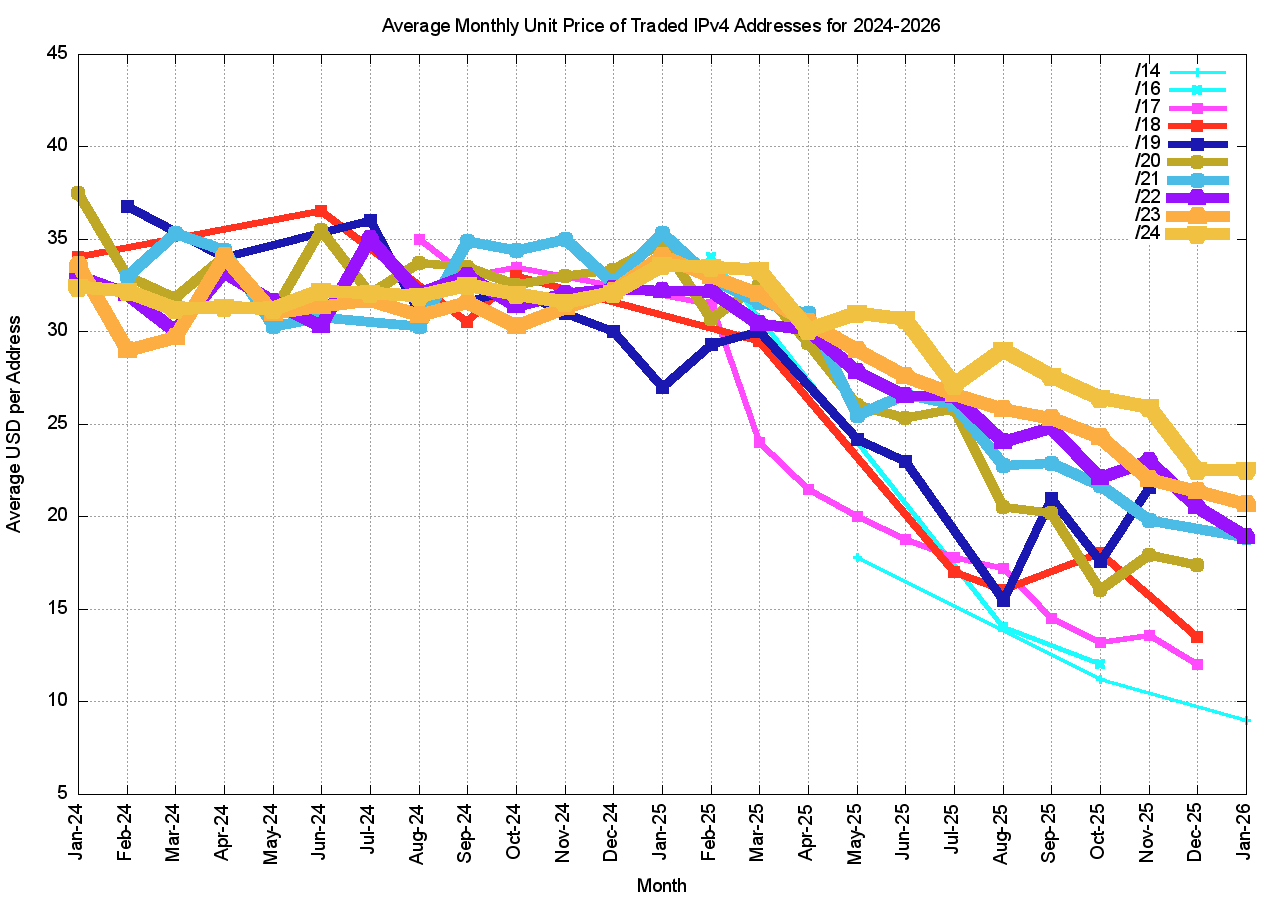
Figure 13 – Average unit price per prefix per month over 2024 – 2026
If prices are reflective of supply and demand it appears that the initial period from 2014 to 2022 saw demand increase at a far greater level than supply, and the price escalation reflected some form of perceived scarcity premium being applied to addresses. However, the subsequent price slump shows that this perception was short-lived. These days the low price of $9 per address is back to the same price that was seen in 2014. The difference this time is the range of prices if far greater, and while the mean price is around $22 per address, the price in an individual transaction as high as $34 per address. Generally, larger address blocks fetch a lower price per address in the market, and the January 2026 sale for $9 per address was for a /14 address block.
What is this price data telling us? If you were hanging onto some idle IPv4 address hoping for the price to rise, then you may have missed out! Equally if you were looking to fund your costs in transition from a IPv4-only platform to a dual-stack through the sale of part of your IPv4 address holds, then that opportunity may have already passed you by. If you are forecasting a future demand for more IPv4 addresses in your enterprise then there is no urgency to hit the market and secure IPv4 addresses. If you wait, then the price is likely to drop further.
The largest buyer on in the IPv4 market was Amazon, and it appeared that they were meeting demands from enterprise customers of their cloud-based products, a sector that has been very conservative in their moves to transition into a dual stack situation. I think it’s reasonable also make the supposition that they saw the price escalation in the period 2014 to 2018 as a signal of a longer-term trend, so securing as much as their forecast future need for IPv4 addresses made sense for them in a rising market. However, once the big data centre buyers had secured their address inventory they then existed the market, and the remainder of the buyers had insufficient volume to sustain the price. Demand fell off and the price slumped from the start of 2022 onward.
It’s not as if this IPv4 address market has collapsed completely, and Figure 6 shows that in 2025 some 33M IPv4 addresses were transferred within the RIR registry system. But the declining price suggests that supply is running higher than demand and while buyers appear to be willing to pay a price premium to purchase from a preferred registry or with a preferred provenance, the average price per address has dropped by some 50% across 2025.
Are there any supply-side issues in the market? Is the supply of tradable IPv4 address declining? One way to provide some insight into answering this question is to look at the registration age of transferred addresses. Are such addresses predominately recently allocated addresses, or are they longer held address addresses where the holder is wanting to realise the inherent value in otherwise unused assets? The basic question concerns the age distribution of transferred addresses where the age of an address reflects the period since it was first allocated or assigned by the RIR system.
The cumulative age distribution of transferred addresses by transaction is shown on a year-by-year basis in Figures 14 and 15.
In the period 2019 – 2021 a visible subset of address holders appeared to hold recently allocated addresses for the policy-mandated minimum holding period of some 2 years and then transfer these addresses on the market. In previous years some 8% of addresses that were transferred were originally allocated up to 5 years prior to the transfer. In 2022 this number has fallen to 4%, which is presumably related to the smaller volumes of address allocations in 2022 rather than any change in behaviours of address holders, and in 2023 and 2024 this behaviour has all but disappeared, due to the very small volume of address allocations by the RIRs rather than any change in the behaviour of address holders.
The bulk of transferred addresses in 2025 (more than 55% of the total volume) were originally allocated between 13 and 25 years ago, or between 2000 and 2012.
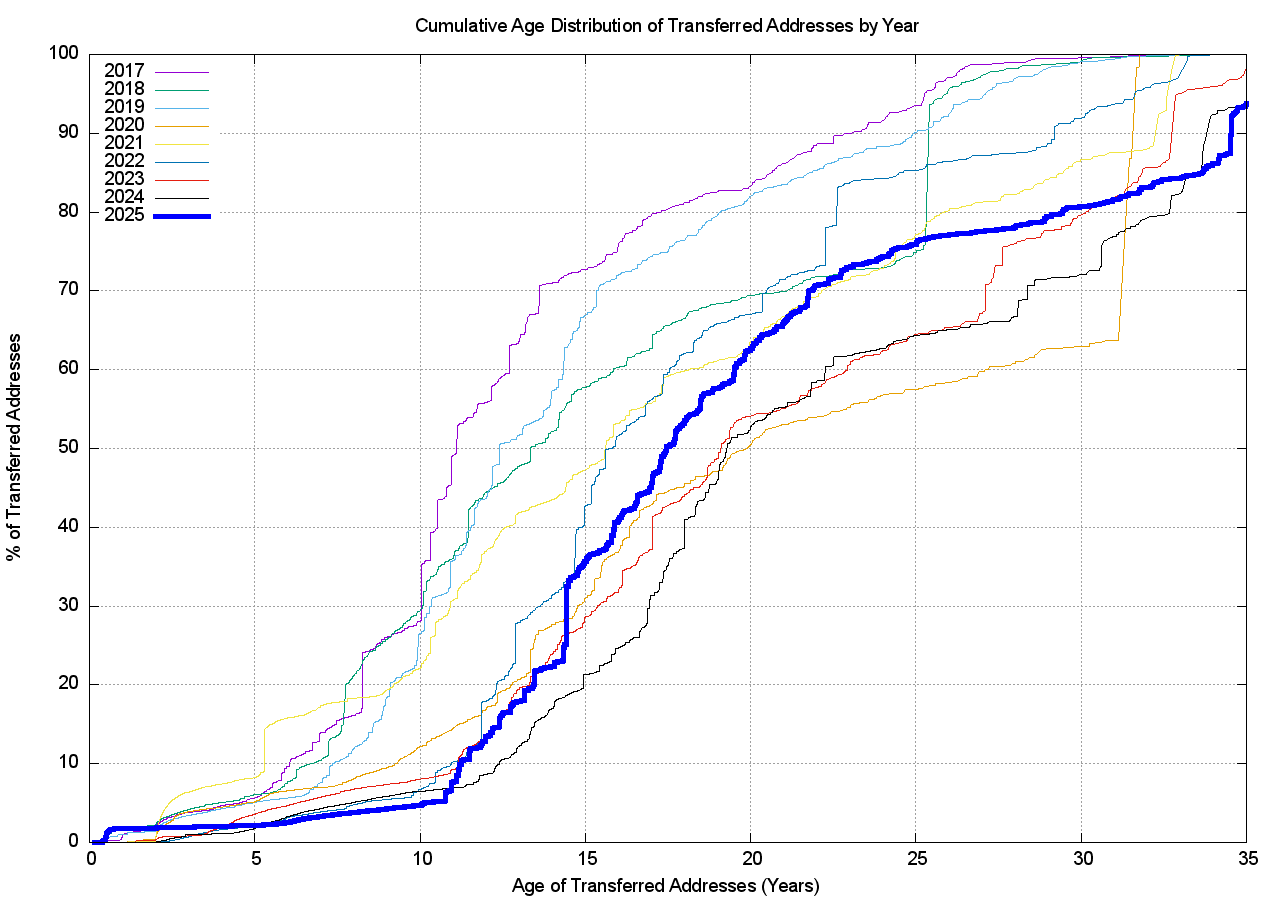
Figure 14 – Age distribution of transferred addresses
Figure 15 shows the cumulative age distribution of transfer transactions (as distinct from the volume of transferred addresses), and the disparity between the two distributions for 2025 show that recent individual allocations have been far smaller in size but are still being traded. Some 20% of the recorded transfer transactions in 2025 refer to an address prefix that was allocated within the past 7 years, yet these transactions encompass less than 2% of the inventory of transferred addresses in 2025. Some 40% of the volume of transferred addresses were originally allocated 20 or more years ago, while these transactions are recorded in just 28% of the transfers recorded in 2025.
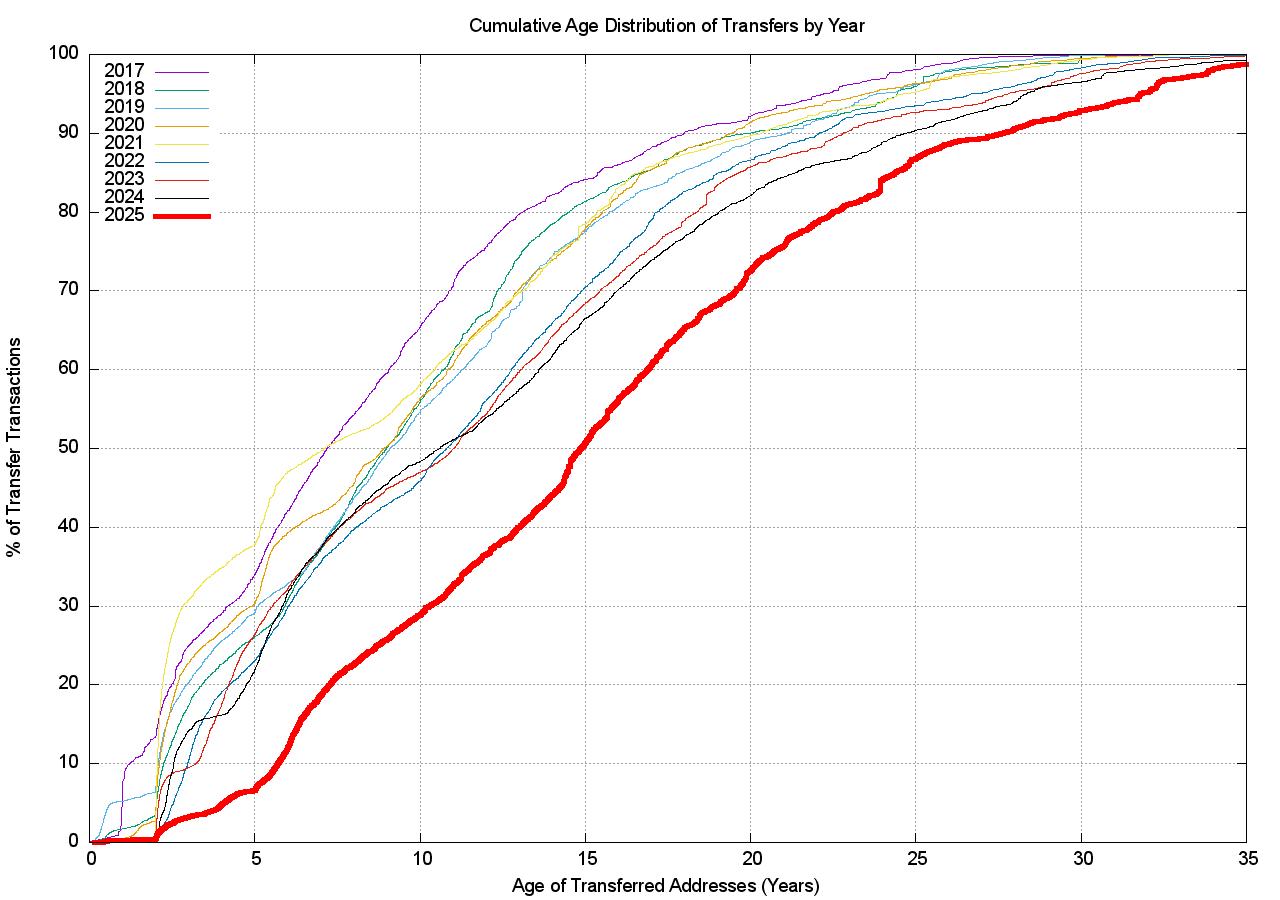
Figure 15 – Age distribution of Transfer Transactions
There appear to be a number of motivations driving the transfer process.
One is when demand is outstrips supply and price escalation is an inevitable consequence. This may motivate some network operators to purchase addresses early, in the expectation that further delay will encounter higher prices. This factor also may motivate some address holder to defer the decision to sell their addresses, in that delay will improve the price. Taken together, these motivations can impair market liquidity and create a feedback loop that causes price escalation. This factor appeared to be a major issue in the period between 2019 and 2022, but these days the opposite is the case and supply far outstrips demand in the addrtess market.
The second factor is IPv6 deployment. Many applications prefer to use IPv6 over IPv4 if they can (the so-called “Happy Eyeballs” protocol for protocol selection). For a dual stack access network this means that the more the services that they use are provisioned with dual stack, then the lower the traffic volume that uses IPv4, and the lower the consumption pressure on their IPv4 CG-NAT address pools, which reduces their ongoing demand for IPv4 address space. This reduced demand for additional IPv4 addresses has an impact on the market price. A falling market price acts as a motivation for sellers to bring their unused address inventory to market sooner, as further delay will only result in a lower price.
The overriding feature of this address market is the level of uncertainty within the market over the state of the IPv6 transition, coupled with the uncertainty over the further growth of the network. This high degree of uncertainty may lie behind the very high variance of individual transfer transaction prices, as shown in Figure 12 for 2025. Have we finally managed to deploy enough network infrastructure in both IPv4 and IPv6 to get ahead of the demand pressures? Are we now looking at a market which is currently saturated with sufficient addresses and associated service platform infrastructure?
Do Transfers Fragment the Address Space?
The next question is whether the transfer process is further fragmenting the address space by splitting up larger address blocks into successively smaller address blocks. There are 56,629 transactions described in the RIRs’ transfer registries from the start of 2012 until the start of 2026, and of these 14,831 entries list transferred address blocks that are smaller than the original allocated block. In other words, some 26% of transfers implicitly perform fragmentation of the original allocation.
These 14,831 transfer entries that have fragmented the original allocation are drawn from 9,231 original allocations. On average the original allocation is split into 1.9 smaller address blocks. This data implies that the answer to this question is that address blocks are being fragmented as a result of address transfers, but in absolute terms this is not a major issue. There are some 253,021 distinct IPv4 address allocation records in the RIRs registries as of the end of 2025, and the fragmentation reflected in 14,831 more specific entries of original allocation address blocks represents around 5.9% of the total pool of allocated address prefixes.
Imports and Exports of Addresses
The next question concerns the international flow of transferred addresses. Let’s look at the ten economies that sourced the greatest volume of transferred addresses, irrespective of their destination (i.e. including ‘domestic’ transfers within the same economy) (Table 6), and the ten largest recipients of transfers (Table 7), and the ten largest international address transfers (Table 8). We will use the RIR-published transfer data for the year 2024 as basis for these tables.
| Rank | CC | Addresses | Source Economy |
|---|---|---|---|
| 1 | US | 11,747,840 | USA |
| 2 | BR | 7,113,216 | Brazil |
| 3 | DE | 4,375,552 | Germany |
| 4 | GB | 2,706,432 | Ukraine |
| 5 | IT | 778,240 | Italy |
| 6 | ES | 655,872 | Spain |
| 7 | IR | 488,960 | Iran |
| 8 | NL | 479,232 | Netherlands |
| 9 | RU | 451,072 | Russian Federation |
| 10 | JP | 436,224 | Japan |
| 11 | AU | 369,408 | Australia |
| 12 | CN | 295,936 | China |
| 13 | UA | 283,136 | Ukraine |
| 14 | HK | 280,576 | Hong Kong (SAR) |
| 15 | IN | 277,248 | India |
| 16 | IE | 236,544 | Ireland |
| 17 | SE | 187,136 | Sweden |
| 18 | KR | 184,064 | Republic of Korea |
| 19 | FR | 182,272 | France |
| 20 | CZ | 180,224 | Czech Republic |
Table 6 – Top 20 Countries Sourcing Transferred IPv4 addresses in 2025
| Rank | CC | Addresses | Destination Economy |
|---|---|---|---|
| 1 | GB | 7,581,696 | Ukraine |
| 2 | US | 5,460,736 | USA |
| 3 | DE | 5,201,664 | Germany |
| 4 | BR | 4,082,944 | Brazil |
| 5 | SG | 1,248,768 | Singapore |
| 6 | IT | 1,021,696 | Italy |
| 7 | RU | 777,216 | Russian Federation |
| 8 | ES | 669,184 | Spain |
| 9 | NL | 622,080 | Netherlands |
| 10 | SE | 482,816 | Sweden |
| 11 | IN | 381,952 | India |
| 12 | HK | 343,040 | Hong Kong (SAR) |
| 13 | FR | 329,728 | France |
| 14 | UA | 264,192 | Ukraine |
| 15 | SA | 256,512 | Saudi Arabia |
| 16 | AE | 256,256 | United Arab Emirates |
| 17 | KR | 250,368 | Republic of Korea |
| 18 | CN | 243,712 | China |
| 19 | ID | 240,128 | Indonesia |
| 20 | JP | 229,120 | Japan |
Table 7 – Top 20 Countries Receiving Transferred IPv4 addresses in 2025
There are many caveats about this data collection, particularly relating to the precise meaning of this economy-based geolocation. Even if we use only the country-code entry in the RIRs’ registry records, then we get a variety of meanings. Some RIRs use the principle that the recorded country code entry corresponds to the physical location of the headquarters of nominated entity that is the holder of the addresses, irrespective of the locale where the addresses are used on the Internet. Other RIRs allow the holder to update this geolocation entry to match the holder’s intended locale where the addresses will be used. It is generally not possible to confirm the holder’s assertion of location, so whether these self-managed records reflect the actual location of the addresses or reflect a location of convenience is not always possible to determine.
When we look at the various geolocation services, of which Maxmind is a commonly used service, there are similar challenges in providing a geographic location service. At times this is not easy to establish, such as with tunnels used in VPNs. Is the “correct” location the location of the tunnel ingress or tunnel egress? Many of the fine-grained differences in geolocation services reflect the challenges in dealing with VPNs and the various ways these location services have responded. There is also the issue of cloud-based services. Where the cloud service uses anycast, then the address is located in many locations at once. In the case where the cloud uses conventional unicast, the addresses use may be fluid across the cloud service’s points of presence based on distributing addresses to meet the demands for the service. The bottom line is that these location listings are a “fuzzy” approximation rather than a precise indication of location.
With that in mind let’s now look at imports and exports of addresses of 2025 transfers where the source and destination of the transfers are in different economies. Some 2,421 transfers appear to result in a movement of addresses between countries, involving a total of 18,729,216 addresses. The 20 largest country pairs are shown in Table 8.
| Rank | From | To | Addresses (M) | Source | Destination |
|---|---|---|---|---|---|
| 1 | US | GB | 5,880,576 | USA | UK |
| 2 | BR | US | 2,682,880 | Brazil | USA |
| 3 | US | DE | 935,936 | USA | Germany |
| 4 | DE | US | 560,384 | Germany | USA |
| 5 | BR | SG | 458,752 | Brazil | Singapore |
| 6 | US | SG | 454,400 | USA | Singapore |
| 7 | US | ES | 395,264 | USA | Spain |
| 8 | JP | US | 286,720 | Japan | USA |
| 9 | GB | SE | 273,408 | UK | Sweden |
| 10 | GB | US | 235,008 | UK | USA |
| 11 | US | SA | 232,704 | USA | Saudi Arabia |
| 12 | AU | US | 219,648 | Australia | USA |
| 13 | US | LT | 214,016 | USA | Lithuania |
| 14 | GB | DE | 213,248 | UK | Germany |
| 15 | US | IT | 202,752 | USA | Italy |
| 16 | US | PA | 196,864 | USA | Panama |
| 17 | US | RU | 196,608 | USA | Russian Federation |
| 18 | US | BR | 196,608 | USA | Brazil |
| 19 | US | NL | 187,136 | USA | Netherlands |
| 20 | US | HK | 180,224 | USA | Hong Kong SAR |
Table 8 – Top 20 Economy-to-Economy IPv4 address transfers in 2025
The 2025 transfer logs also contain 3,198 domestic address transfers, with a total of 14,261,856 addresses, with the largest activity by address volume in domestic transfers in the Brazil (4M), Germany (4M), UK (1.5M), US (1.1M), Italy (0.8M) and the Russian Federation (0.4M).
An outstanding question about this transfer data is whether all address transfers that have occurred have been duly recorded in the registry system. This question is raised because registered transfers require conformance to various registry policies, and it may be the case that only a subset of transfers are being recorded in the registry as a result. This can be somewhat challenging to detect, particularly if such a transfer is expressed as a lease or other form of temporary arrangement, and if the parties agree to keep the details of the transfer confidential.
It might be possible to place an upper bound on the volume of address movements that have occurred in any period is to look at the Internet’s routing system. One way to shed some further light on what this upper bound on transfers might be is through a simple examination of the routing system, looking at addresses that were announced in 2025 by comparing the routing stable state at the start of the year with the table state at the end of the year (Table 9).
| Jan-25 | Jan-26 | Delta | Unchanged | Re-Home | Removed | Added | ||
|---|---|---|---|---|---|---|---|---|
| Announcements | 955,963 | 1,049,909 | 53,946 | 878,092 | 29,699 | 88,172 | 142,118 | |
| Root Prefixes: | 469,272 | 505,731 | 36,459 | 411,634 | 20,623 | 30,321 | 59,826 | |
| Address Span (M) | 3,117.65 | 3,106.37 | -11.28 | 2,944.99 | 37.97 | 127.86 | 95.77 | |
| More Specifics: | 526,691 | 544,178 | 17,487 | 294,126 | 9,076 | 57,851 | 82,292 | |
| Address Span (M) | 899.75 | 872.16 | -27.59 | 773.50 | 19.84 | 81.49 | 89.05 |
Table 9 – IPv4 BGP changes over 2025
While the routing table grew by 53,946 entries over the year, the nature of the change is slightly more involved. Some 88,172 prefixes that were announced at the start of the year were removed from the routing system at some time through the year, and 142,118 prefixes were announced by the end of the year that were not announced at the start of the year. More transient prefixes may have appeared and been withdrawn throughout the year of course, but here we are comparing two snapshots rather than looking at every update message. A further 29,699 prefixes had changed their originating AS number, indicating some form of change in the prefix’s network location in some manner.
If we look at the complete collection of BGP updates seen from an individual BGP vantage point (AS 131072) across all of 2025 we see a larger collection of transient address prefixes. A total of 1,270,968 distinct prefixes were observed through 2025. That implies that some 221,059 additional prefixes were seen at some point through the year, starting from the initial set as January 2025.
We can compare these prefixes that changed in 2025 against the transfer logs for the two-year period 2024 and 2025. Table 10 shows the comparison of these routing numbers against the set of transfers that were logged in these two years.
| Type | Listed | Unlisted | Ratio |
|---|---|---|---|
| Re-Homed | |||
| All | 1,991 | 26,722 | 6.9% |
| Root Prefixes | 927 | 12,711 | 6.8% |
| Removed | |||
| All | 3,172 | 85,000 | 3.6% |
| Root Prefixes | 1,869 | 285 | 86.8% |
| Added | |||
| All | 14,457 | 127,571 | 10.2% |
| Root Prefixes | 12,686 | 47,140 | 21.2% |
Table 10 – Routing changes across 2025 compared to the Transfer Log Entries for 2024 – 2025
These figures show that some 7% of changes in advertised addresses from the beginning to the end of the year are reflected as changes as recorded in the RIRs’ transfer logs. This shouldn’t imply that the remaining changes in advertised prefixes reflect unrecorded address transfers. There are many reasons for changes in the advertisement of an address prefix and a change in the administrative controller of the address is only one potential cause. However, it does establish some notional upper ceiling on the number of movements of addresses in 2025, some of which relate to transfer of operational control of an address block, that have not been captured in the transfer logs.
Finally, we can perform an age profile of the addresses that were added, removed and re-homed during 2025 and compare it to the overall age profile of IPv4 addresses in the routing table. This is shown in Figure 16. This figure show that address prefixes added to the routing table tend to be “younger” than average. One half of all added address prefixes are 15 years old or less, while for all advertised address prefixes 50% of such prefixes are 17 years old or younger. Prefixes that are changing their originating network (“re-Homing”) tend to be older than average, and 50% of all rehomed prefixes are 15 years old or older.
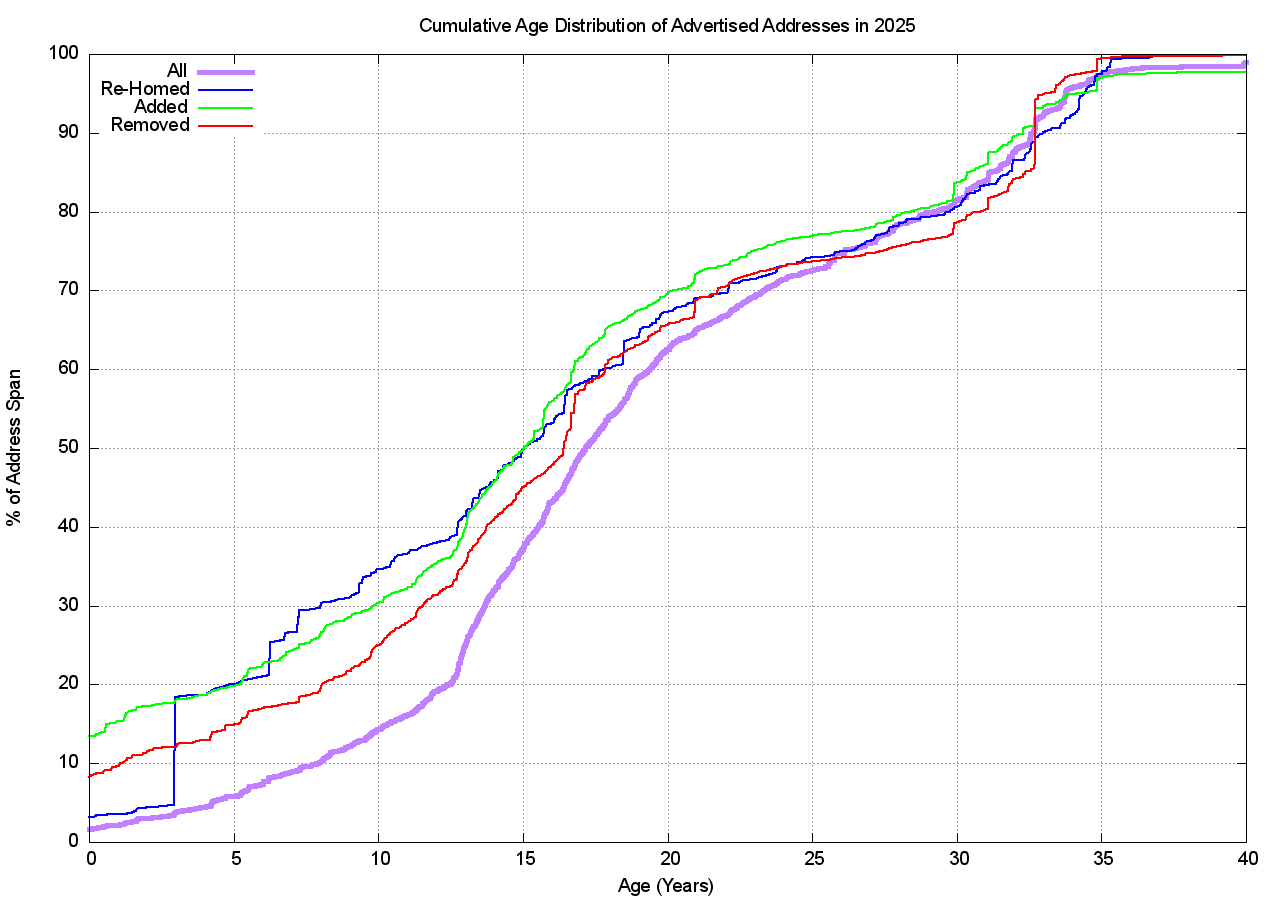
Figure 16 – Changes to the BGP routing table across 2025 by Address Prefix Age
As IPv4 moves into its final stages we are perhaps now in a position to take stock of the overall distribution of IPv4 addresses and look at where the addresses landed up. Table 11 shows the 20 economies that have the largest pools of allocated IPv4 addresses. However, I have to note that the assignation of a country code in an address registration reflects the country where address holder is located (the corporate location), and not necessarily the country where the addresses will be deployed.
| Rank | CC | IPv4 Pool | % Total | Per-Capita | Economy |
|---|---|---|---|---|---|
| 1 | US | 1,610,004,832 | 43.7% | 4.67 | USA |
| 2 | CN | 343,148,544 | 9.3% | 0.24 | China |
| 3 | JP | 188,742,464 | 5.1% | 1.55 | Japan |
| 4 | GB | 141,092,616 | 3.8% | 2.07 | UK |
| 5 | DE | 125,335,872 | 3.4% | 1.51 | Germany |
| 6 | KR | 112,490,496 | 3.1% | 2.18 | Republic of Korea |
| 7 | FR | 82,105,648 | 2.2% | 1.26 | France |
| 8 | BR | 79,973,120 | 2.2% | 0.36 | Brazil |
| 9 | CA | 67,666,432 | 1.8% | 1.71 | Canada |
| 10 | IT | 54,150,720 | 1.5% | 0.93 | Italy |
| 11 | NL | 47,845,216 | 1.3% | 2.70 | Netherlands |
| 12 | AU | 46,192,640 | 1.3% | 1.70 | Australia |
| 13 | RU | 44,887,360 | 1.2% | 0.31 | Russian Federation |
| 14 | IN | 41,819,648 | 1.1% | 0.03 | India |
| 15 | TW | 35,723,264 | 1.0% | 1.49 | Taiwan |
| 16 | ES | 32,186,752 | 0.9% | 0.68 | Spain |
| 17 | SE | 31,439,400 | 0.9% | 2.92 | Sweden |
| 18 | MX | 28,958,720 | 0.8% | 0.22 | Mexico |
| 19 | SG | 27,180,032 | 0.7% | 4.45 | Singapore |
| 20 | ZA | 27,145,216 | 0.7% | 0.44 | South Africa |
| 3,687,097,368 | 100% | 0.45 | World |
Table 11 – IPv4 Allocated Address Pools per National Economy as of January 2026
If we divide this address pool by the current population of each national entity, then we can derive an address per capita index. The global total of 3.69 billion allocated addresses with an estimated global population of 8 billion people gives an overall value of 0.45 IPv4 addresses per capita.
| Rank | CC | IPv4 Pool | % Total | Per-Capita | |
|---|---|---|---|---|---|
| 1 | SC | 7,475,456 | 0.2% | 68.50 | Seychelles |
| 2 | VA | 10,752 | 0.0% | 20.10 | Holy See |
| 3 | GI | 235,264 | 0.0% | 7.18 | Gibraltar |
| 4 | VG | 166,144 | 0.0% | 5.18 | British Virgin Islands |
| 5 | US | 1,611,699,808 | 43.7% | 4.68 | USA |
| 6 | SG | 26,597,376 | 0.7% | 4.35 | Singapore |
| 7 | MU | 4,780,032 | 0.1% | 3.67 | Mauritius |
| 8 | SE | 31,078,888 | 0.8% | 2.89 | Sweden |
| 9 | CH | 25,444,472 | 0.7% | 2.85 | Switzerland | 10 | NO | 15,542,032 | 0.4% | 2.79 | Norway |
| XA | 3,687,386,072 | 100.0% | 0.45 | World |
Table 12 – IPv4 Allocated Address Pools ranked by per-Capita holdings
IPv4 Address Leasing
It is worth noting that the address market includes leasing as well as sales. Should an entity who requires IPv4 addresses enter the market and perform an outright purchase of the addresses from an existing address holder, or should they execute a timed leased to have the use of these addresses for a specified period and presumably return these addresses at the end of the lease? This lease versus buy question is a very conventional question in market economics and there are various well-rehearsed answers to the question. They tend to relate to the factoring of market information and scenario planning.
If a buyer believes that the situation that led to the formation of a market will endure for a long time, and the goods being traded on the market are in finite supply while the level of demand for these goods is increasing, then the market will add an escalating scarcity premium to the price goods being traded. The balancing of demand and supply becomes a function of this scarcity premium imposed on the goods being traded. Goods in short supply tend to become more expensive to buy over time. A holder of these goods will see an increase in the value of the goods that they hold. A lessee will not.
If a buyer believes that the market only has a short lifespan, and that demand for the good will rapidly dissipate at the end of this lifespan, then leasing the good makes sense, in so far as the lessee is not left with a valueless asset when the market collapses.
Scarcity also has several additional consequences, one of which is the pricing of substitute goods. At some point the price of the original good rises to the point that substitution looks economically attractive, even if the substitute good has a higher cost of production or use. In fact, this substitution price effectively sets a price ceiling for the original scarce good.
Some commentators have advanced the view that an escalating price for IPv4 increases the economic incentive for IPv6 adoption, and this may indeed be the case. However, there are other potential substitutes that have been used, most notably NATs (Network Address Translators). While NATs do not eliminate the demand pressure for IPv4, they can go a long way to increase the address utilisation efficiency if IPv4 addresses. NATs allow the same address to be used by multiple customers at different times. The larger the pool of customers that share a common pool of NAT addresses the greater the achievable multiplexing capability.
The estimate as to how long the market in IPv4 addresses will persist is effectively a judgement as to how long IPv4 and NATs can last and how long it will take IPv6 to sufficiently deployed to be viable as an IPv6-only service. At that point in time there is likely to be a tipping point where the pressure for all hosts and networks to support access to services over IPv4 collapses. A that point, the early IPv6-only adopters can dump all their remaining IPv4 resources onto the market as they have no further need for them, which would presumably trigger a level of market panic to emerge as existing holders are faced with the prospect of holding a worthless asset and are therefore under pressure to sell off their IPv4 assets while there are still buyers in the market.
While a significant population of IPv4-only hosts and networks can stall this transition and increase scarcity pressure, if the scarcity pressure becomes too great the impetus of IPv6-only adoption increases to the level that the IPv6-connected base achieves market dominance. When this condition is achieved the IPv4 address market will quickly collapse.
The leasing market is relatively opaque, as lease arrangements are not registered in a public registry, but are the subject of a private contract. There is one address broker, IPXO, that does publish data relating to its leasing activities. This enterprise has seen an increase in their total pool of leased addresses from 0.7M at the start of 2022 to 9.2M (Figure 17). Note that this does not reflect the total pool of leased addresses, just the view from one active address broker in this space.
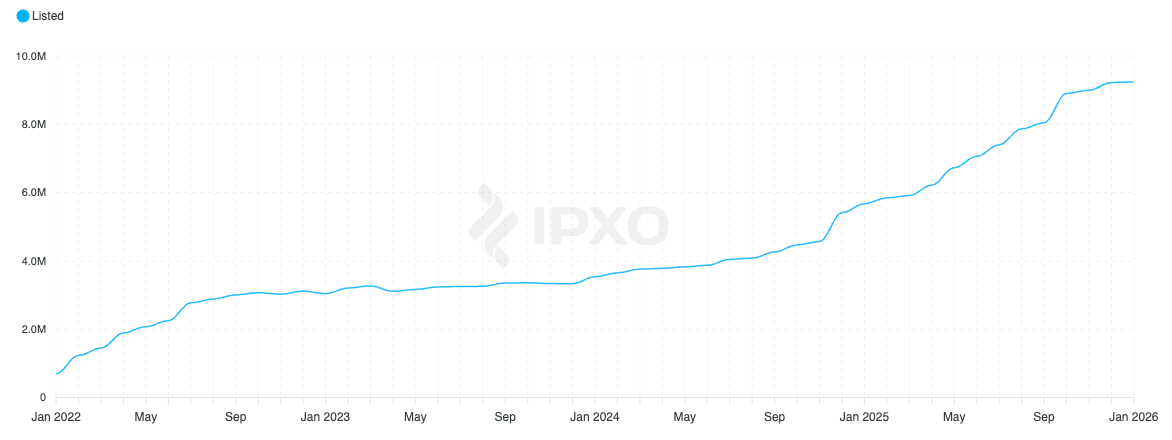
Figure 17 – Size of the leased Address pool by IPXO (from https://www.ipxo.com/market-stats/)
The average lease price, and the price range is shown for 2025 on a week-by week basis in shown in Figure 18.
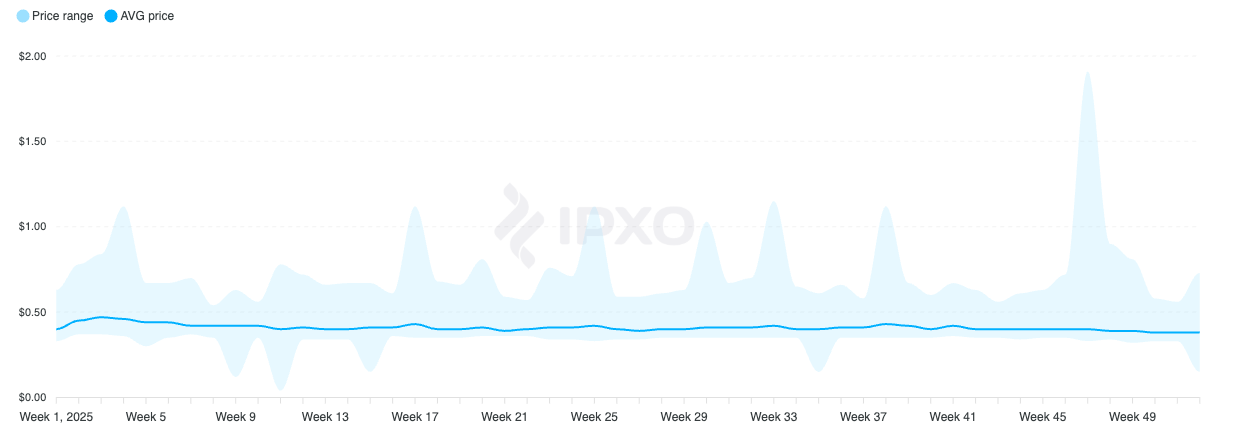
Figure 18 – Lease Price recorded by IPXO (from https://www.ipxo.com/market-stats/)
This lease price data is slightly at odds with the sale price data. Over 2025 the average lease price declined by some 15%, while the average sale price declined by 50%. The reasons for this apparent discrepancy are unclear.
IPv6 in 2025
Obviously, the story of IPv4 address allocations is only half of the story, and to complete the picture it’s necessary to look at how IPv6 has fared over 2025.
IPv6 uses a somewhat different address allocation methodology than IPv4, and it is a matter of choice for a service provider as to how large an IPv6 address prefix is assigned to each customer. The original recommendations published by the IAB and IESG in 2001, documented in RFC 3177, envisaged the general use of a /48 prefix as a generally suitable end-site prefix. Subsequent consideration of long term address conservation saw a more flexible approach being taken with the choice of the end site prefix size being left to the service provider. Today’s IPv6 environment has some providers using a /60 end site allocation unit, many using a /56, and many other providers using a /48 IPv6 address prefix. This variation makes a comparison between ISPs of the count of allocated IPv6 addresses somewhat misleading, as an ISP using /48’s for end sites will require 256 times more address space to accommodate a similarly sized same customer base as a provider who uses a /56 end site prefix, and 4,096 times more address space than an ISP using a /60 end site allocation!
For IPv6 let’s use both the number of discrete IPv6 allocations and the total amount of space that was allocated to see how IPv6 fared in 2025.
Comparing 2024 to 2025, the number of individual allocations of IPv6 address space has decreased by 7%, while the number of IPv4 allocation transactions has increased by 3% (Table 13).
| Allocations | 2012 | 2013 | 2014 | 2015 | 2016 | 2017 | 2018 | 2019 | 2020 | 2021 | 2022 | 2023 | 2024 | 2025 |
|---|---|---|---|---|---|---|---|---|---|---|---|---|---|---|
| IPv6 | 3,291 | 3,529 | 4,502 | 4,644 | 5,567 | 5,740 | 6,176 | 6,799 | 5,376 | 5,350 | 4,066 | 3,874 | 3,925 | 3,645 |
| IPv4 | 7,435 | 6,429 | 10,435 | 11,352 | 9,648 | 8,185 | 8,769 | 12,560 | 5,874 | 6,939 | 4,395 | 3,462 | 3,559 | 3,654 |
Table 13 – Number of individual Address Allocations, 2012 – 2025
The amount of IPv6 address space distributed in 2025 is 80% less than the amount that was allocated in 2023, while the corresponding IPv4 volume decreassed by 11% (Table 14).
| Addresses | 2012 | 2013 | 2014 | 2015 | 2016 | 2017 | 2018 | 2019 | 2020 | 2021 | 2022 | 2023 | 2024 | 2025 |
|---|---|---|---|---|---|---|---|---|---|---|---|---|---|---|
| IPv6 (/32s) | 17,710 | 23,642 | 17,847 | 15,765 | 25,260 | 19,975 | 38,699 | 35,924 | 21,620 | 28,131 | 27,497 | 74,159 | 45,105 | 10,332 |
| IPv4 (/32s)(M) | 88.8 | 57.7 | 58.8 | 32.3 | 20.8 | 15.1 | 14.1 | 13.9 | 4.2 | 3.1 | 2.1 | 1.6 | 1.8 | 1.6 |
Table 14 – Volume of Address Allocations, 2012 – 2025
Regionally, each of the RIRs saw IPv6 allocation activity in 2025 that was on a par with those seen in 2024, but well short of the peak period of IPv6 allocation activity in 2018 – 2019 (Table 15).
| Allocations | 2012 | 2013 | 2014 | 2015 | 2016 | 2017 | 2018 | 2019 | 2020 | 2021 | 2022 | 2023 | 2024 | 2025 |
|---|---|---|---|---|---|---|---|---|---|---|---|---|---|---|
| AFRINIC | 82 | 72 | 59 | 81 | 111 | 110 | 108 | 111 | 108 | 135 | 151 | 115 | 117 | 133 |
| APNIC | 599 | 540 | 528 | 777 | 1,680 | 1,369 | 1,460 | 1,484 | 1,498 | 1,392 | 1,317 | 1,381 | 1,265 | 1,239 |
| ARIN | 603 | 543 | 489 | 604 | 645 | 684 | 648 | 601 | 644 | 668 | 680 | 712 | 951 | 1,034 |
| LACNIC | 251 | 223 | 1,199 | 1,053 | 1,007 | 1,547 | 1,439 | 1,614 | 1,801 | 725 | 635 | 612 | 656 | 606 |
| RIPENCC | 1,756 | 2,151 | 2,227 | 2,129 | 2,124 | 2,030 | 2,521 | 2,989 | 1,325 | 2,430 | 1,283 | 1,054 | 936 | 633 |
| 3,291 | 3,529 | 4,502 | 4,644 | 5,567 | 5,740 | 6,176 | 6,799 | 5,376 | 5,350 | 4,066 | 3,874 | 3,925 | 3,645 |
Table 15 – IPv6 allocations by RIR, 2012 – 2025
The address assignment data tells a slightly different story. Table 16 shows the number of allocated IPv6 /32’s per year. There were no large IPv6 allocations in 2025, and the total volume of allocated Ipv6 addresses was less than one quarter of the volume allocated in 2024.
| Addresses (/32s) | 2012 | 2013 | 2014 | 2015 | 2016 | 2017 | 2018 | 2019 | 2020 | 2021 | 2022 | 2023 | 2024 | 2025 |
|---|---|---|---|---|---|---|---|---|---|---|---|---|---|---|
| AFRINIC | 4,201 | 66 | 48 | 308 | 76 | 112 | 71 | 360 | 88 | 141 | 387 | 400 | 380 | 372 |
| APNIC | 3,807 | 4,462 | 2,663 | 2,108 | 1,235 | 4,228 | 19,681 | 7,945 | 7,365 | 10,185 | 4,856 | 599 | 33,257 | 4,457 |
| ARIN | 1,672 | 12,571 | 5,214 | 642 | 1,087 | 1,372 | 844 | 5,520 | 4,975 | 373 | 13,695 | 66,340 | 5,692 | 1,859 |
| LACNIC | 4,301 | 158 | 1,314 | 953 | 1,173 | 1,427 | 1,327 | 1,496 | 1,669 | 658 | 563 | 467 | 575 | 565 |
| RIPENCC | 3,729 | 6,385 | 8,608 | 11,754 | 21,689 | 12,836 | 16,776 | 20,603 | 7,523 | 16,774 | 7,996 | 6,353 | 5,111 | 3,079 |
| 17,710 | 23,642 | 17,847 | 15,765 | 25,260 | 19,975 | 38,699 | 35,924 | 21,620 | 28,131 | 27,497 | 74,159 | 45,015 | 10,332 |
Table 16 – IPv6 address allocation volumes by RIR
Dividing addresses by allocations gives the average IPv6 allocation size in each region (Table 17). Overall, the average IPv6 allocation size in 2025 smaller than a /30, with the RIPE NCC and APNIC averaging larger individual IPv6 allocations than the other RIRs.
| 2012 | 2013 | 2014 | 2015 | 2016 | 2017 | 2018 | 2019 | 2020 | 2021 | 2022 | 2023 | 2024 | 2025 | |
|---|---|---|---|---|---|---|---|---|---|---|---|---|---|---|
| AFRINIC | /26.3 | /32.1 | /32.3 | /30.1 | /32.5 | /32.0 | /32.6 | /30.3 | /32.3 | /31.9 | /30.6 | /30.2 | /30.3 | /30.5 |
| APNIC | /29.3 | /29.0 | /29.7 | /30.6 | /32.4 | /30.4 | /28.2 | /29.6 | /29.7 | /29.1 | /30.1 | /33.2 | /27.3 | /30.2 |
| ARIN | /30.5 | /27.5 | /28.6 | /31.9 | /31.2 | /31.0 | /31.6 | /28.8 | /29.1 | /32.8 | /27.7 | /25.5 | /29.4 | /31.2 |
| LACNIC | /27.9 | /32.5 | /31.9 | /32.1 | /31.8 | /32.1 | /32.1 | /32.1 | /32.1 | /32.1 | /32.2 | /32.4 | /32.2 | /32.1 |
| RIPENCC | /30.9 | /30.4 | /30.0 | /29.5 | /28.6 | /29.3 | /29.3 | /29.2 | /29.5 | /29.2 | /29.4 | /29.4 | /29.6 | /29.7 |
| /29.6 | /29.3 | /30.0 | /30.2 | /29.8 | /30.2 | /29.4 | /29.6 | /30.0 | /29.6 | /29.2 | /27.7 | /28.5 | /30.5 |
Table 17 – Average IPv6 address allocation size by RIR
The number and volume of IPv6 allocations per RIR per year is shown in Figures 19 and 20.
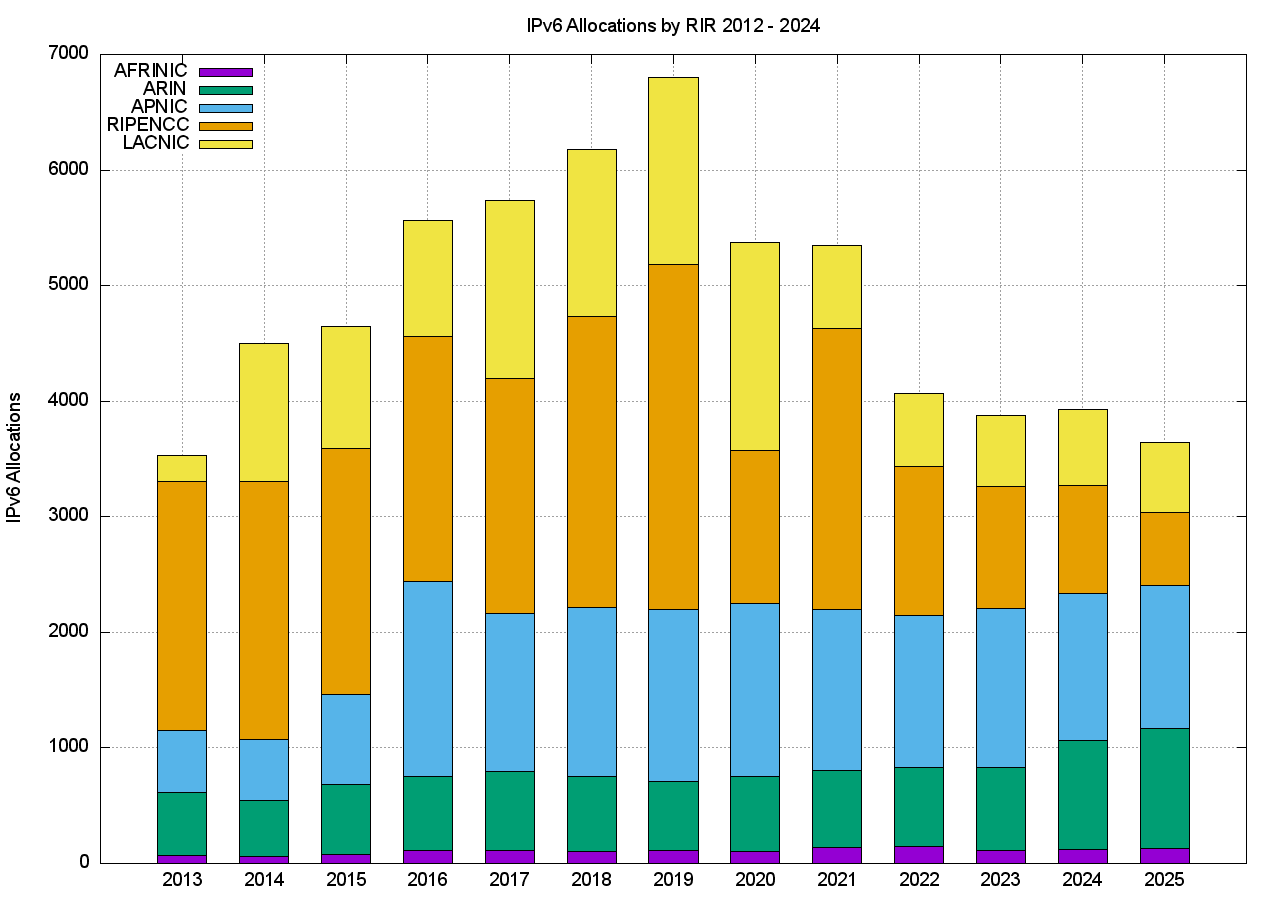
Figure 19 – Number of IPv6 Allocations per year – 2013 – 2025
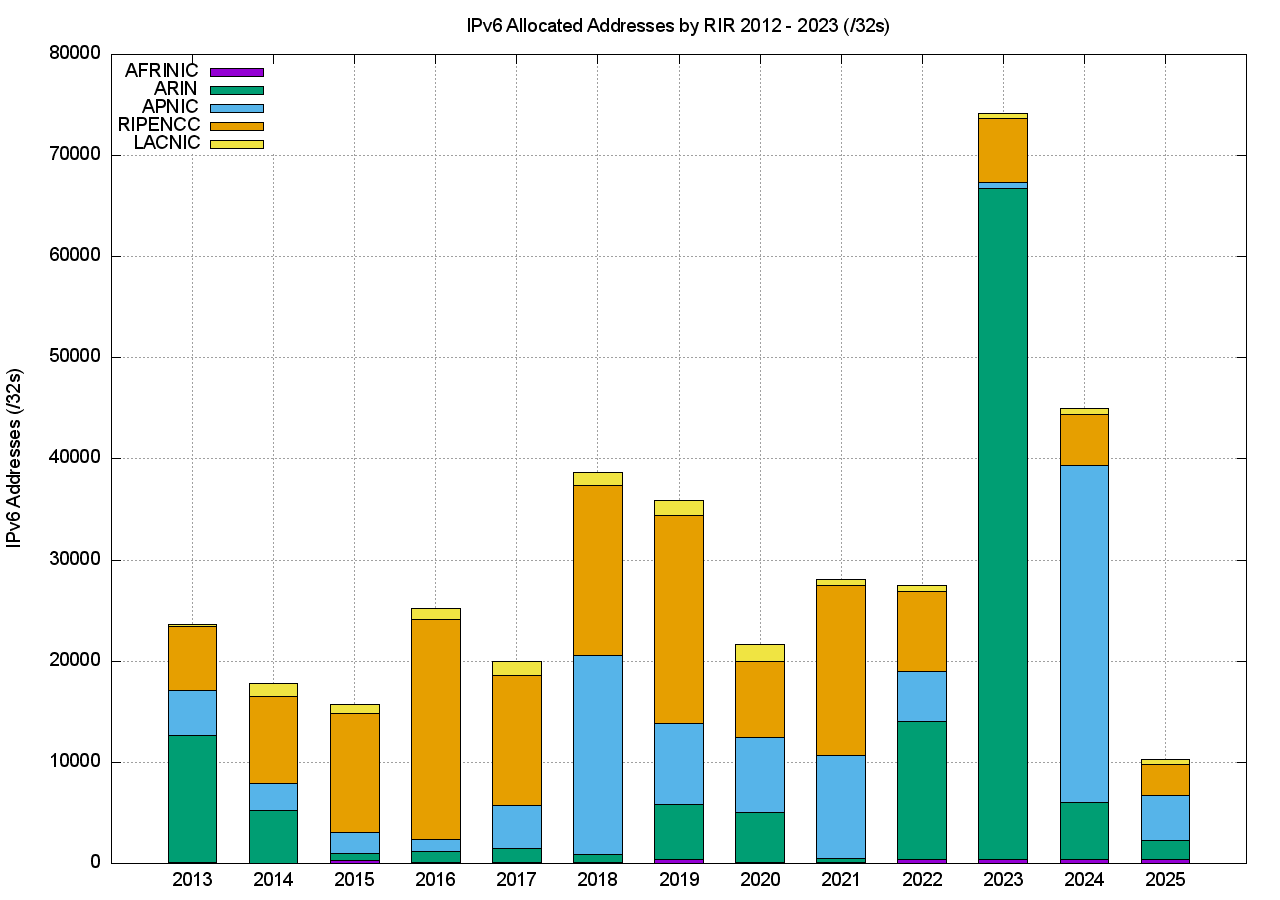
Figure 20 – Volume of IPv6 Allocations per year – 2013 – 2025
The number of IPv6 address allocations has been steadily falling since 2019, as shown in Figure 19. There was a more dramatic fall in the volume of allocated addresses in 2025, although the numbers for 2023 and 2024 were buoyed up by single very large allocations in each of those two years, firstly by ARIN in 2023 and APNIC in 2024.
| Rank | 2020 | 2021 | 2022 | 2023 | 2024 | 2025 | ||||||
|---|---|---|---|---|---|---|---|---|---|---|---|---|
| 1 | Brazil | 1,394 | USA | 619 | USA | 638 | USA | 691 | USA | 889 | USA | 967 |
| 2 | USA | 588 | Russia | 576 | India | 377 | India | 424 | Brazil | 302 | Brazil | 310 |
| 3 | Indonesia | 389 | Brazil | 508 | Brazil | 339 | Brazil | 267 | India | 269 | Indonesia | 304 |
| 4 | India | 226 | Netherlands | 448 | Bangladesh | 239 | Indonesia | 198 | Vietnam | 233 | India | 268 |
| 5 | Netherlands | 199 | India | 390 | Germany | 158 | Bangladesh | 159 | Indonesia | 169 | Bangladesh | 167 |
| 6 | Germany | 192 | UK | 304 | Russia | 138 | Vietnam | 143 | Bangladesh | 156 | Germany | 104 |
| 7 | Bangladesh | 182 | Bangladesh | 213 | UK | 125 | Germany | 126 | Germany | 119 | Vietnam | 98 |
| 8 | Russia | 128 | Germany | 196 | Indonesia | 113 | Colombia | 99 | Iran | 86 | UK | 71 |
| 9 | Australia | 118 | Indonesia | 110 | Australia | 100 | Mexico | 96 | Australia | 83 | Canada | 68 |
| 10 | China | 115 | Hong Kong | 108 | Vietnam | 91 | UK | 85 | Mexico | 83 | Australia | 65 |
Table 18 – IPv6 allocations by Year by Economy – 2020 – 2025
Table 18 shows the countries who received the largest number of individual IPv6 allocations, while Table 19 shows the amount of IPv6 address space assigned on a per economy basis for the past 4 years (using units of /32s). The annual volume of allocated IPv6 addresses is shown in Table 19.
| Rank | 2020 | 2021 | 2022 | 2023 | 2024 | 2025 | ||||||
|---|---|---|---|---|---|---|---|---|---|---|---|---|
| 1 | China | 6,765 | China | 5,424 | USA | 13,919 | USA | 66,579 | Singapore | 32,792 | China | 4,139 |
| 2 | USA | 5,051 | Russia | 4,409 | China | 4,354 | Lithuania | 522 | USA | 5,533 | USA | 1,906 |
| 3 | Brazil | 1,358 | India | 4,281 | Russia | 925 | UK | 513 | Iran | 643 | Germany | 400 |
| 4 | Netherlands | 1,331 | Netherlands | 3,390 | UK | 734 | Germany | 478 | Germany | 426 | Iran | 382 |
| 5 | Germany | 716 | UK | 2,249 | Germany | 706 | Russia | 371 | Lithuania | 410 | Brazil | 295 |
| 6 | Russia | 715 | Germany | 896 | Moldova | 456 | Ukraine | 369 | UK | 352 | UK | 288 |
| 7 | UK | 552 | Ukraine | 651 | France | 404 | Iran | 314 | Turkey | 328 | Ghana | 261 |
| 8 | Italy | 391 | Lithuania | 633 | Netherlands | 397 | France | 276 | South Africa | 304 | Turkey | 248 |
| 9 | France | 390 | Brazil | 502 | Italy | 363 | Seychelles | 258 | Canada | 292 | France | 231 |
| 10 | Turkey | 290 | USA | 491 | Brazil | 328 | Rwanda | 256 | Brazil | 289 | Russia | 219 |
Table 19 – IPv6 Address Allocation Volumes by Year by Economy (/32s)
We can also review the total IPv6 allocated address pools for top 25 IPv6-holding national economies as of the end of 2025 (Table 20).
While the United States tops this list of the total pool of allocated IPv6 addresses, with some 31% of the total span of allocated IPv6 addresses, the per capita number is lower than others in this list (Netherlands, Sweden, Switzerland). In 2023 ARIN allocated a /16 address block to Capital One Financial Cooperation, one of the larger banks in the United States with a large credit card base in retail operations. In 2024 APNIC allocated a /17 to Huawei International, with a corporate location in Singapore.
| Rank | CC | Allocated (/48s) | % Total | /48s p.c. | Advertised /48s | Deployment | Name |
|---|---|---|---|---|---|---|---|
| 1 | US | 9,365,768,669 | 29.1% | 27.2 | 1,461,877,253 | 15.61 | USA |
| 2 | CN | 4,493,742,162 | 14.0% | 3.2 | 1,663,468,967 | 37.02 | China |
| 3 | SG | 2,259,174,127 | 7.0% | 369.8 | 10,160,967 | 0.45 | Singapore |
| 4 | DE | 1,589,183,275 | 4.9% | 19.1 | 1,058,252,137 | 66.59 | Germany |
| 5 | GB | 1,383,735,799 | 4.3% | 20.3 | 402,612,655 | 29.10 | UK |
| 6 | FR | 996,356,774 | 3.1% | 15.3 | 194,604,234 | 19.53 | France |
| 7 | NL | 716,964,426 | 2.2% | 40.4 | 268,864,861 | 37.50 | Netherlands |
| 8 | RU | 707,002,688 | 2.2% | 4.9 | 235,224,973 | 33.27 | Russia |
| 9 | IT | 697,438,251 | 2.2% | 11.9 | 441,473,076 | 63.30 | Italy |
| 10 | JP | 669,610,206 | 2.1% | 5.5 | 512,384,857 | 76.52 | Japan |
| 11 | AU | 622,466,380 | 1.9% | 23.0 | 311,339,826 | 50.02 | Australia |
| 12 | BR | 552,504,290 | 1.7% | 2.5 | 443,002,861 | 80.18 | Brazil |
| 13 | SE | 457,834,856 | 1.4% | 42.5 | 87,939,340 | 19.21 | Sweden |
| 14 | IN | 445,384,346 | 1.4% | 0.3 | 374,616,708 | 84.11 | India |
| 15 | PL | 405,012,749 | 1.3% | 10.3 | 213,105,000 | 52.62 | Poland |
| 16 | SC | 371,458,053 | 1.2% | 3,403.5 | 190,812,631 | 51.37 | Seychelles |
| 17 | ES | 370,671,667 | 1.2% | 7.8 | 115,409,593 | 31.14 | Spain |
| 18 | ZA | 350,950,578 | 1.1% | 5.7 | 311,555,526 | 88.77 | South Africa |
| 19 | AR | 347,215,986 | 1.1% | 7.5 | 288,372,923 | 83.05 | Argentina |
| 20 | KR | 346,493,198 | 1.1% | 6.7 | 2,608,311 | 0.75 | Korea |
| 21 | AE | 286,851,085 | 0.9% | 29.6 | 234,423,207 | 81.72 | United Arab Emirates |
| 22 | TR | 278,396,961 | 0.9% | 3.2 | 68,204,409 | 24.50 | Turkey |
| 23 | EG | 271,384,582 | 0.8% | 2.3 | 270,925,826 | 99.83 | Egypt |
| 24 | CH | 270,205,124 | 0.8% | 30.3 | 126,588,325 | 46.85 | Switzerland |
| 25 | IR | 267,517,963 | 0.8% | 2.9 | 52,436,571 | 19.60 | Iran |
Table 20 – IPv6 Allocated Address pools per National Economy – December 2025
There are a number of visible outliers in this table. In terms of addresses per capita the Seychelles and Singapore are clearly evident as having a volume of IPv6 allocated addresses to entities who are domiciled in that country that is a far greater address pool than their domestic population would suggest. There are some 503 address prefix allocations recorded against Singapore, but one allocation, 2410::/17 to Huawei International, a company whose corporate office is in Singapore, is the reason why Singapore’s address holdings are so large. There are 731 IPv6 address prefix allocations recorded against the Seychelles, but 353 of these allocations, and one half of the total allocated address pool for the Seychelles are recorded by the RIPE NCC against a single account holder. This holding entity is an IP address broker, iNet Ltd, a company registered in the Seychelles, but with a primary UK point of contact, with leasing customers predominately located in Europe.
In terms of advertising IPv6 address prefixes into the public Internet there are also some anomalies. Korea has some 181 IPv6 address allocation records, yet only 55 of these address prefixes are visible in the routing table, representing just 0.75% of the address pool registered to that country. Singapore is in a similar position at this stage. On the other hand, the network operators in Japan, Brazil, India, South Africa, Argentina, the UAE and Egypt advertise more than 75% of their allocated IPv6 address pool.
Some twenty years ago it was common practice to point out the inequities in the state of IPv4 address deployment. At the time, some US universities had more IPv4 addresses at their disposal than some highly populated developing economies, and the disparity was a part of the criticism of the address management practices that were used at the time.
Among a large set of objectives, the RIR system was intended to address this issue of predisposition to a biased outcome in address distribution. The concept behind the RIOR system was that within each regional community, the various local stakeholders had the ability to develop their own address distribution policies and could determine for themselves what they meant by such terms as “fairness” and “equity” and then direct their regional address registry to implement address allocation policies that were intended to achieve these objectives.
While IPv4 had a very evident early adopter reward, in that the address allocations in the original IPv4 class A,B,C address plan could be quite extravagant, the idea was that in IPv6, where the address allocations were developed from the outset through local bottom-up policy frameworks, such evident inequities in outcomes would be avoided, or so it was hoped. It was also envisaged that with such a vast address plan provided by 128 bits of address space, the entire concept of scarcity and inequity would be largely irrelevant. 2128 is a vast number and the entire concept of comparison between two vast pools of addresses is somewhat irrelevant. So, when we look at the metric of /48s per head of population, don’t forget that a /48 is actually 80 bits of address space, which is massively larger than the entire IPv4 address space. Even India’s average of 0.3 /48s per capita is still a truly massive pool of IPv6 addresses!
However, before we go too far down this path it is also useful to bear in mind that the 128 bits of address space in IPv6 has become largely a myth. We sliced off 64 bits in the address plan for no particularly good reason, as it turns out. We then sliced off a further 16 bits for again no particularly good reason. 16 bits for end-site addresses allows for some 65,000 distinct networks within each site, which is somewhat outlandish in pretty much every case. The result is that the vastness of the address space represented by 128 bits in IPv6 is in fact not so vast in practice. The usable address prefix space in IPv4 roughly equates a /32 end address in IPv4 with a /48 prefix in IPv6. So perhaps this metric of /48s per capita is not entirely fanciful, and there is some substance to the observation that there are some inequities in the address distribution in IPv6. However, unlike IPv4, the exhaustion of the IPv6 address space is still quite some time off, and we still believe that there are sufficient IPv6 addresses to support a uniform address utilisation model across the entire world of silicon over time.
There is a larger question about the underlying networking paradigm in today’s public network. IPv6 attempts to restore the 1980’s networking paradigm of a true peer-to-peer network where every connected device is capable of sending packets to any other connected device. However, today’s networked environment regards such unconstrained connectivity as a liability. Exposing an end client device to unconstrained reachability is regarded as being unnecessarily foolhardy, and today’s network paradigm relies on client-initiated transactions. This is well-suited to NAT-based IPv4 connectivity, and the question regarding the long-term future of an IPv6 Internet is whether we want to bear the costs of maintaining end-client unique addressing plans, or whether NATs in IPv6 might prove to be a most cost-effective service platform for the client side of client/server networks.
To what extent are allocated IPv6 addresses visible as advertised prefixes in the Internet’s routing table?
Figure 21 shows the daily totals of advertised, unadvertised and total allocated address volumes for IPv6 since 2010, while Figure 22 shows the advertised address span as a percentage of the total span of allocated and assigned IPv6 addresses.
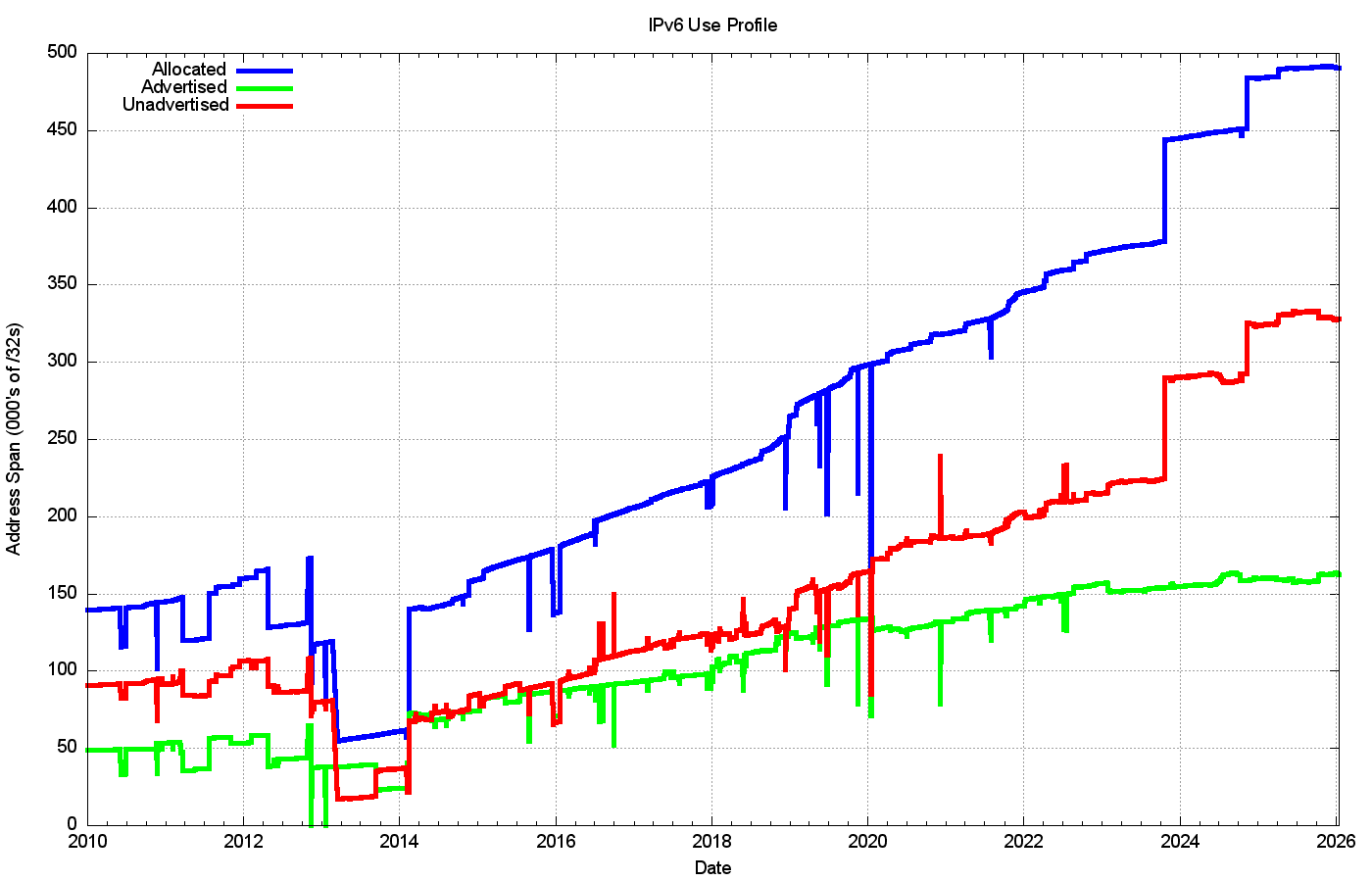
Figure 21 – Allocated, Unadvertised and Advertised IPv6 addresses
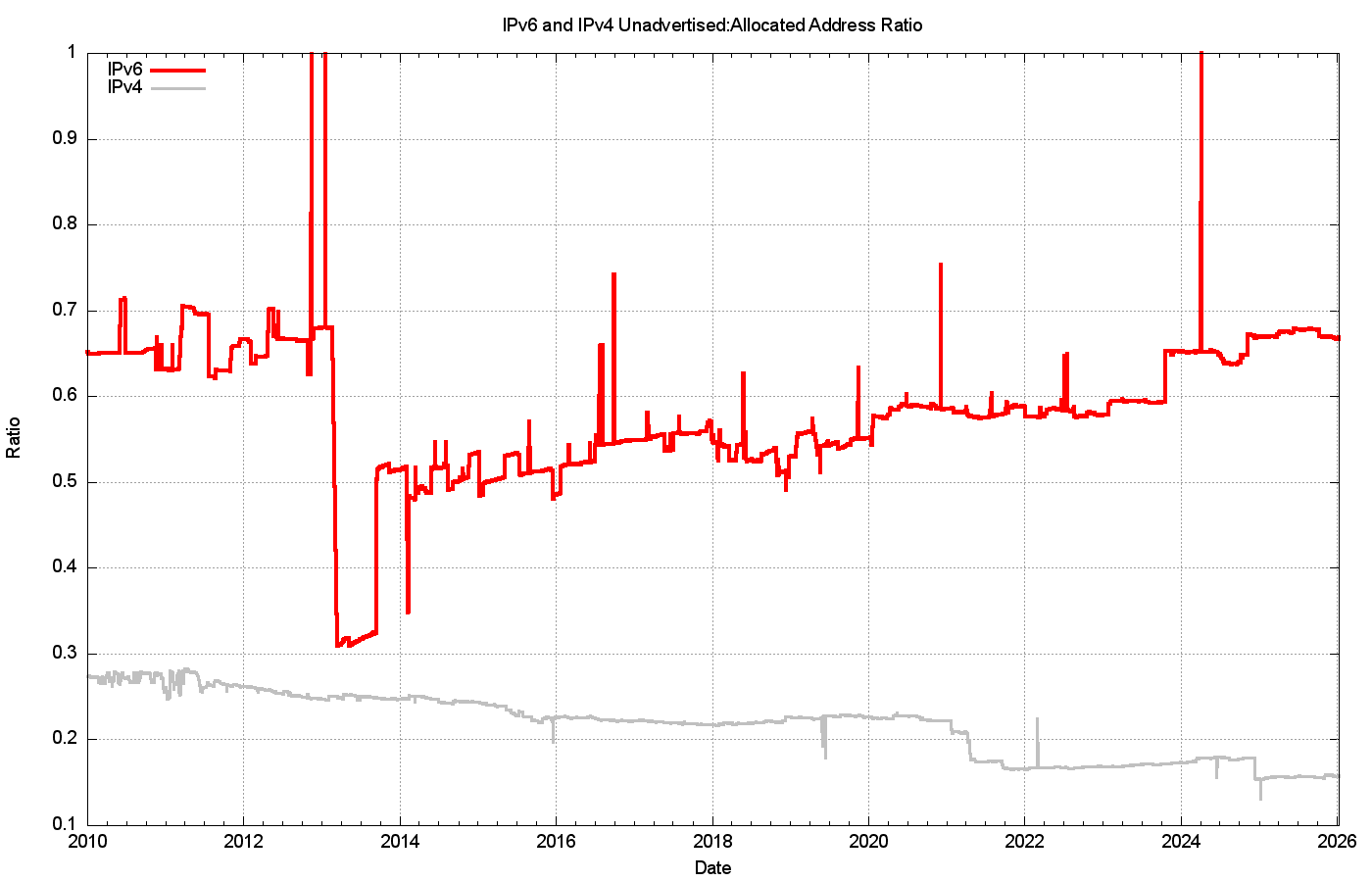
Figure 22 – Unadvertised Address Ratio for IPv6 and IPv4
The drop in the allocated address span in 2013 is the result of a change in LACNIC where a single large allocation into Brazil was replaced by the recording of direct allocation and assignments to ISPs and similar end entities. It is interesting to note that in IPv4 the longer term tend of the ratio of unadvertised address space is falling, while in IPv6 the same metric is rising. The IPv4 transfer market may be a relevant consideration here in terms of bringing otherwise unused IPv4 addresses back into circulation. From a history of careful conservation of IPv4 addresses, where some 85% of allocated or assigned IPv4 addresses are advertised in the BGP routing table, a comparable IPv6 figure of 34% does not look all that impressive. But that’s not the point. We chose the 128-bit address size in IPv6 to allow addresses to be used without overriding concerns about conservation. We’re allowed to be inefficient in address utilisation in IPv6!
At the start of 2026 we’ve advertised an IPv6 address span which is the equivalent of some 160,000 /32s, or some 10.5 billion end-site /48 prefixes. That is just 0.0037% of the total number of /48 prefixes in IPv6.
The Outlook for the Internet
Once more the set of uncertainties that surround the immediate future of the Internet are considerably greater than the set of predictions that we can be reasonably certain about.
The year 2017 saw a sharp rise in IPv6 deployment, influenced to a major extent by the deployment of IPv6 services in India, notably by the Reliance Jio mobile service, which acted as a catalyst to prompt the other major Indian ISPs to also undertake similar deployment in their networks. The next year, 2018, was a quieter year, although the rise in the second half of the year is due to the initial efforts of mass scale IPv6 deployment by some major Chinese service providers. This movement accelerated in 2019 and the overall move of a further 5% in IPv6 deployment levels had a lot to do with the very rapid rise of the deployment of IPv6 in China. There has been an ongoing rise in the level of IPv6 within China, and the measured level of IPv6 has risen from 32% of the user base at the start of 2024 to 54%at the end of 2025, or an expansion of the Chinese IPv6 user pool by some 94M end clients over the two-year period.
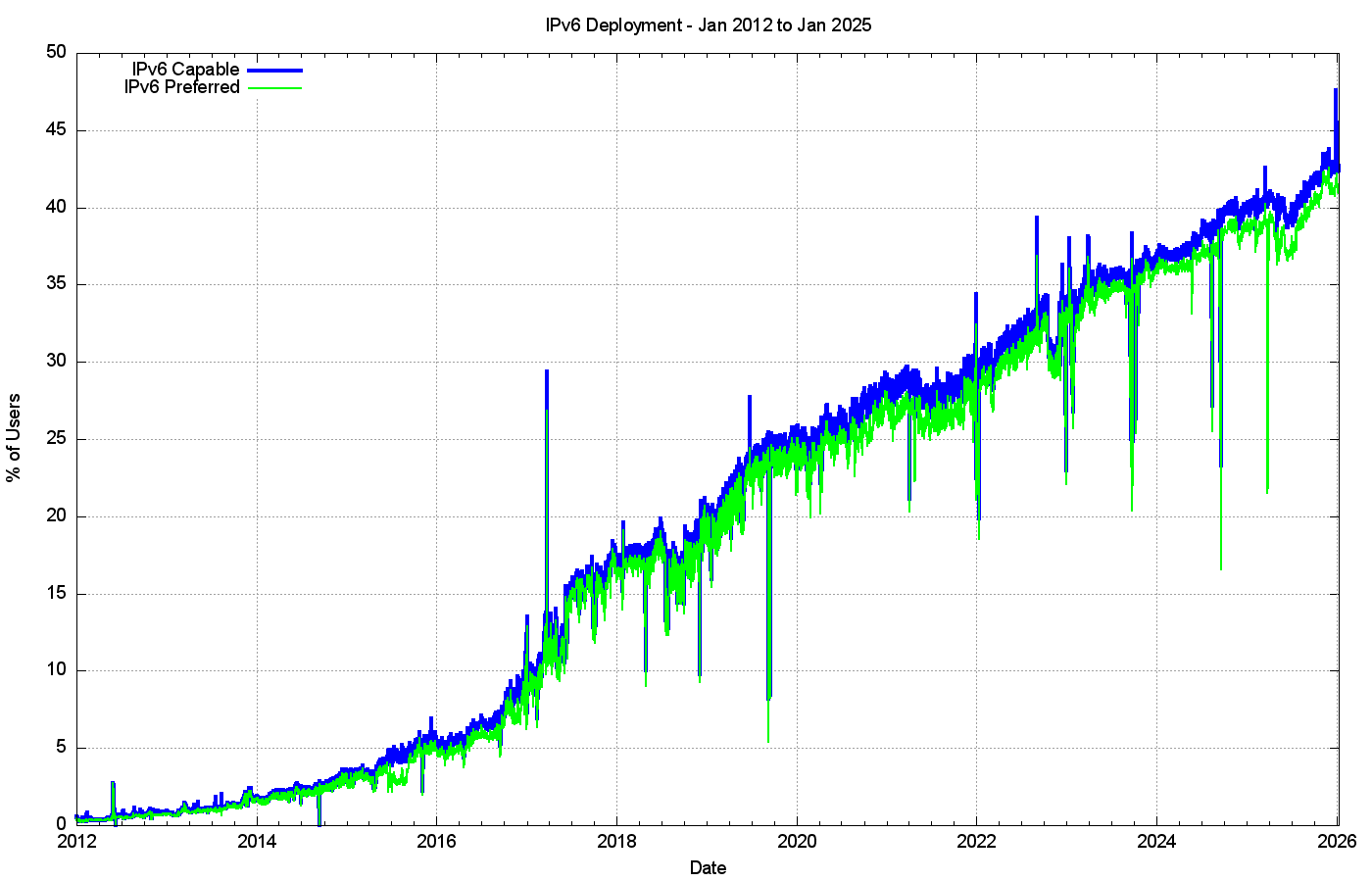
Figure 23 – IPv6 Deployment measurement 2012 – 2026
In 2025 the growth patterns for IPv6 were more diffuse around the world with a 3.7% overall growth rate (Figure 23). IPv6 has been extensively deployed in Northern America and parts of Western Europe, and some countries in Asia. There is scant deployment across Africa, Eastern and Southern Europe and Western Asia, and aside from China there is little in the way of large scale new deployments of IPv6 at present (Figure 24).
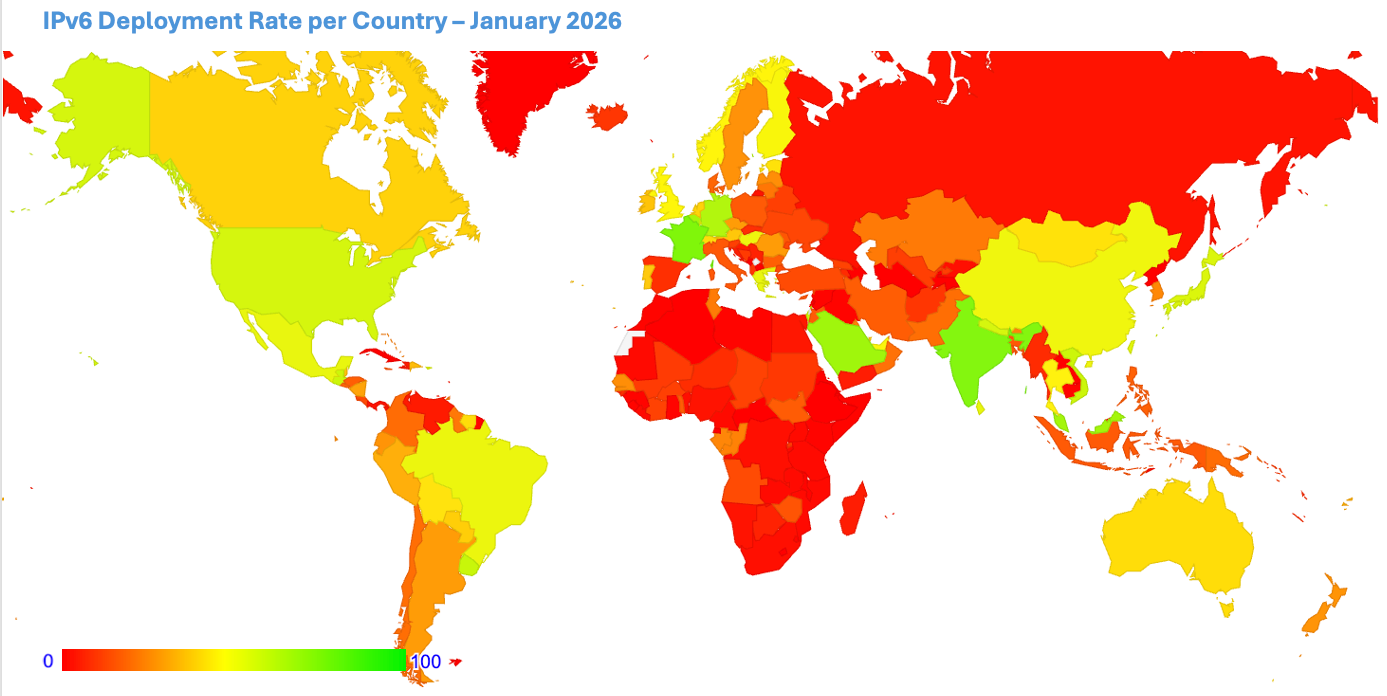
Figure 24 – IPv6 Deployment measurement – January 2026
While a number of service operators have reached the decision point that the anticipated future costs of NAT deployment are unsustainable for their service platform, there remains a considerable body of opinion that says that NATs will cost effectively absorb some further years of Internet growth. At least that’s the only rationale I can ascribe to a very large number of service providers who are making no visible moves to deploy Dual-Stack services at this point in time. Given that the ultimate objective of this transition is not to turn on Dual-Stack everywhere, but to turn off IPv4, there is still some time to go, and the uncertainty lies in trying to quantify what that time might be.
The period of the past decade has been dominated by the mass marketing of mobile internet services, and the Internet’s growth rates for 2014 through to 2016 perhaps might have been the highest so far recorded. This would’ve been visible in the IP address deployment data were it not for the exhaustion of the IPv4 address pool. In address terms this growth in the IPv4 Internet is being almost completely masked by the use of Carrier Grade NATs in the mobile service provider environment, so that the resultant demands for public addresses in IPv4 are quite low and the real underlying growth rates in the network are occluded by these NATs. In IPv6 the extremely large size of the address space masks out much of this volume. A single IPv6 /20 allocation to an ISP allows for 268 million /48 allocations, or 68 billion /56 allocations, so much of the growth in IPv6-using networks is simply hidden behind the massive address plan that lies behind IPv6.
It has also been assumed that we would see IPv6 address demands for deployments of large-scale sensor networks and other forms of deployments that are encompassed under the broad umbrella of the Internet of Things. This does not necessarily imply that the deployment is merely a product of an over-hyped industry, although that is always a possibility. It is more likely to assume that, so far, such deployments are taking place using IP addresses in a private context, using application-level gateways to interface to the public network. On the private side, the protocol could be IPv4 or IPv6 – the choice does not matter – such an occluded deployment relies on NATs in any case. Time and time again we are lectured that NATs are not a good security device, but in practice NATs offer a reasonable front-line defence against network side malware scanning and injection, so there may be a larger story behind the use of NATs and device-based networks than just a simple conservative preference to continue to use an IPv4 protocol stack.
More generally, we are witnessing an industry that is no longer using technical innovation, openness and diversification as its primary means of expansion. The widespread use of NATs in IPv4 limit the technical substrate of the Internet to a very restricted model of simple client/server interactions using TCP and UDP. The use of NATs force the interactions into client-initiated transactions, and the model of an open network with considerable flexibility in the way in which communications take place is no longer being sustained in today’s network. Incumbents are entrenching their position. Innovation and entrepreneurialism are taking a back seat while we sit out this protracted IPv4/IPv6 transition. You could argue that this is a sign of technical maturity where a small number of deployment models are picked up by all players as being best suited to the environment of deployment. You could also note that our efforts to have hosts be capable of countering all forms of hostile attack are somewhat effectual, and this form of occluded deployment where hosts sit behind some form of device that can deflect unsolicited traffic is mandatory on today’s Internet.
What is happening is that today’s internet carriage service is provided by an ever-smaller number of very large players, each of whom appear to be assuming a very strong position within their respective markets. The drivers for such larger players tend towards risk aversion, conservatism and increased levels of control across their scope of operation. The same trends of market aggregation are now appearing in content provision platforms, where a small number of platform operators are exerting a completely dominant position across the entire Internet.
The evolving makeup of the Internet industry has quite profound implications in terms of network neutrality, the separation of functions of carriage and service provision, investment profiles and expectations of risk and returns on infrastructure investments, and on the openness of the Internet itself. Given the economies of volume in this industry, it was always going to be challenging to sustain an efficient, fully open and competitive industry platform that was capable of sustaining both large and small operators, but the degree of challenge in this agenda is multiplied many-fold when the underlying platform has run out of the basic currency of IP addresses. The pressures on the larger players within these markets to leverage their incumbency into overarching control gains traction when the stream of new entrants with competitive offerings dries up, and the solutions in such scenarios typically involve some form of public sector intervention directed to restore effective competition and revive the impetus for more efficient and effective offerings in the market.
As the Internet continues to evolve, it is no longer the technically innovative challenger pitted against venerable incumbents in the forms of the traditional industries of telephony, print newspapers, television entertainment and social interaction. The Internet is now the established norm. The days when the Internet was touted as a poster child of disruption in a deregulated space are long since over, and these days we appear to be increasingly looking further afield for a regulatory and governance framework that can challenge the increasing complacency of the very small number of massive digital incumbents.
It is unclear how successful we will be in this search for responses to this oppressive level of centrality in many aspects of the digital environment. We can but wait and see.

Disclaimer
The above views do not necessarily represent the views of the Asia Pacific Network Information Centre.
About the Author
GEOFF HUSTON AM B.Sc., M.Sc., is the Chief Scientist at APNIC, the Regional Internet Registry serving the Asia Pacific region.
www.potaroo.net
⚡ **What’s your take?**
Share your thoughts in the comments below!
#️⃣ **#ISP #Column #January**
🕒 **Posted on**: 1768920434
🌟 **Want more?** Click here for more info! 🌟
