


🚀 Discover this must-read post from Hacker News 📖
📂 **Category**:
💡 **What You’ll Learn**:
At first blush, it sounds like science fiction: supersonic jets able to traverse the vastness of the Pacific Ocean in under two hours. But recent tests by Japan’s Aerospace Exploration Agency (JAXA) in conjunction with several Japanese universities have brought that once seemingly impossible vision closer to reality (alongside similar Mach-5 testing in the U.S.).
A team of engineers from JAXA, Waseda University, the University of Tokyo, and Keio University has completed a successful ground combustion trial of a ramjet engine designed for a Mach‑5 hypersonic aircraft, a key step toward a future where flights from Tokyo to Los Angeles could take roughly the same time as a short domestic hop. The test was conducted at JAXA’s Kakuda Space Center, simulating flight at five times the speed of sound and focused on validating the aircraft’s heat‑shielding, control surfaces, and engine performance under extreme conditions. The results, and aircraft like NASA’s “quiet” supersonic X-59, may help redefine how engineers think about high‑altitude, high‑speed passenger and even suborbital travel.
How Japan’s Mach-5 ramjet works
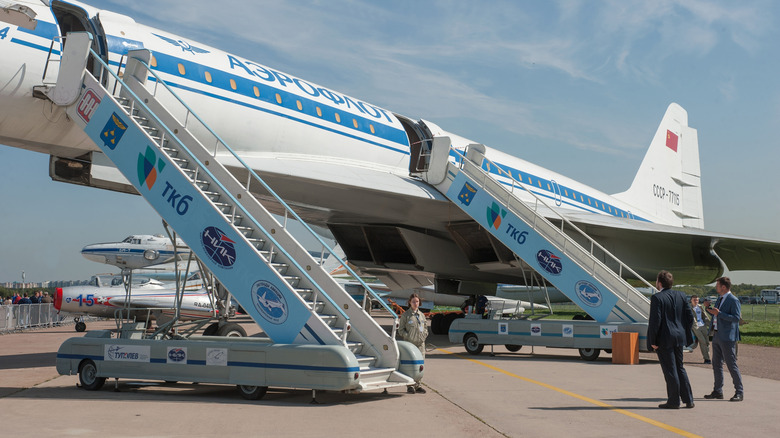
A ramjet, the technology at the core of the test, is a type of air-breathing jet engine that has no moving parts. The name is derived from the engine’s reliance on rapid forward motion to “ram” and compress incoming air before mixing it with fuel and igniting it for thrust. The technology eliminates the need for heavy rotating compressors and allows them to operate at speeds that far exceed the capabilities of conventional turbofans. However, ramjets can’t operate from a standstill: to function, they first need to be accelerated to supersonic speeds.
In the Japanese test, an experimental aircraft was mounted in a wind tunnel simulating conditions at around 25 kilometers of altitude, where the atmosphere is roughly one‑hundredth as dense as at sea level. At that elevation at Mach‑5, air around the nose and leading edges can reach temperatures exceeding 1,000 degrees Celsius (1,832°F), a challenge the U.S. Air Force has struggled to overcome with its own hypersonic jets.
To handle that level of heat, engineers constructed an advanced thermal‑protection system that maintained the aircraft’s interior near normal operating temperature, allowing the onboard avionics and control electronics to function normally. Simultaneously, sensors mapped surface‑temperature distribution to verify thermal‑structure calculations, crucial for scaling up to a full‑size passenger vehicle.
From sounding rockets to two hour Pacific crossings
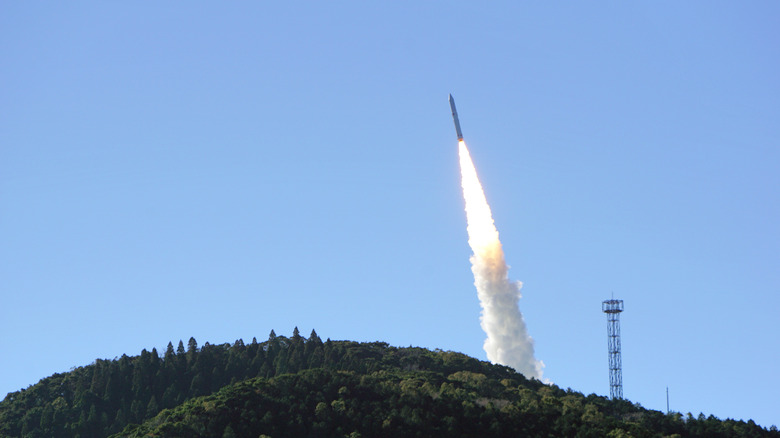
To be clear, this initial test is still a far cry from an actual test flight. What it represents is a ground‑based validation of a scaled‑down model. Next, JAXA plans to mount the experimental vehicle on a sounding rocket (a suborbital rocket typically used to take measurements and conduct scientific experiments in space) and attempt an actual flight at Mach 5. Assuming success and that regulatory and technical hurdles can be cleared, the goal is commercial hypersonic passenger service by the 2040s.
If progress continues at this pace, a Mach-5 plane flying at an altitude of 25 kilometers (nearly double the altitude achieved by current commercial airlines) could theoretically cut the Tokyo‑to‑Los Angeles route from roughly 10 hours to around two hours, without the complexity of entering full orbit. That means slashing transit time for a flight from the U.S. to Japan, transforming what would previously have been a week-long ordeal into a day trip with just a few hours in the air.
🔥 **What’s your take?**
Share your thoughts in the comments below!
#️⃣ **#Japans #Hypersonic #Engine #2Hour #Flights #Reality**
🕒 **Posted on**: 1779739807
🌟 **Want more?** Click here for more info! 🌟
