

🔥 Discover this insightful post from Hacker News 📖
📂 **Category**:
📌 **What You’ll Learn**:
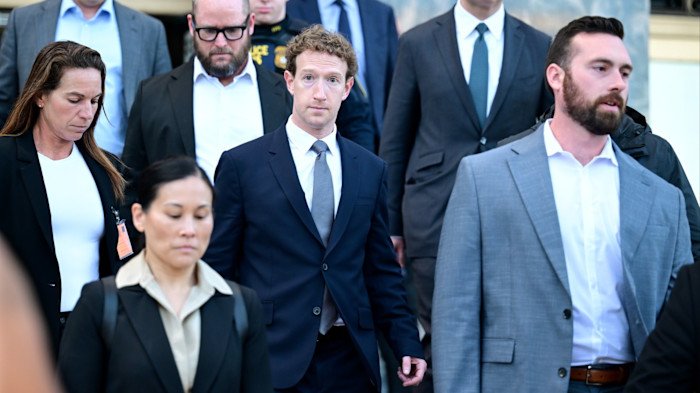
Mark Zuckerberg told a jury on Wednesday that he overruled concerns about teen wellbeing from staff and 18 experts to lift a ban on Instagram beauty filters because he was concerned about “free expression”.
The billionaire social media boss faced a grilling in a Los Angeles court on Wednesday as he battles a landmark legal claim that social media is addictive to children.
Instagram temporarily suspended beauty filters — which digitally alter people’s appearance — to conduct a review of the features in 2019. All of the 18 experts Meta hired concluded they presented a wellbeing issue.
Zuckerberg told the court there was a “high bar” for demonstrating harm, calling the restrictions “paternalistic” and “overbearing”, adding he “wanted to err on the side of people being able to express themselves” in making the decision.
The case comes as social media platforms face a reckoning over whether they will suffer legal consequences from claims their products are harmful to young people, prompting comparisons with the 1990s crackdown on Big Tobacco.
The Los Angeles trial is one of a series of test cases that will set the direction for a larger group of similar claims — all of which contend Big Tech platforms cause personal injury by developing deliberately addictive products.
Internal documents cited in the case show Meta was aware that beauty filters could encourage body dysmorphia and other health concerns in teens. Zuckerberg said the decision to reinstate them was more to do with free expression concerns than it was financially motivated.
The billionaire has become more politically aligned with Donald Trump since the US president’s re-election, overhauling Meta’s content moderation with a focus on “free speech”.
The Facebook co-founder also told the court Meta no longer tried to maximise the time users spend on the platform.

He was forced to rebut internal emails and documents between 2013 and 2022 in which he and other Meta employees explicitly stated that boosting time spent was a goal or milestone included among teenage users.
Zuckerberg testified the company no longer set internal goals around time spent on Meta’s social media platforms, focusing instead on “utility” and “value” to users over the longer term.
“I’m focused on building a community that’s sustainable,” Zuckerberg told the court.
In tense exchanges before a packed courtroom, Zuckerberg repeatedly said lawyers for the plaintiffs were mischaracterising evidence, adding that the company had shifted to no longer make time spent a focus.
Losing the Los Angeles case would represent a major blow to Meta and Google because it could set a precedent for a flood of similar suits.
Thousands of individuals, school districts and state attorneys-general have filed similar lawsuits against social media platforms, seeking damages and design changes.
In this first case, the plaintiff, a 20-year-old known only as KGM, argues she became addicted to Meta’s Instagram and Google’s YouTube during her childhood, leading to mental health issues including anxiety and depression.
Snap and TikTok settled with the same plaintiff for an undisclosed amount shortly before the case went to trial.
Mark Lanier, the lawyer for KGM, pressed Zuckerberg on testimony that the chief executive made under oath during past congressional hearings when he said under-13s were not allowed on Instagram.
Lanier presented as evidence a 2018 internal document in which company staff estimated 4mn users under 13 years old were on Instagram in 2015, about 30 per cent of all 10- to 12-year-olds in the US. Lanier also noted the company asked for existing users’ birthdays in 2021.
Zuckerberg maintained the company was taking action to root out under-13s from the platform but acknowledged this was “difficult to determine” because of the number of people who lie about their age.
“I wish we could’ve gotten there sooner,” he said, adding the company was “now in the right place” and would add more tools to address this in future.
The discovery and depositions in the case have been damaging for Meta.
Internal emails show employees acknowledging the potential addictiveness of the social platform. “IG [Instagram] is a drug . . . We’re basically pushers,” one researcher wrote in an email, stating that Instagram chief Adam Mosseri “freaked out” when they had raised the topic of dopamine hits from social media usage.
Another allegation to emerge was the testimony from one former top safety executive, alongside internal documentation, that claimed Meta once had a “17x” strike policy for accounts engaged in the “trafficking of humans for sex”.
“That means that you could incur 16 violations for prostitution and sexual solicitation, and upon the 17th violation, your account would be suspended,” the executive said in a deposition.
Meta argues scientific research does not support the claim that social media is addictive and that other factors could have resulted in KGM’s mental health struggles, such as familial abuse.
It has pointed to billions of dollars in investments in child safety as evidence that it has not been negligent. Independent research into whether social media is addictive and harms children’s health has produced mixed results.
The company is also invoking Section 230 of the Communications Decency Act, the US legal provision that holds that social platforms are not liable for user-generated content.
The plaintiffs argue the case is not about content, rather how the platforms are designed, including features such as “likes” that encourage social comparison, “infinite scroll” and push notifications.
The Los Angeles case is the first of a series of nine personal injury cases to be heard by jury trial. A second set of federal cases is scheduled for trial in another California federal court in the summer, focused on the knock-on impact of alleged child social media addiction for schools and teachers, among others.
A separate trial began this month for a case brought by New Mexico against Meta arguing the platform failed to remove child sexual abuse material from its platforms.
💬 **What’s your take?**
Share your thoughts in the comments below!
#️⃣ **#Mark #Zuckerberg #overruled #wellbeing #experts #beauty #filters #Instagram**
🕒 **Posted on**: 1771492866
🌟 **Want more?** Click here for more info! 🌟
