

🚀 Read this insightful post from Business News 📖
📂 **Category**:
💡 **What You’ll Learn**:
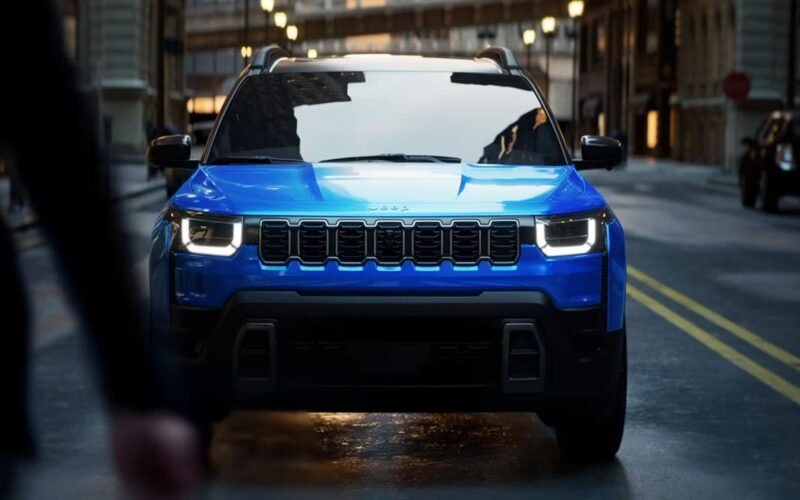
Jeep Cherokee 2026.
Courtesy: Stellantis
Detroit – Jeep maker Stellantis CNBC is relying on technologies from auto suppliers for its latest hybrid SUVs, as the market for more fuel-efficient vehicles is expected to continue to grow, CNBC has learned.
The transatlantic automaker’s first hybrid SUV for North America, the recently launched Cherokee, features a system from a Toyota-backed company called Blue Nexus, while its upcoming extended-range electric vehicles, or EREVs, use key technologies from Bosch, the world’s largest vehicle supplier.
It’s not uncommon for automakers to use components from suppliers, but it’s less common for key systems or technologies, especially those created by a competitor like Toyota.
But Stellantis’ efforts are a prime example of broader market shifts away from fully electric vehicles and a way for automakers to more quickly get hybrids — which were in increasing demand even before oil prices rose — to market, and perhaps at a lower capital cost. Many automakers have already lost billions of dollars due to massive spending on electric vehicles, including developing and producing many of the technologies themselves.
The Jeep Cherokee, which uses Blue Nexus’ dual-motor continuously variable hybrid electric transmission, and the upcoming Jeep Grand Wagoneer EREV are major launches for the automaker this year, especially as it tries to regain market share in the U.S. Stellantis also plans to use the EREV system on its Ram pickup trucks.
“The electrification trends are pretty steady. The hybrid trends are absolutely growing,” Richard Cox, Jeep’s senior vice president of brand operations, told CNBC during a recent media event for the 2026 Cherokee. “So I think it was a big step in the right direction.”
Officials at Stellantis and the auto suppliers declined to comment on these links, but sources at each of the companies who were not authorized to speak publicly about the partnerships confirmed the details to CNBC.
Both hybrid systems work differently. The Cherokee is a conventional hybrid, like many Toyota models, including the Prius.
Meanwhile, upcoming EREVs drive like fully electric cars until the engine kicks in and acts as a generator to power the vehicle’s electric motors when the car’s battery dies. The engine powers the electric motors rather than the car itself.
Both hybrid systems use Stellantis engines and have been combined to meet the company’s driving dynamics standards, according to two automaker sources.
Both systems are also expected to significantly improve the fuel economy of the vehicles, including the Cherokee, which at 37 mpg combined, is the most fuel-efficient non-plug-in Jeep ever produced in the United States.
“Consumers have been accepted [full-hybrid electric vehicle] technology due to improvements in fuel economy, [a] “A wide variety of vehicles to choose from, and because they don’t require lifestyle changes to take advantage of the system,” said Eric Anderson, associate director of Americas Light Vehicle Powertrain Forecasting.
From electric vehicles to hybrid cars
Stellantis and other automakers have invested billions of dollars in recent years to develop all-electric vehicles to meet federal regulations and uncertain consumer demand, but most have pulled back on those investments and are looking to hybrids to increase vehicles’ fuel economy and meet customer expectations.
Stellantis last month disclosed a $26 billion charge related to its electric vehicle plans, while its Detroit rivals also announced writedowns. ford motor It said it would record $19.5 billion in special charges as it backed away from electric vehicle plans, while… GM It said its write-down would be $7.6 billion due to the EV changes.
The Ram 1500 Long Range Hybrid pickup truck, scheduled to go on sale in early 2026, will have the company’s longest driving range ever offered in a light-duty truck, totaling 690 miles between gas engine and battery power.
Ram | Stellantis
Peter Tadros, head of North American energy solutions for Bosch, said the auto supplier has received an influx of inquiries about its hybrid systems as automakers look to move away from electric vehicles and get to market quickly, with a reliable system and partner.
“There’s definitely a lot of interest in these systems,” he told CNBC. “What’s been very clear over the last few years is that hybrid car sales have increased regardless of what’s in the regulations, regardless of political leanings. It’s been a steady increase in the market.”
Led by Toyota, U.S. hybrid vehicle sales rose from 7.3% of the market in 2023 to 12.6% last year, according to S&P Global Mobility. This compares to sales of fully electric cars during that period, which rose from 7.5% to 8%.
S&P Global Mobility expects hybrid electric vehicles to account for 18.4% of U.S. sales this year, while fully electric vehicles are expected to make up 7.1%.
Tadros declined to comment on any relationship with Stellantis, citing company policies, but said it was common for Bosch to work closely and partner with automakers to launch new vehicles and products.
“There is no single magic solution, and everyone is approaching it from a different direction,” he said. “It depends on both of them [automaker]Where is their strength, where is their capital equipment and how do they best use it, that is the starting point.”
Bosch offers what the industry refers to as “off-the-shelf” components, which the company then combines with each automaker’s specific use case. Other than EREV, Bosch also offers components for more conventional hybrids as well as plug-in hybrid electric vehicles that operate similarly to EREVs but drive like traditional gas-powered vehicles rather than electric vehicles.
Toyota technology
Stellantis, more than some other automakers, has a history of collaborating with others in the industry to reduce research, development and capital costs. It has a long-term partnership with German automotive supplier ZF for drivetrain and axle systems.
“They often relied on supplier partners for things like that,” said Sam Abu Al-Samad, vice president of market research at communications and consulting firm Telemetry. “The benefit is that you can take something that may have already been invested in, or developed by a supplier. If you take something off the shelf, you can potentially bring it to market more quickly.”
Abu Al-Samid said downsides include parts that likely won’t be fully integrated with vehicle systems and the company’s lack of control over the supply chain for key components.
In the 2000s, as the Toyota Prius was gaining traction in the United States, the Japanese automaker struck deals with Ford and Nissan Motor Co. to license or use certain hybrid technologies for their vehicles. But those deals and the vehicles that were produced from them, such as the Ford Escape and Nissan Altima hybrids, did not last long.
Blue Nexus is a joint venture established in 2019 between Japanese automotive suppliers Denso and Aisin, both part of Toyota Motor’s parent group. It sells electrified components such as e-axles, or e-axles, and hybrid systems such as Toyota’s Hybrid II system, which includes the dual-motor continuously variable hybrid-electric transmission used by the Jeep Cherokee.
A representative from Blue Nexus could not be reached for comment. Toyota, Denso and Aisin declined to comment or did not respond to requests for comment.
💬 **What’s your take?**
Share your thoughts in the comments below!
#️⃣ **#Stellantis #suppliers #Toyota #Bosch #hybrid #technology #Jeep #vehicles**
🕒 **Posted on**: 1773138767
🌟 **Want more?** Click here for more info! 🌟
