

💥 Check out this awesome post from PBS NewsHour – Politics 📖
📂 **Category**: 2026 State of the Union,Donald Trump news,foreign policy
💡 **What You’ll Learn**:
WASHINGTON (AP) — President Donald Trump’s State of the Union address is expected to focus largely on domestic issues, but it also represents an opportunity for the Republican to explain his foreign policy efforts to Americans who increasingly show unease about his priorities.
Watch live: President Donald Trump’s 2026 State of the Union address
The president counts brokering a fragile ceasefire in Gaza, arresting authoritarian leader Nicolas Maduro in Venezuela, and pressuring NATO members to increase defense spending among his biggest wins.
At a time when polls show the American public increasingly concerned about the economy, Trump’s task Tuesday evening will also be to navigate growing doubts about him remaining true to his “America First” philosophy after a year in which his focus has often been away from home. It’s a caution shared by some who counted themselves among Trump’s closest allies.
“If you had put America first from the beginning, instead of the rich donor class and foreign policy, you wouldn’t have to strategize about how to put the spotlight on Americans,” former Rep. Marjorie Taylor Greene, a Republican from Georgia who resigned from Congress last month after a bitter dispute with Trump, grumbled on X as the White House prepared its blitz over the speech.
Sixty-one percent of American adults said they disapproved of how Trump has handled foreign policy, while 56% said Trump had “gone too far” in using the U.S. military to intervene in other countries, according to polls conducted by The Associated Press and NORC Center for Public Affairs Research earlier this month and in January.
Here are some things to pay attention to in Trump’s keynote speech:
Will he take action against Iran?
The growing concern comes as Trump considers whether to carry out new military action against Iran. Last week, he warned Iran that “bad things will happen” soon if an agreement is not reached on its nuclear program.
Trump envoys Steve Witkoff and Jared Kushner are scheduled to meet again Thursday in Geneva with Iranian officials as American warships and fighter planes swarm in the Middle East.
Read more: Trump warns of “bad things” if Iran does not make a deal as the US aircraft carrier approaches the region
The administration appears to be puzzled that Iran has not yielded to mounting pressure.
“I’m curious as to why they didn’t give up — I don’t want to use the word give up — but why they didn’t give up,” Witkoff said of Trump in an appearance on Fox News over the weekend.
Trump could use this moment to explain to Americans why military action is needed, just eight months after he claimed US strikes had “destroyed” three important Iranian nuclear facilities and left the “Middle East bully” with no choice but to make peace.
The path to an agreement appears murky, as the authoritarian clerics ruling Iran say they will only discuss the nuclear issue. The United States and Israel also want to address Iran’s ballistic missile program and its support for regional armed proxies, including Hezbollah, Hamas, and the Houthis.
Trump seeks to end the war in Ukraine
Tuesday also marks the fourth anniversary of Russia’s invasion of Ukraine.
During his election campaign, Trump bragged that he would be able to end Russia’s war on Ukraine in one day, but he has difficulty keeping his pledge.
Read more: Four years after the Russian invasion of Ukraine, a look at the war in numbers
Russian and Ukrainian officials are negotiating in US-brokered talks, but disagree on key issues, including Russian demands that Kiev cede Ukrainian territory still under its control and who will get the Zaporizhzhya nuclear power plant, the largest in Europe.
Russian forces have moved only about 30 miles (about 50 kilometers) into the Donetsk region of eastern Ukraine in the past two years.
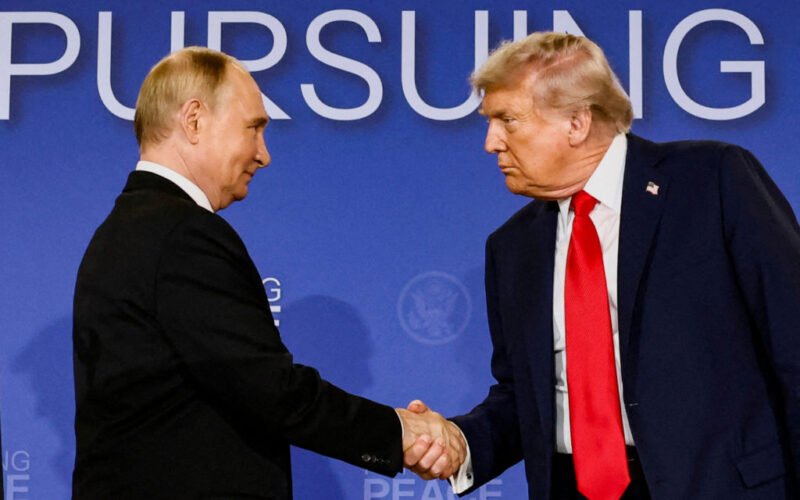
Despite the slow pace, Russian President Vladimir Putin is continuing his extreme demands, saying Kiev must withdraw its forces from four Ukrainian regions that Moscow illegally annexed but does not fully control.
Trump says it is inevitable that Russia will win control of Ukrainian territory, and he has pressed President Volodymyr Zelensky to reach a deal to save lives.
“Russia wants to make a deal, and Zelensky is going to have to act,” Trump said last week.
Trump seems keen to reach a peace agreement before the US midterm elections, despite the challenges. Zelensky says the White House has set a June deadline to end the war and is likely to pressure both sides to meet it.
Ukraine, Russia and the rest of Europe will be listening closely to hear what Trump has to say about ending the war.
Another round of victory over Maduro and focus on the Western Hemisphere
Trump is expected to once again celebrate the capture of the Venezuelan leader last month in a bold military operation.
Maduro and his wife were flown to New York where they are being held to stand trial on federal drug conspiracy charges.
In the aftermath, Trump called on US oil officials to rush back to Venezuela while the White House tries to quickly secure $100 billion in investments to repair the country’s neglected infrastructure and take full advantage of its vast oil reserves.
Trump’s action against Maduro, coupled with an increasingly aggressive stance in the Western Hemisphere aimed at cracking down on drug trafficking and illegal immigration, is a concern for many in the region – although they have also received support from some smaller countries.
He watches: Senator Paul presses Rubio on why ousting Maduro is not an act of war
Trump has likened this strategy to the Monroe Doctrine, with his rejection of foreign influences and his emphasis on the primacy of the United States in what the administration considers “America’s backyard.”
Under Trump’s orders, US forces have carried out dozens of military strikes on alleged drug-smuggling ships in the Caribbean, seized sanctioned oil tankers and tightened an embargo on Cuba as part of what the president refers to as the “Donroe Doctrine.”
Brian Fonseca, a researcher at Florida International University who studies the Americas, said Venezuela is a work in progress for Trump. But Fonseca said this may be a rare case where he can clearly demonstrate how foreign policy guidance benefits Americans.
“With regard to Venezuela, he has the opportunity to say that the U.S. military under my supervision removed a violent drug dictator who was oppressing his own people and perpetuating the global drug trade,” Fonseca said. “And by the way, there are now opportunities for America to make a lot of money in Venezuela.”
Tariff strategy after Supreme Court ruling
The president mocked the six justices, including two governors he appointed to his first term, who last week overturned his use of a 1977 statutory authority that he had invoked in most of the tariff increases he imposed over the past year on friends and foes alike.
He watches: Why did the Supreme Court rule against Trump’s tariffs?
Trump on Monday threatened countries around the world to abide by any tariff agreements they have already agreed to.
Any country that wants to “manipulate” the Supreme Court’s decision, as Trump posted on social media, will be met with “a tariff much higher, and worse, than the one it just agreed to.”
Over the weekend, Trump announced he would increase the new global tariff to 15%, which is intended to replace several import taxes that the Supreme Court ruled last week to be illegal.
He has already signed an executive order enabling him to bypass Congress and impose a 10% tax on imports from around the world, starting Tuesday. These definitions are limited to 150 days unless legislatively extended.
Bharath Ramamurti, who served as deputy director of the White House National Economic Council in the Biden administration, predicted that Trump’s approach would leave companies and investors sitting on the sidelines because they are “unsure of the outlook for tariffs.”
“This decision and the move to pursue other forms of definitions under other legal authorities will only increase this confusion,” Ramamurti added.
Associated Press writer Matthew Lee contributed to this report.
Find out more of our coverage
A free press is the cornerstone of a healthy democracy.
Support trustworthy journalism and civil dialogue.
🔥 **What’s your take?**
Share your thoughts in the comments below!
#️⃣ **#Trumps #State #Union #address #offers #opportunity #clarify #approach #foreign #policy**
🕒 **Posted on**: 1771968587
🌟 **Want more?** Click here for more info! 🌟
