

✨ Check out this awesome post from PBS NewsHour – Politics 📖
📂 **Category**: Addiction,department of health and human services,homelessness,Mehmet Oz,mental health,Robert F. Kennedy Jr
📌 **What You’ll Learn**:
NEW YORK (AP) — Health Secretary Robert F. Kennedy Jr. announced Monday that his department will allocate $100 million to a pilot program to address homelessness and drug abuse in eight cities, building on an executive order President Donald Trump signed last week related to addiction.
Watch the event in our video player above.
The U.S. Department of Health and Human Services will also make faith-based organizations eligible for addiction-related grants and expand states’ ability to use federal health funding for substance abuse treatment in certain conditions involving children, Kennedy said at the Substance Abuse and Mental Health Services Administration’s annual “Prevention Day” event.
Read more: Overdose deaths in the United States fell by 27% last year, the largest decline ever recorded in a single year.
The new initiatives signal that the administration is working to address an issue that affects many Americans — including Kennedy, who has been open about his past heroin addiction and lifelong commitment to recovery. It represents some rapid momentum for Trump’s executive order signed last Thursday to launch what Trump calls a “Great American Recovery Initiative” to better coordinate federal resources on the addiction crisis.
However, these announcements come at a time when the administration’s actions to date have created uncertainty, fear, and logistical challenges for mental health and substance abuse treatment providers across the country.
Over the past year, about a third of SAMHSA’s roughly 900 employees have been laid off. The agency and the organizations it serves are still reeling from the administration’s rollback last month that saw it briefly eliminate and then suddenly restore $2 billion in grant funding for substance abuse and mental health programs. Advocates and providers said they did not feel they could plan for the future because the administration had created an environment of uncertainty.
Department of Health and Human Services spokesman Andrew Nixon said the department is “focused on reform and ensuring that federal resources are used effectively, responsibly and in ways that achieve real results for those who are struggling and their families.”
Read more: Narrating heroin addiction and spiritual awakening, RFK Jr. urges a focus on prevention and community
“As part of the Great American Recovery announced just last week, HHS is moving forward with new funding, expanded resiliency, and targeted actions that strengthen the mental health and substance abuse treatment system and provide greater support to providers on the ground,” he said.
Federal data show that overdose deaths declined over most of last year, signaling a lasting improvement in an epidemic that has been worsening for decades. The numbers showed that this decline is slowing.
SAMHSA’s new pilot program will be called STREETS, or Safety through Recovery, Engagement, Evidence-Based Treatment and Support, Kennedy said. The program, initially directed at eight unspecified communities, will build integrated systems of care for people experiencing homelessness, substance abuse and mental health challenges and help them find housing and employment, he said.
Although this is an idea supported by many proponents, “the devil is in the details,” said Regina LaBelle, director of the Center on Addiction and Public Policy at Georgetown University’s O’Neill Law Institute.
The true impact of the funding depends on which cities receive the funding and how the program is implemented, LaBelle said. It also raised questions about how the program would be funded, and whether it would take away from other programs that have already succeeded in reducing overdose death rates.
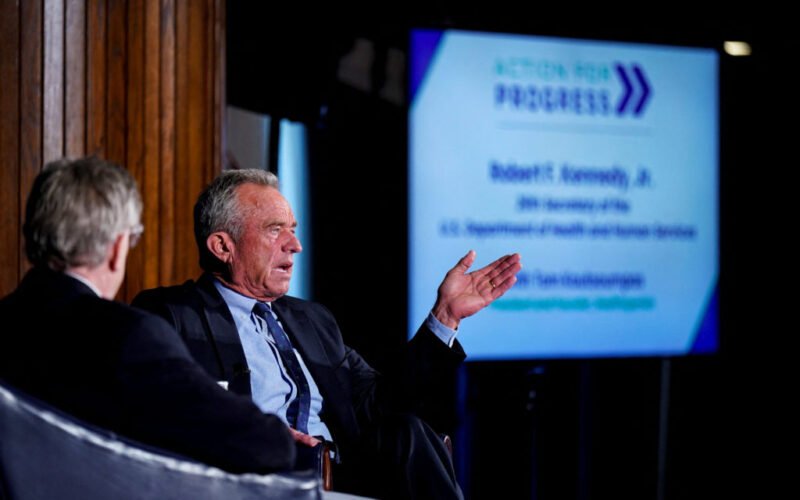
Later Monday, Kennedy appeared at another event focused on substance abuse and mental health — the launch of a bipartisan initiative called Action for Progress by his cousin, former Democratic Rep. Patrick Kennedy, now a partner at the national health consulting firm Healthsperien.
The scion of one of the country’s most prominent political families took different sides in the 2024 presidential race, but found common ground on each other’s personal issue, said Patrick Kennedy, who has shared publicly about his bipolar disorder and battles with alcoholism and drug addiction.
“When we go into recovery rooms, we don’t think of ourselves as Democrats and Republicans,” the former Rhode Island congressman said in a phone interview Monday. “I grew up with my cousin, I know him, and I have the opportunity to share everything I’ve learned over the years in mental health and addictions policymaking with him — and he welcomed it.”
A free press is the cornerstone of a healthy democracy.
Support trustworthy journalism and civil dialogue.
⚡ **What’s your take?**
Share your thoughts in the comments below!
#️⃣ **#WATCH #RFK #launch #addiction #homelessness #initiative**
🕒 **Posted on**: 1770071211
🌟 **Want more?** Click here for more info! 🌟
