

✨ Check out this trending post from PBS NewsHour – Politics 📖
📂 **Category**: Donald Trump news,Supreme Court,tariffs
💡 **What You’ll Learn**:
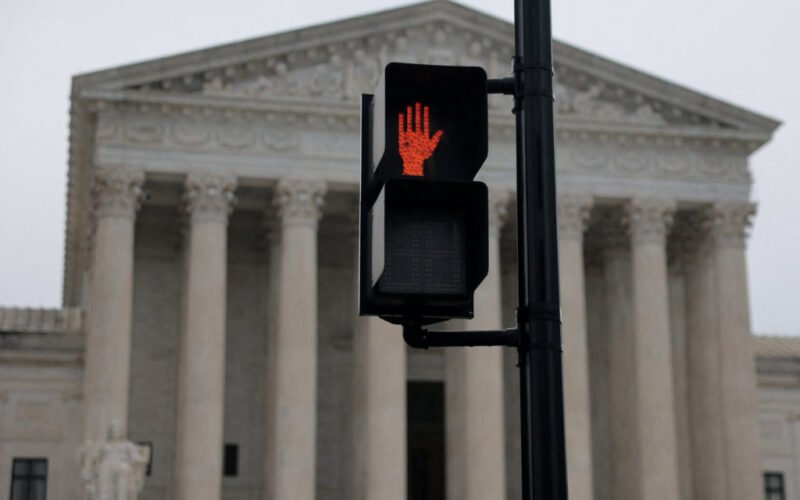
NEW YORK (AP) — The Supreme Court dealt President Donald Trump a devastating loss on a cornerstone of his economic policy, striking down sweeping tariffs he imposed on nearly every country.
The court ruled in its 6-3 opinion on Friday that Trump’s attempt to use the emergency powers law to enforce the tariffs was invalid.
Two out of three Trump-appointed justices joined the majority in striking down the first major piece of Trump’s agenda for his second term to come before them.
Here’s what you should know:
What the court ruled
Trump has relied on the International Emergency Economic Powers Act of 1977, or IEEPA, as justification for his historic barrage of tariffs, even though that law contains no mention of tariffs. IEEPA, which allows the president to seize assets and block transactions during a national emergency, was first used during the Iran hostage crisis. Since then it has been used in a range of global upheavals, from the September 11 attacks to the Syrian civil war.
The president said the US trade deficit is so serious it also qualifies as an emergency, a claim the Supreme Court rejected.
“The fact that no president has ever found such authority in IEEPA is strong evidence that it does not exist,” Chief Justice John Roberts wrote for the majority.
Read more: What happens now that the Supreme Court has struck down Trump’s tariffs?
In their opinion, the justices noted that the Constitution “very clearly” gives Congress, not the president, the power to impose taxes, including tariffs.
Justices Samuel Alito, Clarence Thomas and Brett Kavanaugh dissented from the decision.
“The tariffs at issue here may or may not be wise policy,” Kavanaugh wrote. “But by text, history, and precedent, they are clearly legal.”
What tariffs are affected?
Early last year, Trump cited IEEPA to impose tariffs on America’s three largest trading partners: Mexico, Canada and China. To justify the charges, he declared a national emergency over illegal immigration and the trafficking of drugs such as fentanyl and the chemicals used to use them.
Then in April, on what Trump described as “Liberation Day,” he imposed “reciprocal” tariffs of up to 50% on goods from dozens of countries – and a base tariff of 10% on almost everyone else, also using IEEPA as justification.
Trump has also used IEEPA to impose heavy import taxes on Brazilian imports, citing the criminal prosecution of former President Jair Bolsonaro, and on India over the country’s purchases of Russian oil.
Many of Trump’s IEEPA tariffs have seen volatile activity after their implementation — being removed, increased, and reintroduced at various times in the past year.
While the Supreme Court’s decision turns many of the fees upside down, others imposed by Trump relied on other justifications and were not affected.
Most of America’s trading partners still face steep tariffs on specific sectors, including steel, aluminum, automobiles, copper, wood, kitchen cabinets, bathroom sinks, and upholstered furniture.
Companies adopt the decision
The White House has not yet responded to the ruling, but many opponents of the tariffs are cheering it.
We Pay Tariffs, a group of small businesses that fought the introduction of import taxes, called the decision a “huge victory” for companies hurt by the tariffs.
“They took out loans just to keep their doors open,” group leader Dan Anthony said. “They froze hiring, canceled expansion plans, and watched their savings drained to pay the bills for tariffs that were not in any budget or business plan. Today, the Supreme Court validated what we have been saying all along: These tariffs were illegal from the beginning.”
Refunds can be a ‘mess’
Federal data show the Treasury Department had collected more than $133 billion in import taxes imposed by the president under the Emergency Powers Act as of December.
But the Supreme Court did not address whether companies and individuals who paid those tariffs could be recovered. Several companies, including the large warehouse chain Costco, have already lined up to seek refunds in lower courts.
Kavanaugh, who dissented from Friday’s decision, noted that the process could be complicated.
“The Court is saying nothing today about whether the government should continue to return the billions of dollars it has collected from importers, and if so how. But that process is likely to be a mess, as was acknowledged in oral argument,” Kavanaugh wrote.
A free press is the cornerstone of a healthy democracy.
Support trustworthy journalism and civil dialogue.
🔥 **What’s your take?**
Share your thoughts in the comments below!
#️⃣ **#Supreme #Courts #ruling #Trumps #tariffs**
🕒 **Posted on**: 1771639870
🌟 **Want more?** Click here for more info! 🌟
