


🚀 Explore this must-read post from Hacker News 📖
📂 Category:
📌 Main takeaway:

David Rupprecht, Katharina Kohls, Thorsten Holz, and Christina Pöpper
Ruhr-Universität Bochum & New York University Abu Dhabi
Voice over LTE (VoLTE) is a packet-based
telephony service seamlessly integrated into the Long Term Evolution (LTE) standard. By now all major
telecommunication operators use VoLTE. To secure the phone calls, VoLTE encrypts the voice data between
the phone and the network with a stream cipher. The stream cipher shall generate a unique keystream for
each call to prevent the problem of keystream reuse.
We introduce ReVoLTE, an attack that exploits an LTE implementation flaw to recover the contents of an
encrypted VoLTE call. This enables an adversary to eavesdrop on VoLTE phone calls. ReVoLTE makes use of
a predictable keystream
reuse. Eventually, the keystream reuse allows an adversary to decrypt a recorded call with
minimal resources.
We provide an overview of the ReVoLTE attack, the implications, and demonstrate the
feasibility of the ReVoLTE attack in a commercial network. Further, we publish an App
that allows tech savvy people to track networks down that are still vulnerable. Our work will appear at
the 29th USENIX Security Symposium
(2020) and all details are available in a pre-print version of the paper.
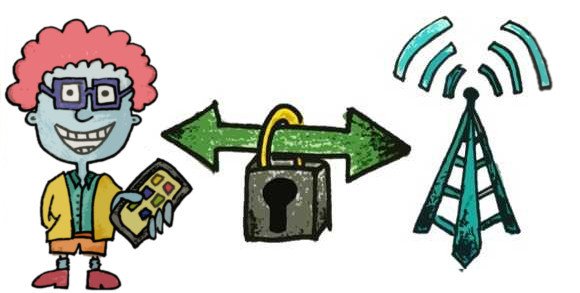
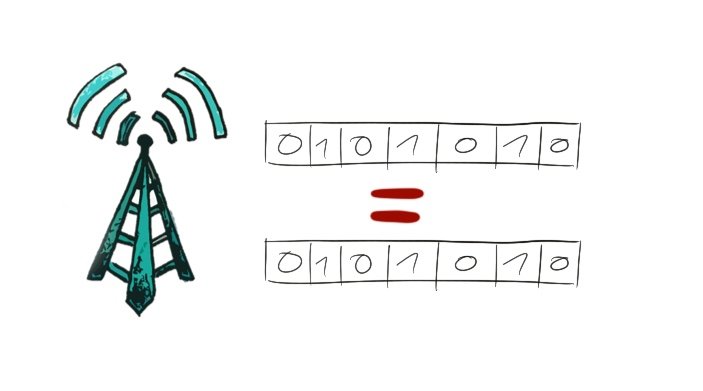
What does ReVoLTE exploit?
The ReVoLTE attacks exploit the reuse of the same keystream for two subsequent calls within one radio
connection. This weakness is caused by an implementation flaw of the base station (eNodeB). In order to
determine how widespread the security gap was, we tested a number of randomly selected radio cells
mainly across Germany but also other countries. The security gap affected 12 out of 15 base stations.
How does the ReVoLTE attack work?
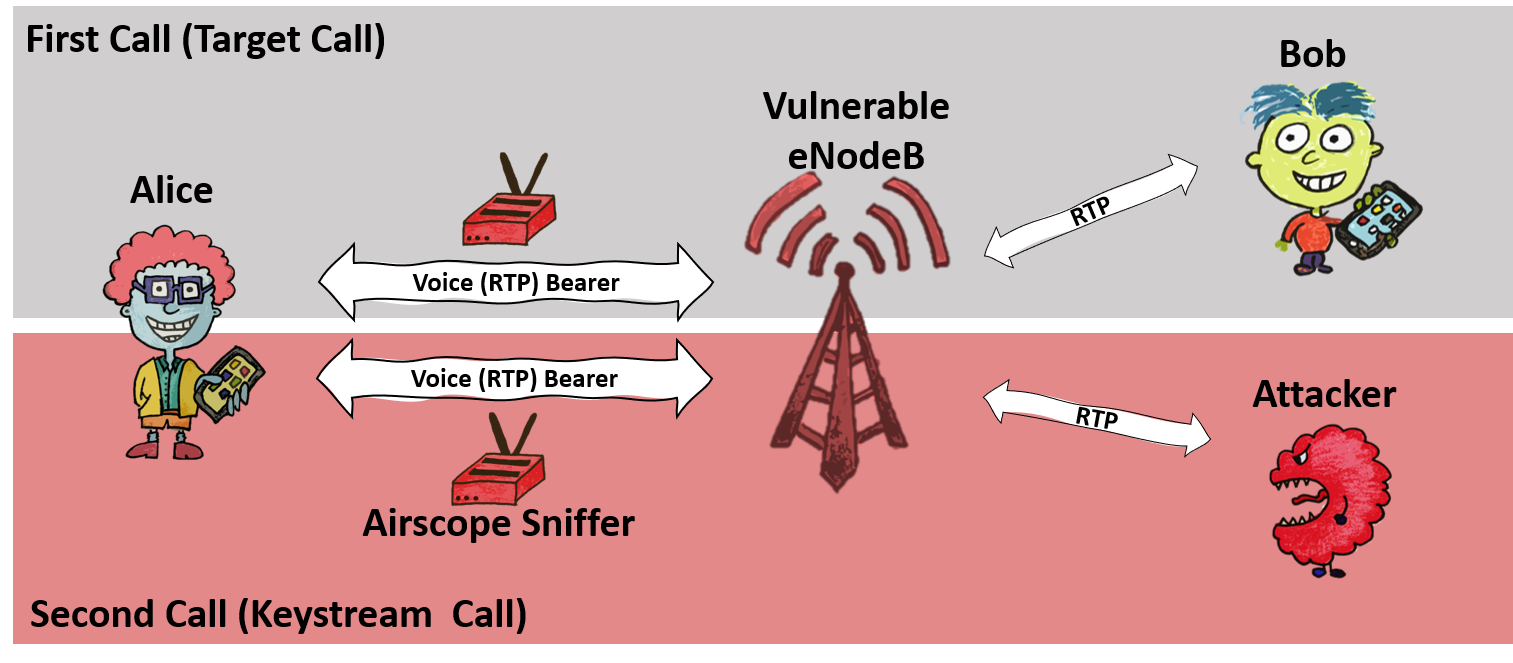
The ReVoLTE attack aims to eavesdrop the call between Alice and Bob. We will name this call the target
or first call. To perform the attack, the attacker sniffs the encrypted radio traffic of Alice within
the cell of a vulnerable base station. Shortly after the first call ends, the attacker calls Alice and
engages her in a conversation. We name this second call, or keystream call. For this call, the attacker
sniffs the encrypted radio traffic of Alice and records the unencrypted sound (known plaintext).
For decrypting the target call, the attacker must now compute the following: First, the attacker xors
the known plaintext (recorded at the attacker’s phone) with the ciphertext of the keystream call. Thus,
the attacker computes the keystream of the keystream call. Due to the vulnerable base station, this
keystream is the same as for the target (first) call. In a second step, the attacker decrypts the first
call by xoring the keystream with the first call’s ciphertext. It is important to note that the attacker
has to engage the victim in a longer conversation. The longer he/she talked to the victim, the more
content of the previous communication he/she can decrypt. For example, if the attacker and victim spoke
for five minutes, the attacker could later decode five minutes of the previous conversation.

Are my phone calls still vulnerable to eavesdropping via ReVoLTE?
To mitigate the threat of eavesdropping, we have informed providers about the attack vector through the
GSMA Coordinated
Vulnerability Disclosure Programme process at the beginning of December 2019. The GSMA requested
vendors to provide patches for affected base stations. By the time of publication, those vendors should
have provided patches, and providers are requested to install and configure them securely. A re-test
indicates that the German operators have managed to install the patches. However, we need to consider a
large number of providers worldwide and their large deployments. It is thus crucial to raise awareness
about the vulnerability. In case you want to know if your network is vulnerable or not, you can test it
with our App.
To demonstrate the practical feasibility of the ReVoLTE attack, we have implemented an end-to-end
version of the attack within a commercial network (which was vulnerable) and commercial phones. We use
the downlink analyzer Airscope
by Software Radio System to sniff the encrypted
traffic. Further, we use three Android-based phones which are controlled via ADB and SCAT to obtain the known plaintext at the attacker’s
phone. For a demonstration of these steps, please refer to the video below.
Is it possible to detect if the base station is vulnerable to ReVoLTE?
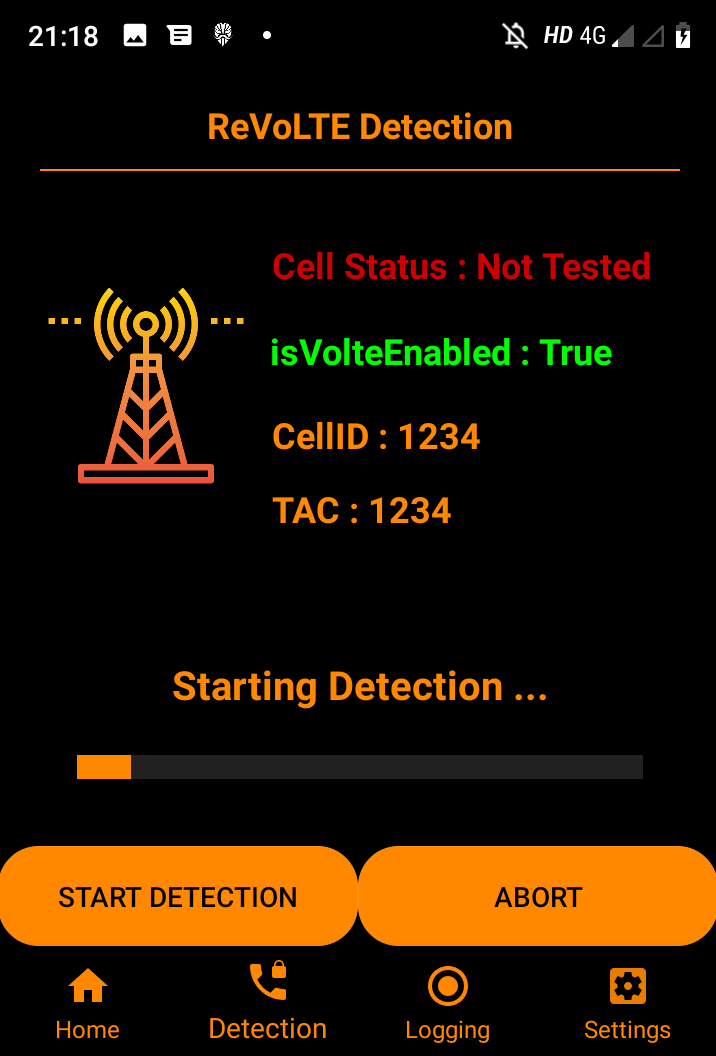
Yes, we (mainly Bedran) have developed an App that allows to
detect whether a base station is vulnerable to the ReVoLTE attack or not. The App requires a VoLTE
capable Android phone with root access and a Qualcomm chipset. Please click here to visit the Github page regarding the Mobile Sentinel
App.
Abstract
Voice over LTE (VoLTE) is a packet-based telephony service seamlessly integrated into the Long Term Evolution
(LTE) standard and deployed by most telecommunication providers in practice. Due to this widespread use,
successful attacks against VoLTE can affect a large number of users worldwide. In this work, we introduce
ReVoLTE, an attack that exploits an LTE implementation flaw to recover the contents of an encrypted VoLTE call,
hence enabling an adversary to eavesdrop on phone calls. ReVoLTE makes use of a predictable keystream reuse on
the radio layer that allows an adversary to decrypt a recorded call with minimal resources. Through a series of
preliminary as well as real-world experiments, we successfully demonstrate the feasibility of ReVoLTE and
analyze various factors that critically influence our attack in commercial networks. For mitigating the ReVoLTE
attack, we propose and discuss short- and long-term countermeasures deployable by providers and equipment
vendors.
- ReVoLTE attack can decrypt 4G (LTE) calls to eavesdrop on conversations [1]
- ReVoLTE an attack that allows to intercept calls encrypted in LTE [2]
- REVOLTE ATTACK [3]
- ReVoLTE Attack Allows Hackers to Listen in on Mobile Calls [4]
- ReVoLTE Attack Allows Eavesdropping of Encrypted 4G (LTE) Calls [5]
- ReVoLTE Attack Encrypted Voice Calls Interception [6]
🔥 What do you think?
#️⃣ #Call #Eavesdropping #Encrypted #LTE #Calls #ReVoLTE
🕒 Posted on 1763357097
